
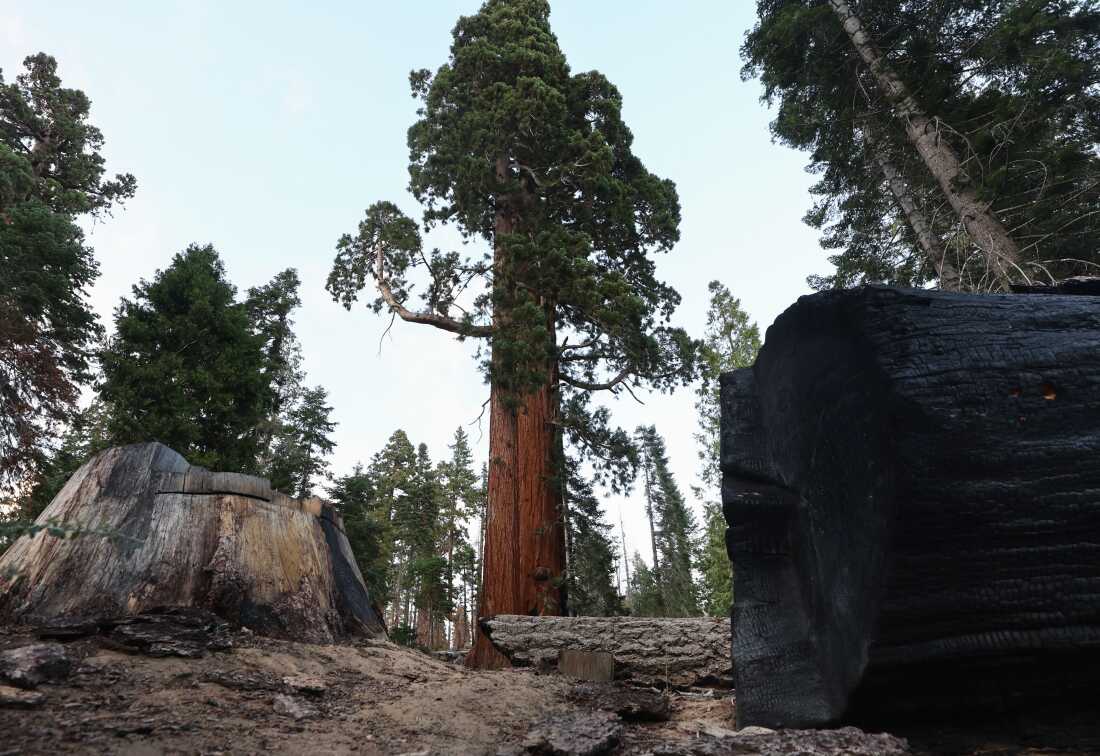
A giant sequoia tree, with a 70-foot circumference, stands prominent beyond the small trees’ remnants along the Trail of 100 Giants in Sequoia National Forest, California, as of August 25, 2022. This significant landscape serves as a backdrop to a major policy change announced by the Trump administration.
On Tuesday, the administration declared a plan to roll back an environmental rule that currently prevents road construction. This move impacts tens of millions of acres of public forest land by limiting most logging and mining activities. The ‘roadless rule’ was first introduced by the Clinton administration in 2001. For 25 years, it has been a point of contention between economic development and conservationists, especially in the Western U.S.
According to Brooke Rollins from the U.S. Department of Agriculture, “Our forests can’t afford another decade of inaction. It’s time to turn the page on the failed roadless rule and return our forests to health and productivity.” Republican governors in states like Montana, Utah, and Wyoming have praised the proposed change, believing it will allow for better, localized decision-making to manage forest resources.
“Rescinding it restores the flexibility to make thoughtful decisions based on the needs of each forest and each community,” stated Utah Gov. Spencer Cox. “We can protect the landscapes we treasure by actively managing them for the next generation.”
Supporters of the roadless rule, however, maintain its significance in U.S. conservation policy. It has limited industrial activity, preserving habitats across vast public lands from Alaska to Florida. Drew Caputo, a senior attorney with Earthjustice, stated, “The roadless rule protects some of the most valuable public lands that belong to all Americans. It is the most important land protection measure of the last 60 years.”
While the administration argues the rule change will increase economic activity, critics note that the roadless policy ended unprofitable timber sales. These sales often subsidized private operations, as pointed out by Steve Ellis, president of Taxpayers for Common Sense. “Before the roadless rule, we would build roads into areas and have money-losing timber sales that cost taxpayers billions,” Ellis emphasized. He noted that repealing the rule could worsen the existing $6 billion maintenance backlog in the U.S. Forest Service.
The proposal coincides with a challenging summer marked by severe wildfires in Western states. Federal land, like parts of Sierra National Forest affected by the 2020 Creek Fire, falls under the roadless rule. Administration officials argue that rescinding it will give managers more flexibility to address fires by allowing road construction, thus improving access for fire crews. Nick Smith, from the American Forest Resource Council, asserted, “Severe wildfire damage to roadless areas is evident in states like Oregon, Washington, California, and Montana.”
Yet, Caputo of Earthjustice pointed out that human activity causes over 80% of wildland fires. He suggested that more roads could increase the risk of accidental fires. Factors like drought conditions, low snowpack, and climate change have exacerbated these risks.
The period for public comment on this proposed change extends until September 21, 2026. This policy shift is part of broader efforts by the Trump administration to weaken environmental protections, including the Endangered Species Act and regulations concerning national marine monuments.