
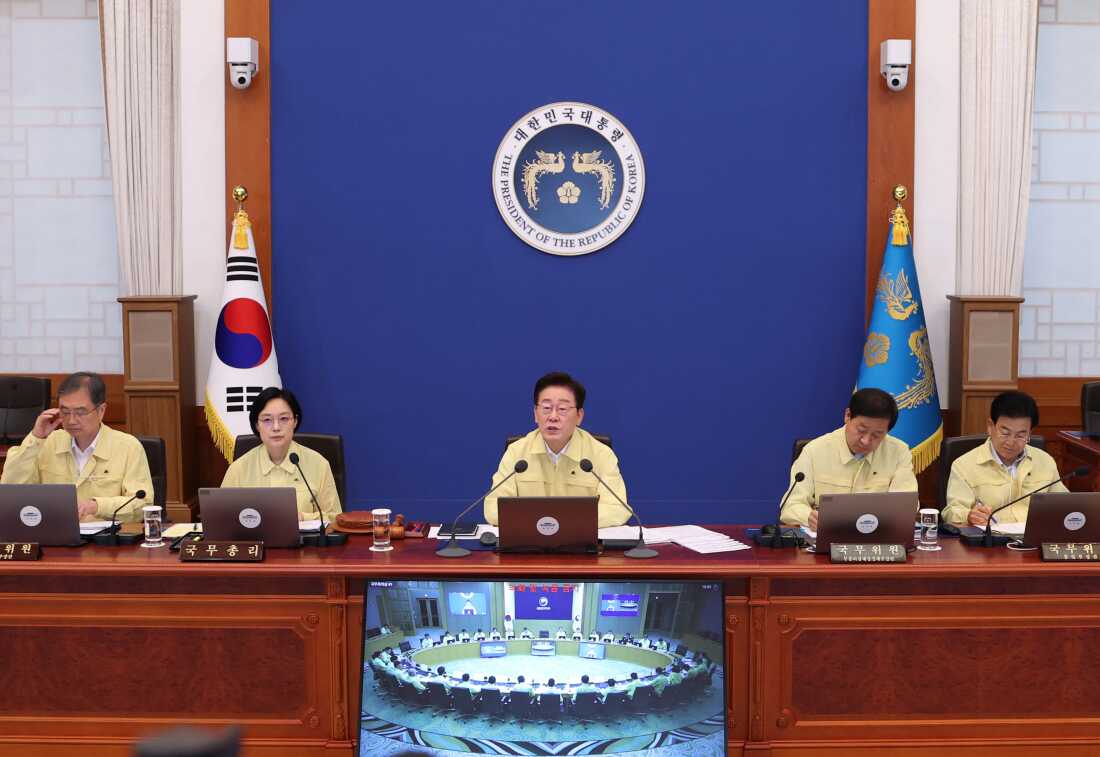
SEOUL, South Korea — South Korean President Lee Jae Myung emphasized the importance of a solid military alliance with the United States for national security. This statement came after U.S. President Donald Trump ordered a “substantial reduction” in joint military exercises. The unexpected announcement left many South Koreans puzzled and worried.
Trump’s announcement came via social media just before the start of the annual Ulchi Freedom Shield exercises, involving U.S. and South Korean forces. These drills focus on readiness against North Korean threats. Trump mentioned a good relationship with North Korean leader Kim Jong Un and South Korea’s refusal to engage in the U.S. conflict with Iran as reasons for his decision.
The sudden change raised questions about the reliability of the U.S.-South Korean alliance, originally formed during the Korean War from 1950 to 1953.
A weakened U.S. defense commitment could severely impact South Korea’s security, particularly since it does not have nuclear weapons. South Korea relies on the U.S. “nuclear umbrella,” ensuring a strong American response if North Korea attacks. There are about 28,500 U.S. troops stationed in South Korea.
Many South Koreans have even less confidence in the U.S. due to Trump’s trade disputes and immigration policies, like the controversial raid in Georgia affecting South Korean workers. South Korean newspaper Hankook Ilbo criticized Trump’s move, saying it reflects a “faltering Korea-U.S. alliance,” and the perception that the U.S. respects North Korea more than South Korea.
Calls for a Strong US Alliance
In a Cabinet meeting, President Lee Jae Myung stressed that a firm alliance with the United States would enhance national security. Lee, a liberal advocate for self-reliant defense, emphasized the strategic value of strengthening ties with the U.S.
Details on the reduction of the exercises remain unclear. South Korean and U.S. militaries had declared the 11-day drills would be in line with past exercises and learnings from recent global conflicts. The focus remains on defense.
North Korea condemned the military exercises, labeling them provocative and promised a “new level of deterrent” in response.
Prospects for Trump-Kim Engagement
Kim Jong Un has avoided talks with the U.S. and South Korea since the collapse of negotiations with Trump in 2019. Experts doubt Kim will engage with Trump’s overture unless significant U.S. concessions are offered. Kim has recently expanded both his nuclear capabilities and support for Russia.
Lee’s office expressed hope for Trump’s positive relationship with Kim to foster dialogue and peace on the Korean Peninsula, which conservatives criticized as prioritizing diplomacy over security.
Growing Doubts About the U.S. Alliance
In his statement, Trump described the exercises as costly and antagonistic to North Korea, which he claimed remained “unthreatening and respectful” during his presidency. Trump noted that South Korea declined to join a U.S.-led effort to “denuclearize” Iran.
Lee’s office stated that South Korea and the U.S. are discussing contributions South Korea might make in restoring freedom of navigation in the Strait of Hormuz.
Leif-Eric Easley, a professor at Ewha University, said Trump’s view sees alliances as investments requiring returns. He noted that South Korea understands this dynamic, viewing the relationship as a complex negotiation of security and economic issues. Seoul is cautiously navigating the evolving situation.