
The commander of U.S. Forces Korea, Xavier Brunson, visited South Korea’s Defense Ministry to deliberate on scaling back joint military exercises. This followed U.S. President Donald Trump’s direction to the Pentagon to significantly reduce these drills. The visit reflects ongoing efforts to address regional security dynamics amidst evolving diplomatic ties.
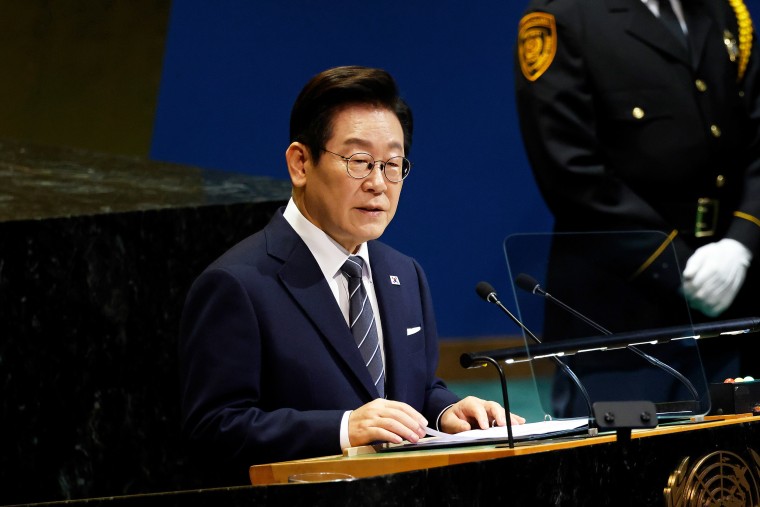
Earlier the same day, South Korean President Lee Jae Myung emphasized the importance of enhancing independent defense capabilities. While he acknowledged that annual civil defense exercises accompany the joint military drills, he clarified these are defensive in nature and not aimed at provoking North Korea.
President Lee stressed the urgency of transferring wartime operational control from the United States to South Korea according to the existing government plan. He remarked that a robust alliance with the U.S. strengthens mutual security, while increasing independent capabilities enhances South Korea’s strategic value.
Highlighting peace as the government’s priority, Lee also advocated for boosting South Korea’s military strength to prepare for potential threats. He urged accelerated progress on developing a nuclear-powered submarine program and training officers adept in integrated operations, recognizing the changing nature of battlefields.
“A strong alliance makes the foundation of security stronger, and strengthening our own capabilities increases our value and necessity as an ally,” said President Lee.
During a National Security Council meeting, Lee reiterated the defensive purpose of civil defense exercises. He assured that South Korea does not intend to use these exercises to attack North Korea but to safeguard citizens’ daily lives.
South Korea’s National Security Adviser, Wi Sung-lac, expressed hopes that Trump’s message might renew dialogue between the U.S. and North Korea. Such discussions could lead to peace and stability on the Korean Peninsula. The engagement might also restart broader talks with Pyongyang.
Amid these discussions, Chinese Foreign Minister Wang Yi’s visit to South Korea is anticipated to cover developments on the Korean Peninsula and related security issues. South Korea’s presidential office affirmed ongoing coordination with Washington regarding their combined defense posture and military activities.
The Ulchi Freedom Shield exercises, which began recently, will continue through August 27.