
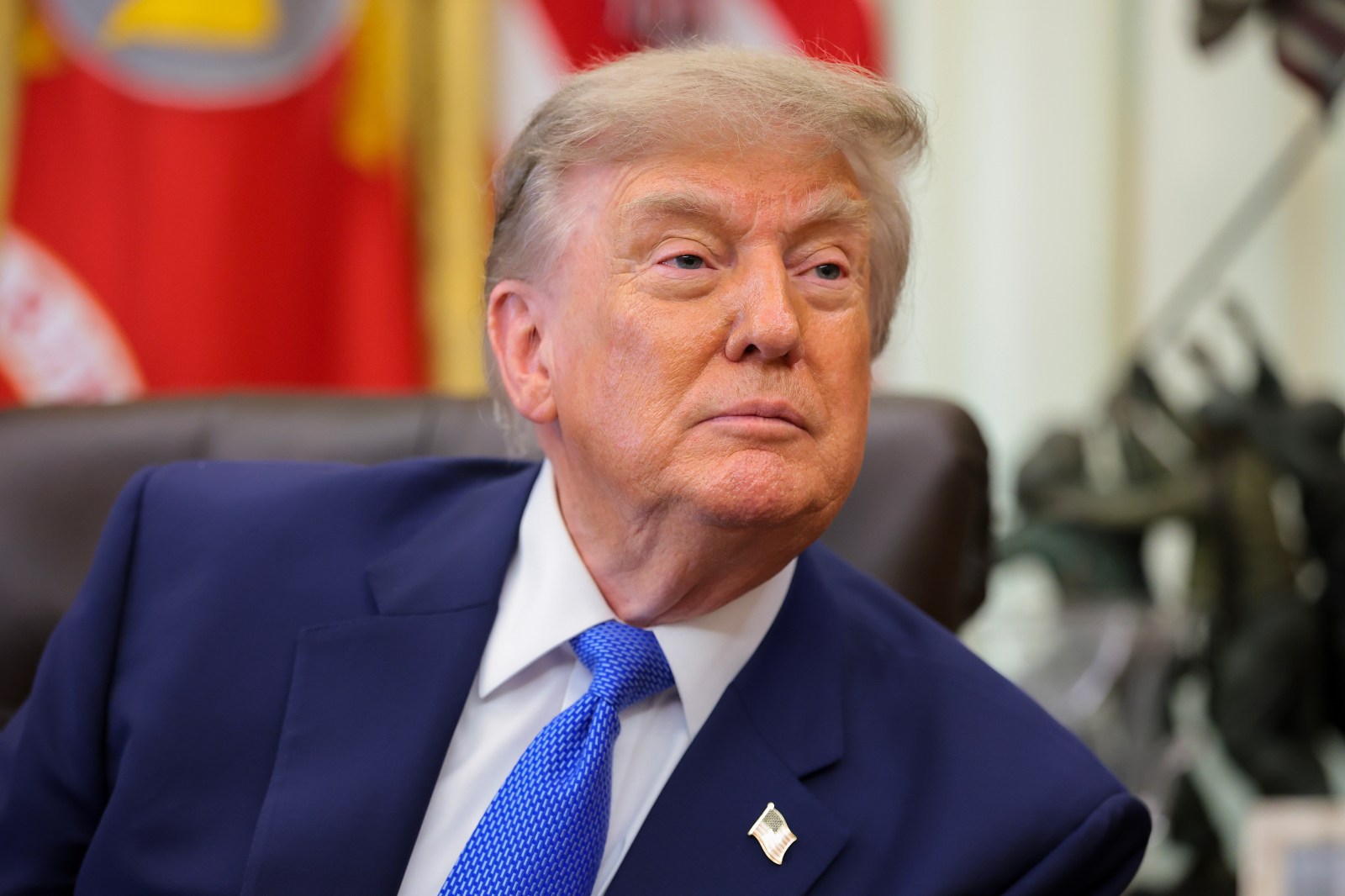
President Donald Trump has again chosen to vote by mail in Florida, even though he has persistently criticized the practice. He called mail-in ballots “inherently corrupt” but participated in Florida’s Republican primary using this method. Palm Beach County records indicate that Trump requested a mail ballot in late July and returned it by August 13, before the Tuesday primary, according to Politico.
This is the second time in 2026 Trump has used a mail-in ballot in Florida. He voted by mail in a special election in March, despite publicly denouncing the practice. At that time, Trump justified mailing his vote because he is the president. Yet records showed he was in Palm Beach when early in-person voting was available, reported the Associated Press.
The White House dismissed the criticisms of Trump’s mail-in voting decision as insignificant.
Santiago Mayer, executive director of Voters of Tomorrow, expressed his views to Newsweek via email on Monday, describing Trump’s behavior as hypocritical, as he continues to criticize mail-in voting while using it himself. Mayer accused Trump of being deceitful about the integrity of mail-in voting and stressed the need for Congress to hold his administration accountable.
Mail-in Voting Discussion
Trump previously labeled mail-in ballots as “inherently corrupt,” advocating restrictions to limit their use to specific situations such as illness, disability, military duty, or travel. However, fact-checkers have found no proof of widespread mail voting fraud. A study from the Brookings Institution, in 2025, discovered approximately four instances of mail-voting fraud per 10 million ballots cast. Around 30% of ballots in the 2024 presidential election were mail-in votes, based on federal data.
Trump’s Mail Voting Record
- August 2026 Primary Election in Florida
- March 2026 Special Election in Florida
- Florida’s 2020 Primary Election
- New York 2018 Midterm Election via absentee ballot
- New York 2017 Mayoral Election via absentee ballot
SAVE America Act
Trump is pressuring Congress to pass the SAVE America Act, requiring documentation proof of U.S. citizenship for federal election voter registration. Strategies include linking the bill to a broader defense spending package, urging Senate Republicans to bypass the filibuster, and using Truth Social to emphasize its importance.
Supporters believe this proposal enhances election integrity. Opponents argue that it complicates voting for eligible citizens without substantially addressing non-citizen voting concerns.
This story continues to develop as new information emerges.