
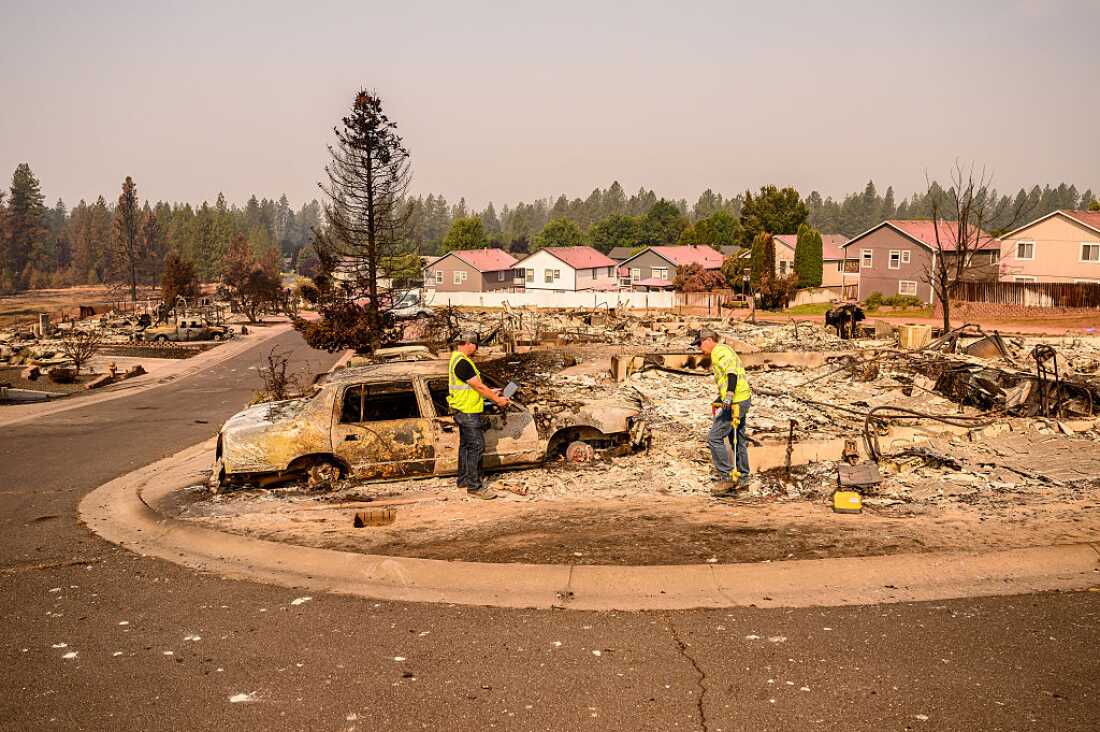
Wildfire Destruction and Safety Precautions
Three wildfires broke out in Spokane, Washington, causing severe damage to over 800 homes and buildings. Among them was the Old Trails Fire. This incident has intensified ongoing discussions about adopting statewide regulations to protect communities from wildfires.
Dave Kokot, whose house faced threats from two separate wildfires, took no chances. He prepared his home with fire-resistant materials and cleared flammable vegetation around the perimeter. Such measures are effective in shielding homes from wind-carried embers, which are the main source of rapid fire spread. Kokot’s experience as a fire protection engineer has driven him to advocate for making these preparations mandatory.
Tackling Wildfire Policies
Washington has been working on creating new safety regulations for areas prone to wildfires. These include building codes for homes and vegetation management rules. However, such regulations, especially those affecting private properties, can face public resistance. Similar challenges are observed in other Western states where wildfire management is left to local authorities, resulting in varied rules.
Efforts to enforce vegetation control in Washington faced pushback from conservation groups. They argued these rules might negatively impact urban tree canopies, crucial for providing shade during heat waves. These concerns led to repeals and revisions of some regulations.
Revised Regulations and Mapping Efforts
In 2024, Washington enacted new legislation to simplify and improve wildfire hazard mapping. The updated mapping will consider past fire incidents for better accuracy. While new constructions in high-risk areas must have fire-resistant features, mandatory vegetation management is no longer part of homeowner requirements. This change stirred concerns among fire services due to the importance of defensible space.
A multi-faceted approach is seen across Western states. California has long enforced fire-resistant construction standards, with regular inspections for vegetation management. Oregon faced opposition over insurance implications related to state-designated high-risk zones, leading to adjustments and legal actions against using state maps for insurance purposes. Colorado and Utah have recently updated their regulations following significant wildfire events.
Refining Wildfire Control Across Regions
Despite these steps, many states still lack comprehensive wildfire strategies and risk assessments. The absence of unified regulations heightens vulnerability amidst the growing threat of wildfires exacerbated by climate change. Establishing consistent building codes could significantly enhance protection.
Looking back at the fires in Spokane, Kokot emphasizes the need for proactive planning to address the evolving nature of wildfires. With increasing frequency and severity, it’s crucial for communities to anticipate and prepare for potential fire events.