
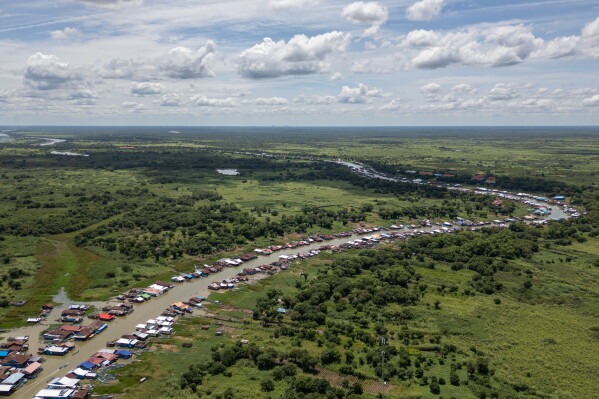
Sou Sreynich, a 13-year-old living in Kampong Prahok on Cambodia’s Tonle Sap Lake, aspires to become a teacher. However, she began her education late, entering school at ten years old. Her mother hesitated to send her earlier due to concerns over the safety of traveling by boat, a common worry among parents in this region. This concern is due to the risk of the boat capsizing during the journey to school.
Recently, fuel prices have surged, caused by the conflict in Iran. This has added to the challenges faced by families like Sreynich’s. The effects of the conflict on education are less visible than during the pandemic, but they still hit the poorest families hardest. Increased fuel costs make transportation difficult for students and teachers. It also strains government budgets, reducing educational funding.
The United Nations Children’s Fund reports that if the conflict persists, up to 23.4 million more children could fall into poverty by the year-end, with 80% of these in Africa and Asia.
Climate change also complicates matters, making water navigation on Tonle Sap unpredictable, with instances of floods and droughts. Tragically, teachers have reported that ten students have drowned over the years.
Students, including Sreynich, rely on gas-powered boats to reach school. Rising gas prices restrict their families’ ability to fish in deeper, more bountiful waters. When financial constraints tighten, Sreynich sometimes misses school to help her parents despite her desire to continue her education.
Vulnerable Children Most at Risk
The conflict forces families living on limited resources to make tough decisions, such as choosing between necessities like food and keeping children in school. Sabrina Hervey from Education Above All Foundation emphasizes that the Iran war has the potential to push millions of children out of school or prevent new enrollments entirely.
Children in Southeast Asia are increasingly dropping out to work. In Vietnam, Ly and Nhi, aged 16 and 13, from a fishing family, intermittently attended school due to financial need. High diesel prices resulting from the war rendered their father unable to keep his fishing job, necessitating the children to work in a restaurant under harsh conditions. With intervention from the Blue Dragon Children’s Foundation, they returned to school, but similar stories are not uncommon.
Michael Brosowski from Blue Dragon highlights a pattern where families, upon financial collapse, prioritize some children to continue education while others are pulled out to work. These children are particularly vulnerable to exploitation.
Sreynich’s family already faces higher costs for everyday items brought by boat to Tonle Sap. Samphors Vorn from Aide et Action reports that costs for basic educational infrastructure, like lab electricity, have increased tenfold. Rising fuel prices influence every aspect of education, from travel to classroom supplies.
Global Educational Impact and Gender Disparities
The war further strains countries dependent on imported energy. Education and poverty reduction progress suffer setbacks in nations like Bangladesh, with government budgets stretched thin due to fuel costs. Arshad Malik from Save the Children International notes that economic pressures may disproportionately affect girls, leading to increased school dropout rates and child marriages in South Asia.
UNICEF highlights that South Asia holds 45% of the world’s child brides, as families often prioritize education for sons over daughters.
Nutritional programs are also at risk. The U.N. World Food Programme indicates that school meals support learning and health, but such initiatives face jeopardy as shipping and fertilizer costs rise. In West and Central Africa, these challenges could exacerbate food security issues.
As collective efforts continue to alleviate these adversities, the complexities faced by children worldwide underscore the need for sustained support and intervention.