
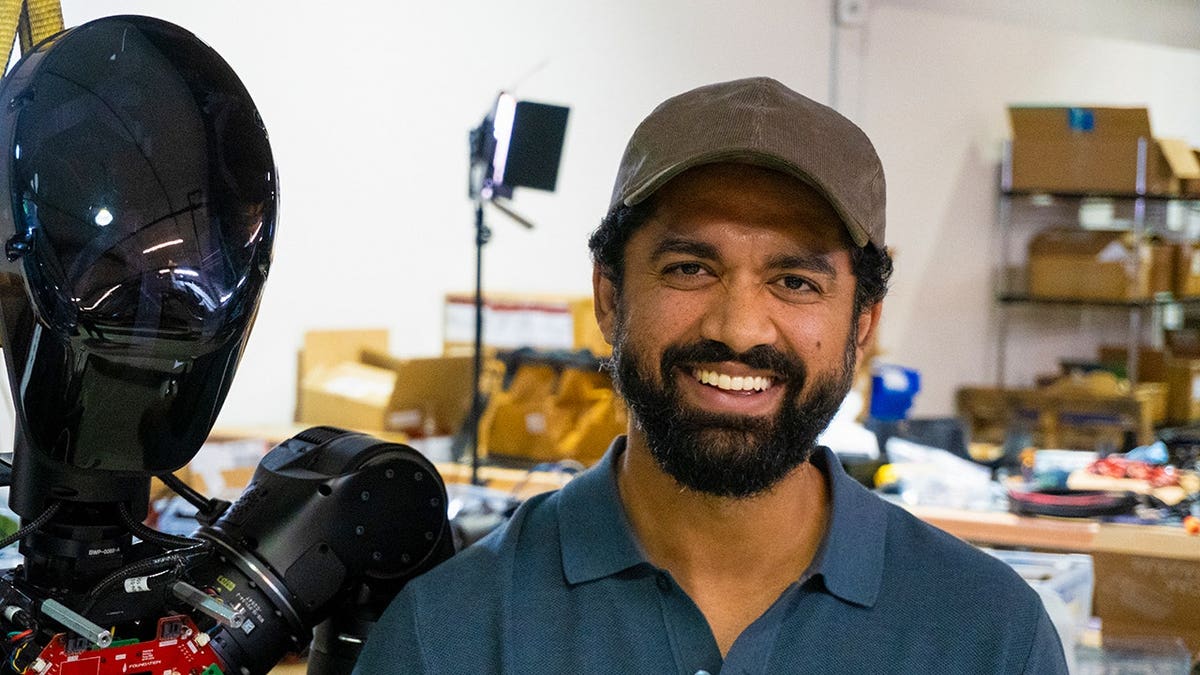
Humanoid robots are being developed to navigate difficult terrains and identify individuals, potentially joining federal agents at the southern border. Foundation, a U.S. robotics firm, has showcased its technology to the Department of Homeland Security (DHS). Sankaet Pathak, the company’s founder and CEO, discussed the project with Fox News Digital, emphasizing potential applications at border areas.
Discussions with Security Agencies
Pathak revealed that Foundation is conversing with major national security agencies, including the Air Force, Navy, Army, and DHS. “We are in discussions with almost all government bodies in national security,” he noted. “We are negotiating contracts and various applications.” Despite these talks, a DHS spokesperson confirmed no formal agreements exist at present.
Capabilities of the Phantom Robot
Pathak sees the Phantom robot performing tasks such as reconnaissance in terrains that challenge humans, vehicles, drones, and cameras. He questioned the current border methods, stating, “If drones and watchtowers solved everything, why do humans remain at the border?” The Phantom can identify humans among obstacles, traverse rough landscapes, and map its surroundings autonomously. The plan is for robots to identify possible border crossings, alerting human officers for further assessment.
Future Developments and Objectives
Pathak mentioned the development of a more resilient Phantom model, with dustproof and waterproof features. This next-generation robot is expected soon, enhancing outdoor capabilities. The technology might also handle tunnel exploration along the border. Pathak highlighted the importance of safeguarding officers by having robots conduct continuous surveys. These machines would signal significant activities, enabling human response when required. “We could initiate a pilot now and expand significantly in a few months,” Pathak predicted.
Safety and Potential Armament
While the Phantom’s immediate role is reconnaissance, Pathak stated that Foundation would equip robots with arms for border duties if requested. Nonetheless, he clarified that these machines wouldn’t make independent enforcement decisions shortly. “They will detect, flag, and then humans determine the next steps,” Pathak explained.