
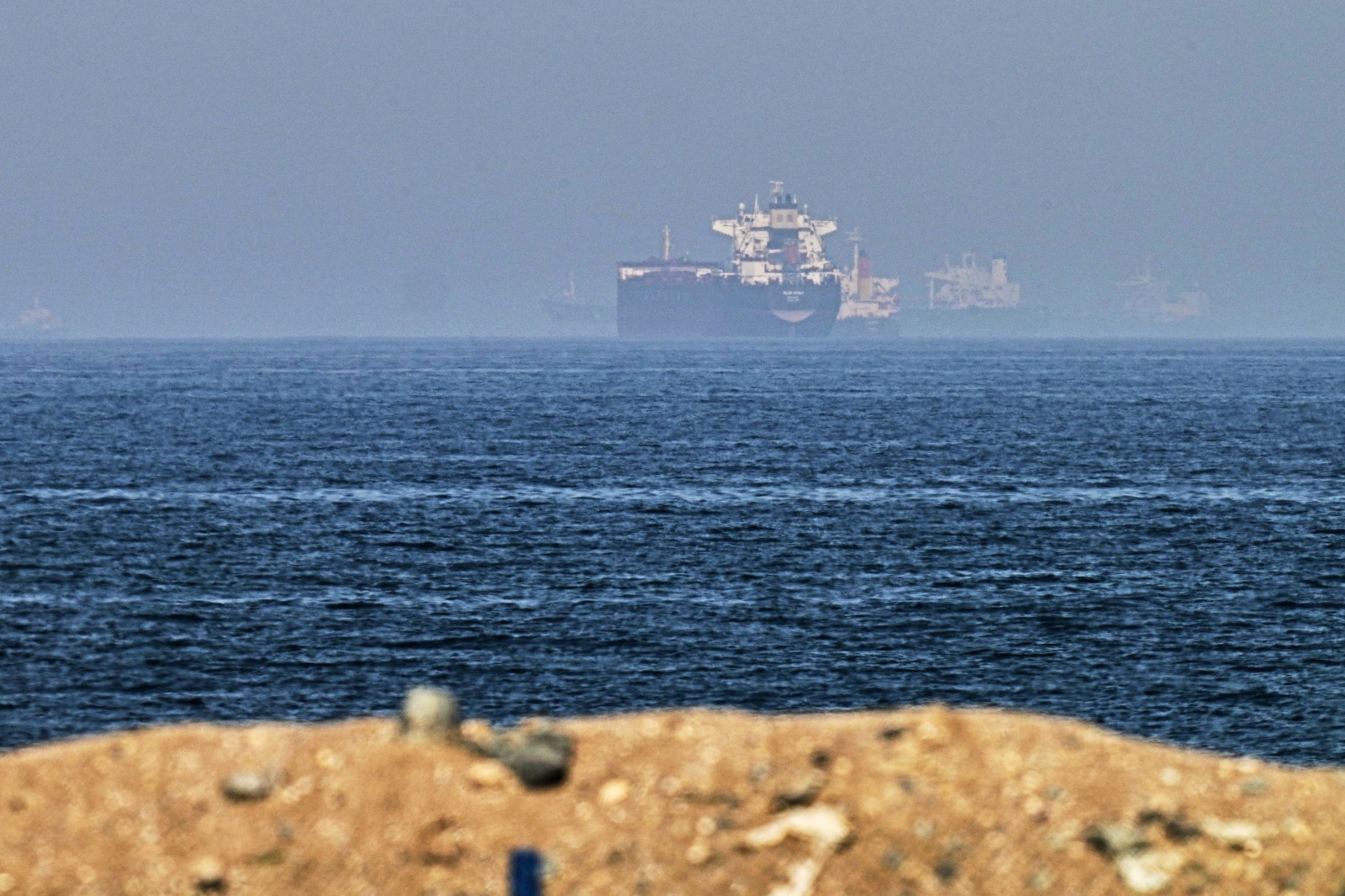
Iran has rebuked President Donald Trump’s recent statements suggesting that the United States could claim the Strait of Hormuz as its territory. Trump made these remarks while speaking in Long Island, New York. He said that after defeating Iran, he would declare the strait a U.S. territory, citing Washington’s control over it through a naval blockade of Iranian ports.
Iranian officials were quick to counter Trump’s proposal. Kazem Gharibabadi, Deputy Foreign Minister for Legal and International Affairs, insisted that Iran will not be cowed by such threats. He affirmed that the regulation of the strait remains under Iran’s jurisdiction.
“Trump has said that after Iran’s defeat, he will soon declare the Strait of Hormuz as U.S. territory!” Gharibabadi stated. “The Strait of Hormuz cannot be seized by tweet, nor by aircraft carrier, nor by issuing an order, nor by an election speech. Iran neither fears threats nor cowers before displays of power.”
He also emphasized that the Strait of Hormuz has always belonged to Iran and will continue to do so.
The Strait of Hormuz is a critical juncture, handling approximately one-fifth of the world’s seaborne oil and natural gas consignments. Control over this waterway is crucial for global energy markets.
The disagreement over access and management has become a key issue in U.S.-Iran relations. The U.S. aims for unrestricted commercial passage, whereas Iran asserts parts of the strait lie within its territorial waters. Navigational standoffs have been linked to increased fuel costs and disruptions in global shipping routes.
Trump has made similar claims about U.S. dominance over important global landmarks. A Newsweek analysis highlighted his past discussions about Greenland, Canada, the Panama Canal, Gaza, Cuba, and Kharg Island in Iran.
Strait of Hormuz Passage
Simultaneously, Iran and Oman are seeking to establish a framework governing navigation through the strait. This includes Iranian proposals to charge vessels for services like security and maritime navigation.
According to the Financial Times, JPMorgan analysts mentioned that Iran and Oman could set up a legal basis for these fees as compensation for maritime services. Such an approach is similar to practices in the Danish Straits and Bosporus, where authorities levy service-related fees, without imposing direct transit charges.
While international maritime law usually forbids charging for mere passage through international straits, it allows fees linked to services like safety assistance. Analysts pointed out that cooperation with Oman can help Iran formalize such fees under international standards.
Iran War Latest
Six months into the conflict that started on February 28, tensions between the U.S., Israel, and Iran remain high, even after a memorandum of understanding in June aimed to reduce hostilities.
The agreement involved an Iranian pledge to ensure safe passage for commercial vessels through the Strait of Hormuz. Nonetheless, both Washington and Tehran have accused each other of not honoring the deal. Talks on sanctions, regional security, and the strait’s future are deadlocked.
The continuous conflict has affected gasoline prices in the U.S., with President Trump acknowledging the increase and suggesting Americans consider it a cost of preventing Iran from obtaining nuclear capabilities.