
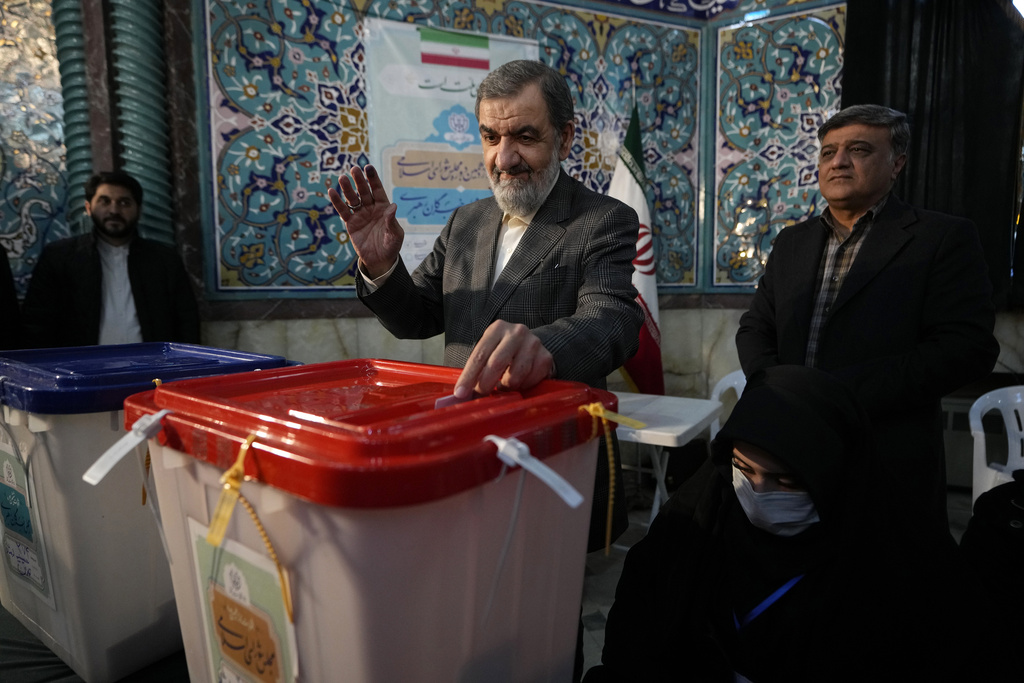
On March 1, 2024, Mohsen Rezaei, a former commander of Iran’s Islamic Revolutionary Guard, participated in voting during the parliamentary and Assembly of Experts elections in Tehran, Iran. Recent developments have shifted the dynamics between the U.S. and Iran. A week ago, U.S. officials signaled that President Trump nearly ordered a renewed major combat operation against Iran. However, in a recent interview, he revealed a different strategy. “We are low keying it,” Trump stated, describing a focus on economic pressure rather than military engagement. He characterized the U.S. stance as semi-negotiating with Iran, keeping an eye on the nation’s high inflation and economic struggles.
The President mentioned, “It will work out. It always works out. It’s like a chess game.” This remark suggests a patience-driven approach without definitive deadlines. Tehran, however, responded promptly. Mohammad Bagher Zolghadr, then Secretary of Iran’s Supreme National Security Council, outlined six American demands for reopening the Strait of Hormuz. These demands included ending U.S. threats, cessation of attacks on Iran-aligned groups, lifting the naval blockade, withdrawing forces, compensating for two “imposed wars,” lifting sanctions, and releasing Iran’s frozen assets.
Iran has shifted discussions from naval passage to negotiating a broader political settlement. Meanwhile, the UAE accused Iran of striking an ADNOC-owned tanker in the Strait of Hormuz with a missile. Oman condemned these actions, warning they might threaten its ongoing talks with Iran. Iranian Foreign Minister Abbas Araghchi denied any U.S.-Iran negotiations, contradicting Trump’s claims of “very good discussions” occurring secretly. Recent changes in Iran’s leadership further complicate the situation. Mohsen Rezaei was officially named the new Secretary General of Iran’s Supreme National Security Council after reports of his appointment were first retracted.
Rezaei’s twofold appointment connects him to both the Supreme National Security Council and as Supreme Leader Mojtaba Khamenei’s representative. This reshuffle reflects potential hardliner consolidation over negotiation processes. Questions regarding who in Tehran has authority remain amid visible governmental disorder. Iran hasn’t seen a leading figure since Ali Larijani’s death by an Israeli strike in March 17, which severed ties between Iran’s government branches.
Rezaei’s background adds significance to his new role. He co-founded the IRGC, commanded it for 16 years, and has been close to Khamenei since becoming his advisor. Reports suggest Araghchi’s exclusion from talks, hinting that diplomacy is losing ground to military interests. This recent leadership change does not guarantee resolution of internal government disputes.
Establishing a former IRGC commander to helm Iran’s foreign and security policy signals an aggressive stance, especially seen a day after the maximalist demands from the outgoing secretary. Washington is betting economic pressure will leverage Iran back to negotiations. Tehran counters by increasing negotiation costs and appointing a former commander to its security council. The emerging question concerns the individuals authorized in Tehran to negotiate a resolution achievable with Washington.