
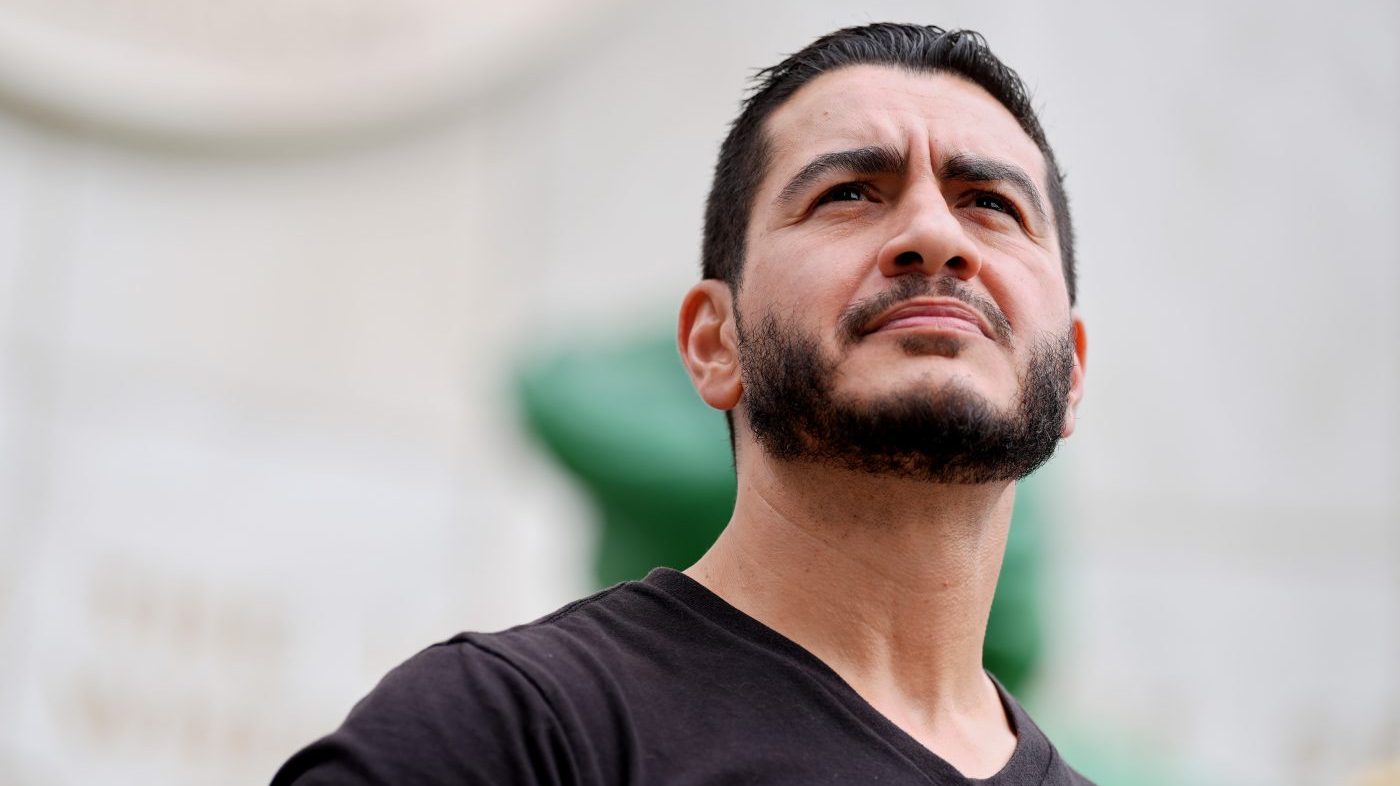
Abdul El-Sayed, a progressive candidate in the Democratic primary for the U.S. Senate in Michigan, engaged with reporters following an event in Detroit in August 2026. His candidacy epitomizes the ongoing struggles within the Democratic Party as it faces unfavorable public opinion and discontent among party members.
Recent polls indicate that 53% of Americans view the party unfavorably, while only 38% hold a positive view. Congressional leadership, seen as aged and uninspiring, garners approval from merely 24% of the public. Anticipating the 2028 elections, an age gap is evident among potential Democratic primary voters. Younger voters under 30 prefer Rep. Alexandria Ocasio-Cortez from New York, whereas older Democrats over 65 show support for California Governor Gavin Newsom.
Despite President Trump’s waning popularity, Democrats haven’t gained significant traction. Their one source of hope lies in the enthusiasm generated by democratic socialists, comprising about one-third of Democratic identifiers. However, this enthusiasm doesn’t translate broadly, as shown by a Washington Post survey revealing less than half of Americans open to endorsing a democratic socialist presidential candidate. While 75% of Democrats might be supportive, 54% of independents reject the idea.
Moderate Democrats seem possessed by the fear that Americans will abandon them because of the contagion of a handful of socialists who won Democratic primaries in New York in June.
Michael Greenberg, New York Review of Books
Ideological splits are not new in American politics. The early 19th-century Whig Party divided over slavery issues, leading to its downfall in 1855. Later, both Democratic and Republican parties clashed internally over the gold standard in economic policies. The 1960s saw the rise of Goldwater conservatism, the 2009 Tea Party movement, and the MAGA trend, each bringing division and sometimes electoral success.
The turmoil within parties can yield electoral victories but also result in disorder. If democratic socialists gain control of the Democratic Party, they must effectively educate voters about democratic socialism and address fears of economic upheaval. The Washington Post highlights that Americans lack a clear understanding of democratic socialism, with public opinion diverging between views of economic equality and communism. No more than 13% of Americans coalesce around one understanding.
This misperception enables President Trump and allies to label democratic socialists as communists, extending this label to the entire Democratic Party. According to Benjamin Wallace-Wells, the critical issue for Democrats is managing the populist movement they need but whose principles differ from traditional party values. Solving this conundrum is vital for the party’s future and democracy itself.
Austin Sarat is the William Nelson Cromwell Professor of Jurisprudence and Political Science at Amherst College.
Copyright 2026 Nexstar Media Inc.