
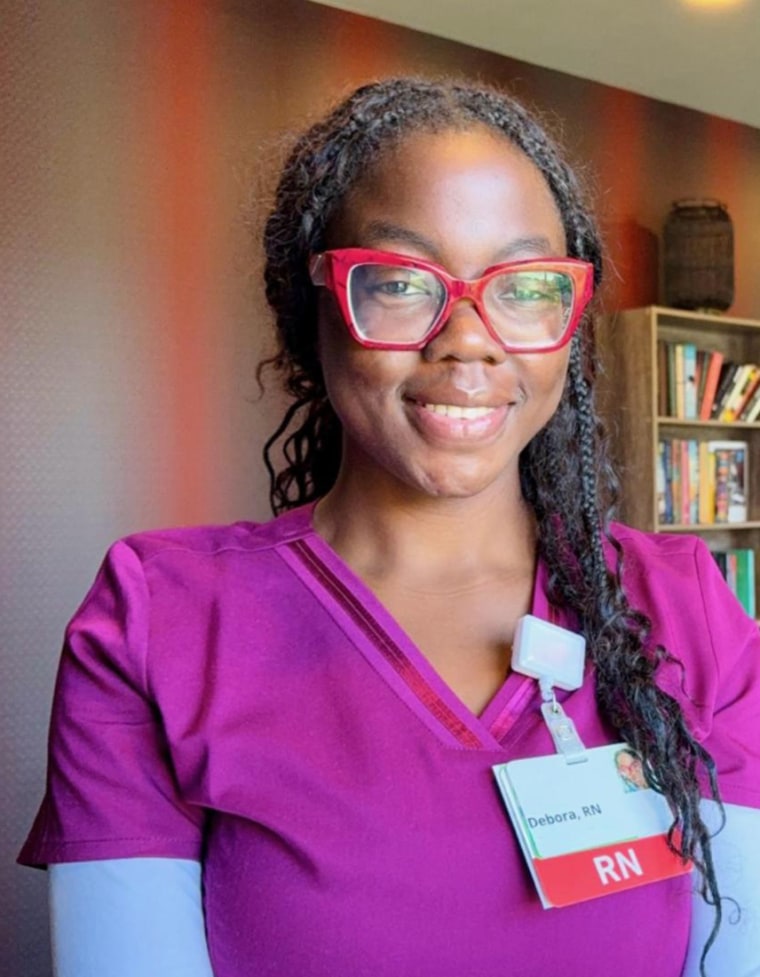
A registered nurse has returned to her family following a week of spirited support from community members and colleagues at Maine Medical Center. They demanded her release from immigration detention. Debora Kapisha, as she expressed in her first statement post-release, feels ‘thankful to be home’ and eagerly anticipates rejoining her co-workers and patients.
Sara English, also a nurse at Maine Medical Center, delivered Kapisha’s message during a Friday morning news conference hosted by National Nurses United and the Maine State Nurses Association. At the conference, Janelle Crowley, a NICU nurse and union leader, stated, ‘We protect each other and we protect our patients. We stood up for Debora.’
Kapisha, originally from Zambia, works as a medical-surgical nurse with dialysis patients at Maine Medical Center. ‘It’s a tough unit to work on,’ noted Kelli Brennan, a registered nurse and co-president of the Maine State Nurses Association, during a phone interview with NBC News. ‘We need her in that area.’
Kapisha is navigating a pending asylum case. According to the union, she was detained by ICE officers on July 30 while traveling through Boston’s Logan International Airport. Though the Department of Homeland Security and ICE did not immediately respond to comment requests, ICE informed WCSH in Portland that Kapisha entered the U.S. legally in 2024 on a five-month visa, which she overstayed.
Brennan emphasized ongoing support, saying, ‘We’re celebrating our victory today, but it’s not the end. We have to keep fighting.’
President of MaineHealth’s Southern Region, Britt Crewse, voiced concerns over her detention, highlighting that she appeared to be living and working legally while her asylum case is unresolved.
Kapisha’s case underscores the impact of immigration enforcement under the Trump administration, particularly as it affects healthcare workers. According to Brennan, an enforcement surge has resulted in increased anxiety and labor shortages at her hospital. This has affected multiple departments, from healthcare to ancillary services, causing deviations from normal roles.
‘People were doing jobs they don’t normally do,’ Brennan remarked. She described scenes where doctors transported patients in hallways due to staffing constraints. ‘Our colleagues were afraid to leave the house. Our patients were afraid to come to appointments.’
These incidents highlight the critical role immigrants play in sustaining healthcare systems, with Crewse noting that enhanced enforcement has left many care team members tense and uncertain.