
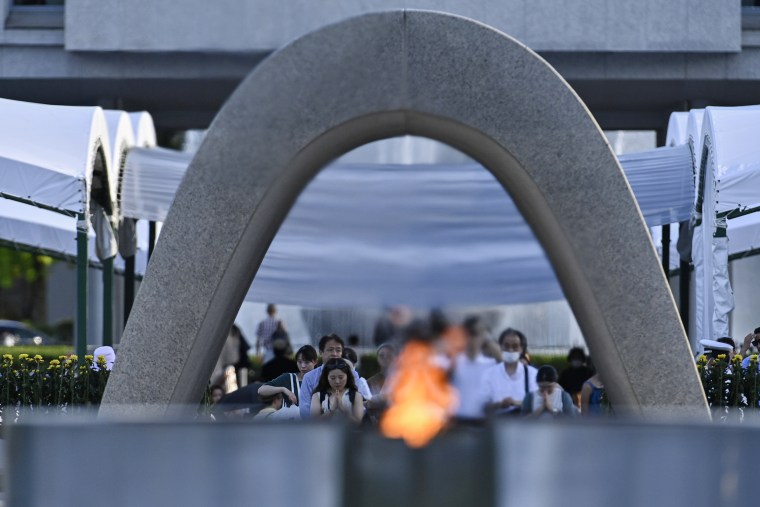
The city of Hiroshima observed the 81st anniversary of the atomic bombing by the United States on Thursday. Mayor Kazumi Matsui used the occasion to criticize global powers for engaging in warfare and called for an end to the justification of nuclear weapons as a deterrent. Matsui emphasized the dangers of minimizing the horror of nuclear arms, warning that it risks creating cycles of violent retaliation that could lead to events like Hiroshima or Nagasaki repeating.
Matsui’s peace declaration at the Hiroshima Peace Memorial Park criticized leaders who view nuclear deterrence as realistic and pointed out that this stance only distances the world from eliminating nuclear weapons. He urged individuals to learn from history and take active steps to prevent future conflicts.
Approximately 50,000 people, including delegates from about 120 countries such as the United States and Iran, attended the ceremony. At 8:15 a.m., the time the atomic bomb was dropped, a minute of silence was observed with the tolling of the peace bell.
“The horror of nuclear weapons is just one lesson of Hiroshima. Another is the need to build a world in which the threat or use of these weapons becomes unthinkable,” said United Nations Secretary-General António Guterres in a written statement.
Japan’s Prime Minister Sanae Takaichi attended the ceremony for the first time in her capacity as prime minister. She advocated for a “realistic approach” regarding nuclear disarmament under the United Nations’ framework. The timing of the ceremony coincides with discussions within her government about potentially reviewing Japan’s postwar non-nuclear principles in upcoming defense policies.
Takaichi has suggested re-evaluating these principles, including whether to allow nuclear weapons entry into Japan. Although Japan still maintains its non-nuclear stance, Takaichi did not confirm long-term dedication to this policy. This stance has caused concern among survivors who are apprehensive about global backing for nuclear weapons as a deterrent. Japan, under the U.S. nuclear umbrella, has continuously sought affirmation from Washington on its commitment to defense, leading to reluctance in signing or observing the Treaty on the Prohibition of Nuclear Weapons.
The bombing on August 6, 1945, led to the devastation of Hiroshima and the loss of 140,000 lives. Nagasaki was bombed three days later with 70,000 casualties. This led to Japan’s surrender on August 15, ending World War II and its expansionist actions in Asia. Currently, survivor numbers have dwindled to about 91,105, with an average age over 86. There is concern about fading memories, especially among younger survivors who do not vividly recall the events.
Hiroshima serves as a testament to resilience and hope, emphasized Guterres, calling for dialogue, cooperation, and collective security to overcome division and conflict.