
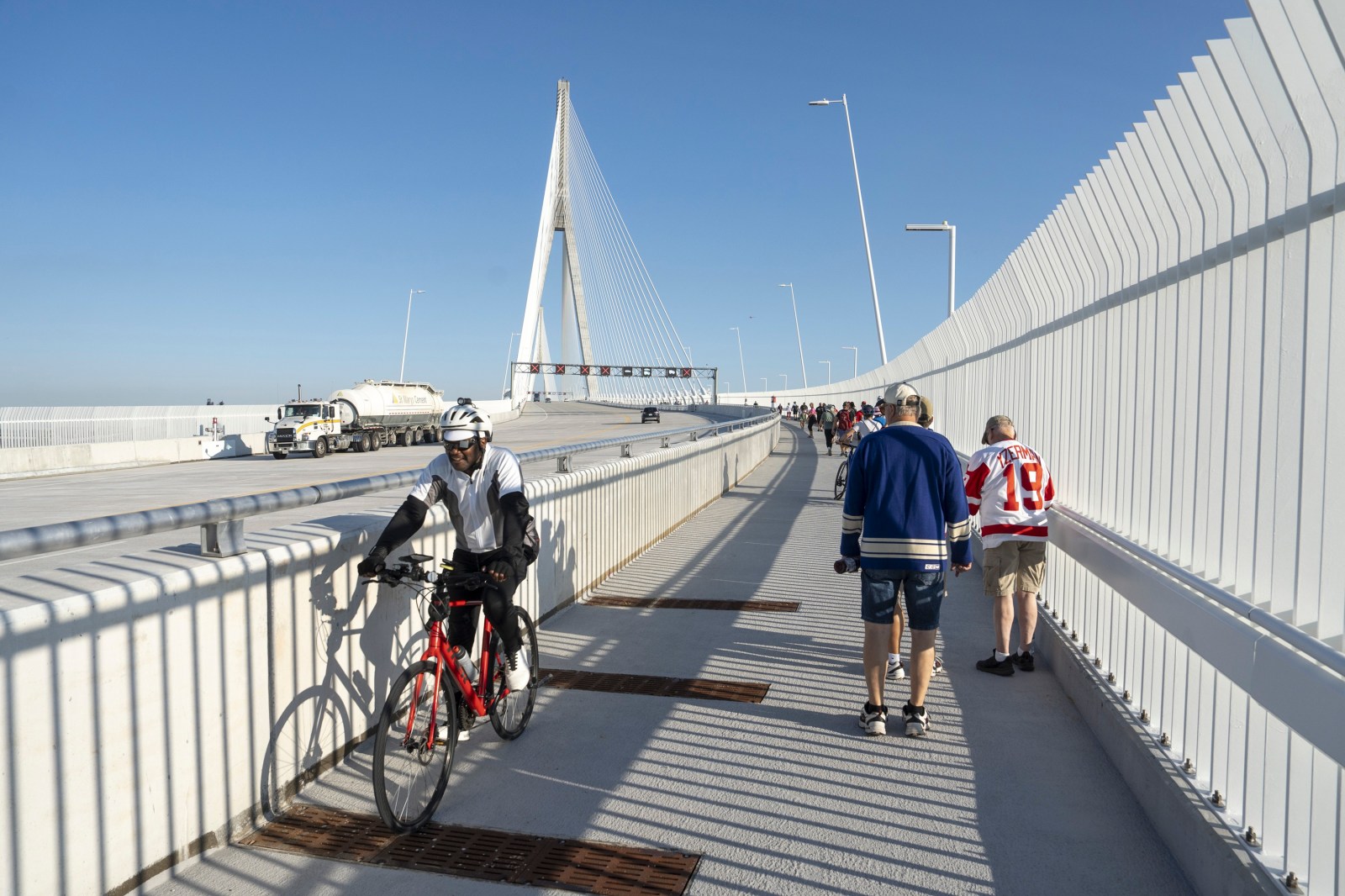
The Gordie Howe International Bridge now offers a new option for walking or cycling between the United States and Canada. This toll-free pathway allows travelers to move between the countries in under an hour. Opened to the public on August 5, it provides access to both pedestrians and cyclists.
The bridge itself opened on July 27. This cable-stayed bridge stands 150 feet above the Detroit River between Detroit, Michigan, and Windsor, Ontario. It holds the title of the longest cable-stayed bridge in North America and ranks tenth globally.
The Windsor-Detroit Bridge Authority (WDBA) promotes the pathway as a significant new connection. Chuck Andary, interim chief executive officer and chief legal officer, emphasized that the path reflects community involvement in the project. He stated that the path’s opening results from collaboration among designers, engineers, and border agencies.
The multiuse path is a significant addition to the Gordie Howe International Bridge, shaped by community input.
The bridge was proposed to enhance trade capacity between Detroit and Windsor, which is a major commercial corridor. Construction began in 2018, and before its completion, trade relied on the Ambassador Bridge and the Detroit-Windsor Tunnel. The new bridge not only boosts trade but also provides a safe route for pedestrians and cyclists.
Controversies Before Opening
The bridge’s opening did not come without political tension. In February 2026, President Donald Trump threatened to prevent the bridge’s opening without compensation for what he saw as unfair treatment by Canada. Trump demanded that the United States be treated with respect and fairness and imposed 50 percent tariffs on certain Canadian goods.
In response, Canadian officials canceled the planned joint ribbon-cutting ceremony. Gregor Robertson’s team stated that moving forward with such an event was unsuitable due to U.S. trade actions.
Using the Pathway
Travelers can plan a crossing: cyclists should expect a journey of about 20 minutes, while walking might take around 45 minutes. These estimates exclude time needed for border processing. The bridge operates from 8 a.m. to 8 p.m., requiring users to carry travel documents for both entry and reentry. Access to the path is free and limited to ensure safety. Visitors should anticipate visiting later in summer or fall to avoid initial crowd limits.
Impact on Tourism and Connections
The pathway is more than just a transport route. Andary describes it as an integral part of a binational trail network. It encourages recreation and tourism, connecting communities and highlighting the Windsor-Detroit region.
Heather Grondin, chief relations officer at the WDBA, noted strong interest from cycling groups, tourism organizations, and locals. She regards the path as a “unique international attraction.” The path fulfilled public desires for a safe, active connection between the cities, linking existing trail networks and enhancing local ties.