
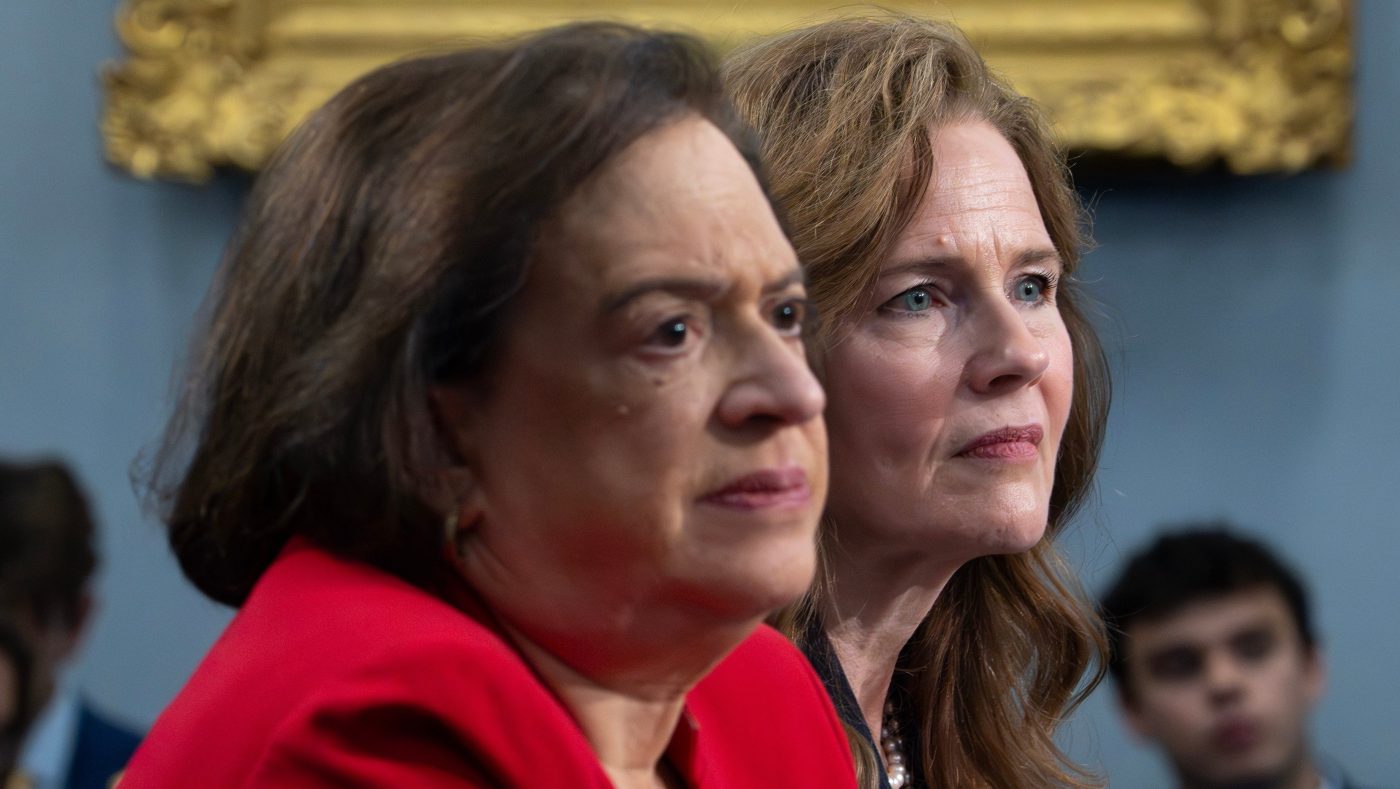
Supreme Court Justices Amy Coney Barrett and Elena Kagan testified at a House Appropriations subcommittee hearing on July 14, 2026, in Washington, as captured by Nathan Howard of AP. This event highlights ongoing debates about the court’s role in politics.
Political scientist Robert Dahl remarked nearly 50 years ago that viewing the Supreme Court solely as a legal body ignores its political influence. He noted that Americans struggle to recognize it as a political institution, making the public simultaneously hold conflicting views.
A recent poll indicates shifting public opinion. Over 50% of Americans disapprove of the court’s performance, with 46% believing in the influence of ideology over law during the Trump administration.
The Supreme Court faces criticism for perceived partisanship. Concerns grow over justices urging the public to overlook their political involvement. Comparisons emerge between the current court and the Taney Court of the 1800s, known for its role in the Dred Scott decision and the subsequent Civil War. Likewise, the 1930s court faced opposition for resisting President Roosevelt’s New Deal, causing a constitutional crisis. Such historical parallels raise concerns about the court’s direction.
On June 29, a decision allowing the president to dismiss members of independent federal agencies sparked criticism. Paul Krugman of Princeton decried it as a detriment to democracy, warning of authoritarian risks.
Senator Sheldon Whitehouse analyzed the Supreme Court’s 2017-2018 term, pointing out the abandonment of traditional judicial principles for perceived partisan victories. The justices express differing views publicly, revealing deep political divides.
Justice Ketanji Brown Jackson, dissenting in a recent Voting Rights Act case, described the decision as politically motivated. Justice Samuel Alito countered by calling her claims unfounded. These exchanges underline intense ideological divides.
The court’s legalization of same-sex marriage in Obergefell v. Hodges prompted Justice Antonin Scalia to criticize the decision as a usurpation of legislative power, indicating deep divisions on pivotal issues.
Despite few Americans reading Supreme Court opinions, clear ideological splits in major cases raise questions about the court’s impartiality. Chief Justice John Roberts claims there are no partisan judges. Justice Neil Gorsuch denies political influence. Justice Amy Coney Barrett affirmed their nonpartisan stance, focusing on following the law.
Yet, the public remains skeptical, questioning the veracity of claims of judicial impartiality. Re-establishing trust in the court requires addressing accusations of hypocrisy and clarifying its role as a political entity.
Austin Sarat is the William Nelson Cromwell Professor of Jurisprudence and Political Science at Amherst College. © 2026 Nexstar Media Inc. All rights reserved. This material is not for reproduction.