
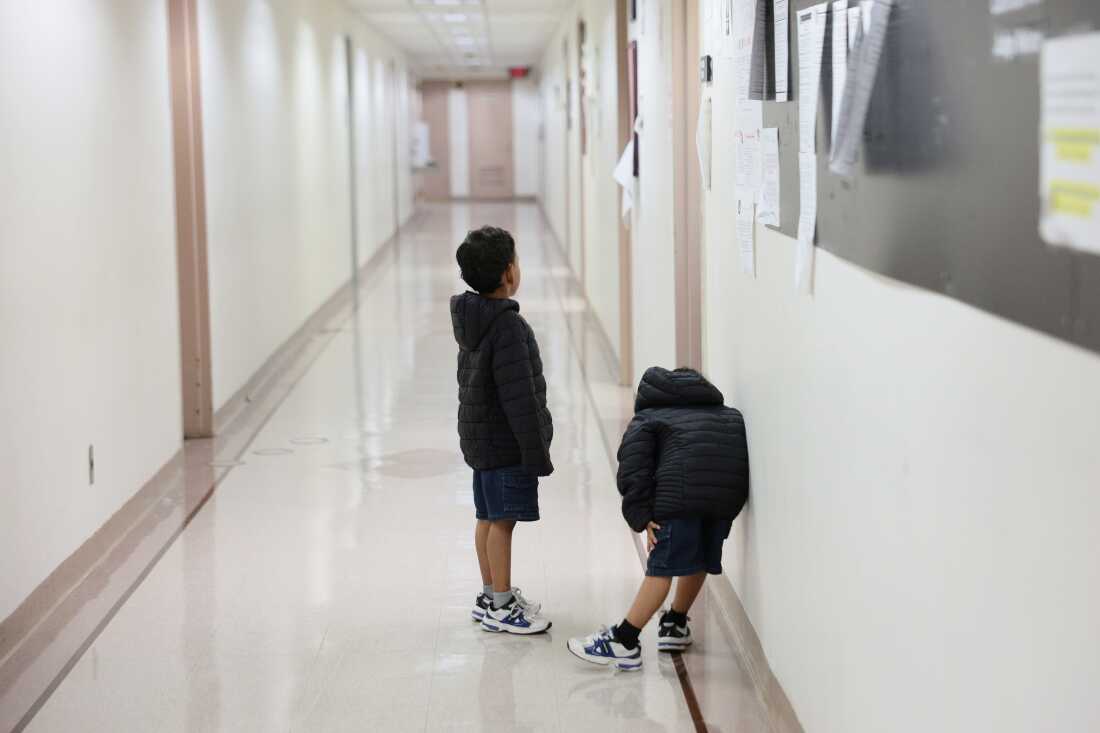
On July 31, 2026, children were seen waiting outside the Jacob K. Javits Federal Building’s immigration court in New York City. Image credit: Michael M. Santiago/Getty Images.
Approximately 26,000 children who entered the United States without parents or guardians might be left without legal representation by Monday, according to their legal advocates. For over two decades, U.S. law has mandated protection for these children to prevent exploitation, abuse, and trafficking.
Once children cross the border unaccompanied, they are usually transferred to the Office of Refugee Resettlement (ORR). Nearly 100 legal groups provide legal services to these children in ORR custody, funded by Congress. In November, ORR ceased payment for these services after legal groups refused to share confidential information about the children, citing attorney-client privilege.
Mickey Donovan from the Immigrant Defenders Law Center emphasized their ethical duty; attorneys cannot abandon cases even without government funding. They plan to represent these children in court, despite the lack of payment.
The Acacia Center for Justice stated that the government is withholding payment to obtain confidential information unjustly. ORR did not renew the contract with the legal network, which expired Friday.
Alexa Sendukas from the Galveston-Houston Immigrant Representation Project noted that children might have to represent themselves in court, significantly increasing their risk of deportation. Unaccompanied children win less than 1% of cases without legal representation.
A group of legal nonprofits filed a $65 million lawsuit to recover owed payments and secure funding for future services. Due to financial strain, some groups like ProBAR laid off staff. Acacia was informed by the federal government about a potential new contract with different providers, but details remain unclear.
About 1,800 children were in ORR custody in June, held for an average of 194 days before release. The 2008 law requires children to be matched with guardians or sponsors swiftly, but delays have concerned legal advocates.
Lawyers have educated children in ORR care on their rights and screened them for eligible legal services. Victims of trafficking or abuse are entitled to special protections, but some services may no longer be provided.