
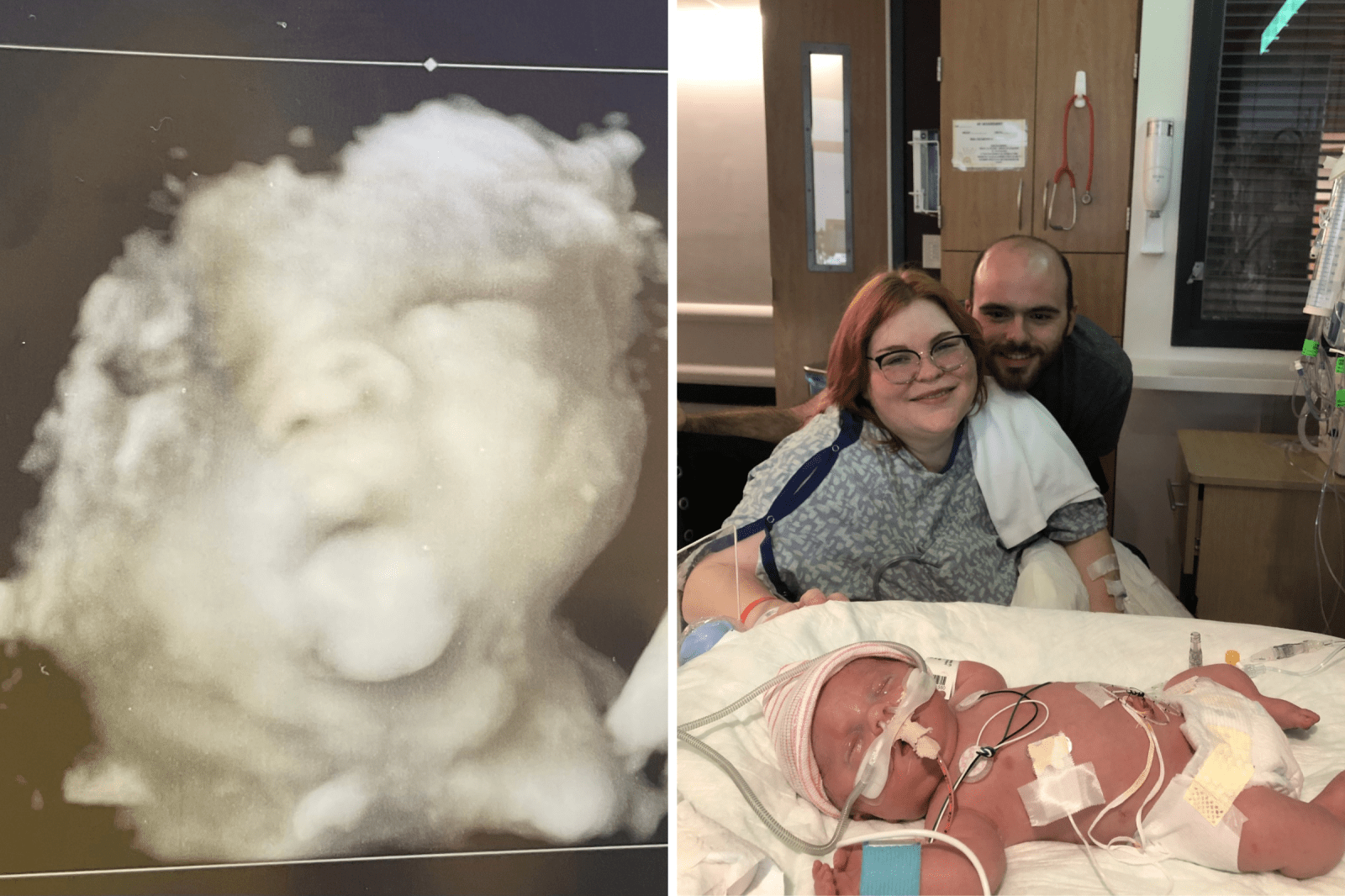
In late 2024, I learned that I was expecting my third child. My first pregnancy ended in heartbreak when my baby died in utero at about 18 weeks. During my third pregnancy, I remained cautious, knowing anything could happen. During the 20-week anatomy scan, they found issues with my baby’s bones. Her limbs were smaller than expected, and her skull resembled a lemon shape.
I asked my OBGYN if it could be osteogenesis imperfecta (OI), suspecting it caused my first baby’s death. He disagreed, suggesting another form of skeletal dysplasia, leading to a referral to a maternal fetal specialist.
The specialist identified fractures and agreed it was likely OI, often known as brittle bone disease. This genetic disorder causes bones to shatter easily. Convinced of a lethal prognosis, the specialist advised termination, leaving me devastated and deeply depressed. In desperation, I turned to prayer and then sought information online.
I connected with families affected by OI, finding stories of resilience and determination. Inspired, I decided to fight for my daughter’s life. I located a maternal fetal specialist committed to saving her. Together, we planned a cesarean, carefully constructed to reduce bone breakage risks.
My daughter, Dani, was born on July 7, 2025, with a unique mutation on the 17th exon of her COL1A2 gene. Immediately, I had to fiercely advocate for her pain relief and treatment in the NICU. She needed oxygen, a feeding tube, and medication for her many fractures.
Geneticists had never seen Dani’s exact mutation and guessed her diagnosis. Initially labeled as type 2 in utero, evidence later suggested type 3. I suspect she might yet be closer to type 4, causing moderate severity with growth challenges.
Family History of OI
OI runs in our family. My first baby and Dani are severely affected, while my great-grandmother also lived with it. I exhibit mild signs, such as joint flexibility and a few fractures, as do my father and grandfather. Carolyn, my 7-year-old, is tall but shares my hyper-mobility and has already experienced fractures.
Dani requires typical baby care, yet in a unique manner due to her fragility. Handling her involves specific methods to prevent injury. At birth, every bone in her body showed signs of prior fractures. Despite this, Dani is a happy baby.
She experiences bone fragility, but also conditions like skull deformities due to Wormian bones. Her scoliosis further complicates potential future mobility. Although Dani faces physical challenges, therapies and adaptive equipment support her development.
When fractures occur, we stabilize them at home. We maintain strict household rules, such as avoiding temperature changes and ensuring nothing falls on Dani.
Despite predictions of a short life, Dani has persevered beyond expectations. Her joyful spirit shines, proving skeptics wrong.
OI awareness is growing, yet misconceptions and lack of understanding persist. To parents in similar situations, I encourage relying on informed decisions over potentially inaccurate statistics.
My faith journey transformed during this time. I found strength in prayer and am committed to raising awareness for OI, documenting Dani’s journey to educate others.