
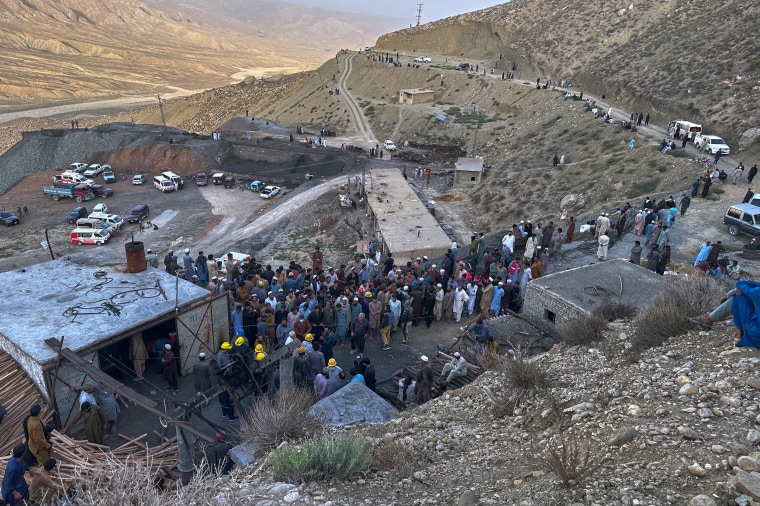
An explosion inside a coal mine in southwest Pakistan resulted in the deaths of at least 32 miners on Thursday. Ten others remain trapped underground in conditions that authorities describe as life-threatening. The incident unfolded near Quetta, the capital of Baluchistan province, due to what officials attribute to a buildup of methane gas, according to government mine inspector Ghani Baloch.
Rescue operations are underway as teams work to locate and recover the remaining trapped individuals. The bodies of seven miners were initially recovered hours after the explosion, followed by the discovery of 25 more victims. Authorities, including the provincial disaster management agency, continue their efforts to ensure all miners are found.
Baloch expressed concern about the increasing death toll, noting the challenges faced by rescuers working under precarious conditions. Methane gas explosions significantly reduce oxygen levels, diminishing hopes of finding survivors and necessitating careful rescue operations.
Families of the deceased are being informed and are in the process of receiving the bodies for burial. Relatives of those unaccounted for remain anxious as the situation unfolds.
Baluchistan’s Minister for Mines and Minerals, Shoaib Nosherwani, acknowledged the difficult circumstances faced by rescue teams. He conveyed condolences to the victims’ families and announced that the provincial government would award compensation of 500,000 Pakistani rupees (about $1,800) to the family of each deceased miner. Nosherwani also pledged a comprehensive investigation into the explosion and a review of safety measures within the mining sector.
The Pakistan Central Mines Labour Federation, a coal miners’ labor union, has raised concerns over possible negligence leading to the incident. The union has urged the government to enforce strict safety regulations and hold accountable those violating mine safety laws.
Accidents are frequent in Pakistan’s coal mining industry, particularly in Baluchistan. Many mines in the region lack essential safety features such as proper ventilation and gas monitoring systems. Labor groups accuse mine owners of neglecting safety standards and failing to provide miners with adequate protective equipment.
Despite the inherent risks, thousands of workers rely on the coal industry in Baluchistan, Pakistan’s largest yet least developed province. The region faces high levels of unemployment and poverty, making mining an essential, albeit dangerous, source of livelihood.