
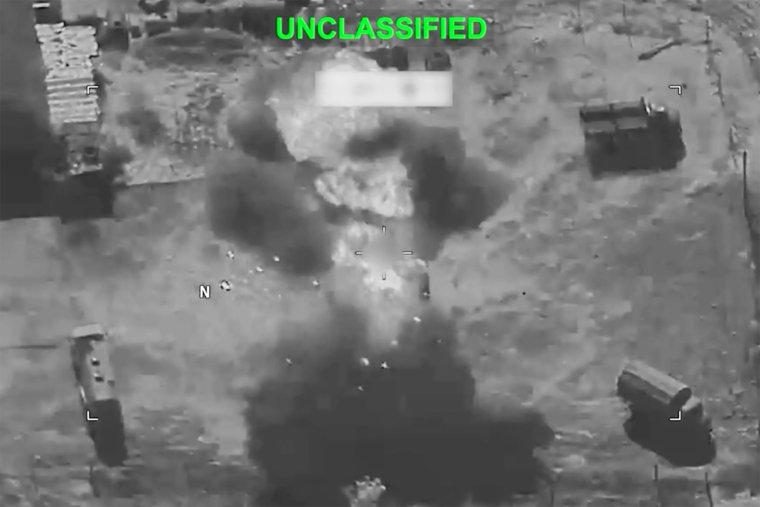
On Thursday, Iran announced its intent to retaliate against the United States. This came after the U.S. military confirmed a “heavy wave of strikes” as a response to Tehran’s prior attack on American forces in the Middle East.
The escalation disrupted a temporary calm during which attempts were made to revive diplomatic relations. U.S. President Donald Trump stated the U.S. would respond decisively following an Iranian attack on a U.S. base in Jordan. The Revolutionary Guard Corps of Iran warned of continued hostilities, declaring early Thursday that “the aggressor will be punished today” following the U.S. military actions.
Jordan reported intercepting new Iranian attacks, while Kuwait disclosed that an Iranian strike hit a building belonging to a Chinese firm, resulting in one casualty.
Impact on Regional Stability
There are indications of the conflict widening, which could affect regional stability and the global economy. After Saudi Arabia joined U.S. efforts against Iran-backed militants, Egypt reported that a drone attack started fires on two natural gas vessels in the port of Damietta. The identity of the drone attackers remains unclear, but an Iranian attack here would significantly expand the conflict, involving a crucial U.S. ally and mediator. This incident underscores the potential threat to global energy supplies due to the ongoing conflict.
When questioned about the attacker, President Trump commented in a general sense, stating, “it’s a little more of the same.” He assured that retaliatory measures would ensue, mentioning, “we’re going to be hitting them very hard because it’s our turn.” According to Fox News, Trump used explicit language, emphasizing a forceful stance against Iran following their attack on U.S. forces earlier in the week.
The U.S. Military Response
Hours later, the U.S. Central Command, or CENTCOM, announced on social media that it had completed extensive strikes against Iran. This response targeted key Revolutionary Guard Corps facilities, including command centers, missile and drone sites, coastal defenses, and maritime capabilities. These locations were struck over a two-hour period, affecting various cities across Iran.
Reports from Iran’s state-owned IRIB news agency confirmed casualties, including a toddler, in Qeshm, an island in the Strait of Hormuz, a critical point in the conflict and a central issue in peace discussions.
Consequences for Global Oil Trade
The Strait of Hormuz is crucial as it previously facilitated 20% of the world’s oil trade. However, recent attacks have hampered shipping activities through this and the Bab el-Mandeb Strait. As negotiations continue to collapse into reciprocal strikes, oil prices have experienced volatility, with Brent crude reaching approximately $90 a barrel.
Recent traffic analysis of tanker routes revealed that a Qatar-managed LNG tanker, Al Areesh, successfully traveled from the Persian Gulf into the Gulf of Oman, navigating through routes administered by Iran. This marks the first successful transit of a Qatari-linked LNG tanker since a missile strike in early July. The Fars news agency reported that Iran permitted this travel. Concurrently, four additional ships traversed Iranian routes, including two Emirati-managed asphalt tankers and another LNG tanker, with around 59 tankers and cargo vessels passing through Bab el-Mandeb in about 24 hours.