
Users of T-Mobile and Verizon across the U.S. experienced phone service outages on Monday afternoon. Many users received SOS messages, indicating a loss of service. By 8:40 p.m. ET, reports of outages had decreased to fewer than 7,000, a significant drop from over 60,000 reports earlier at 5:06 p.m. ET for T-Mobile, recorded on DownDetector.
Trouble Spots and Carrier Responses
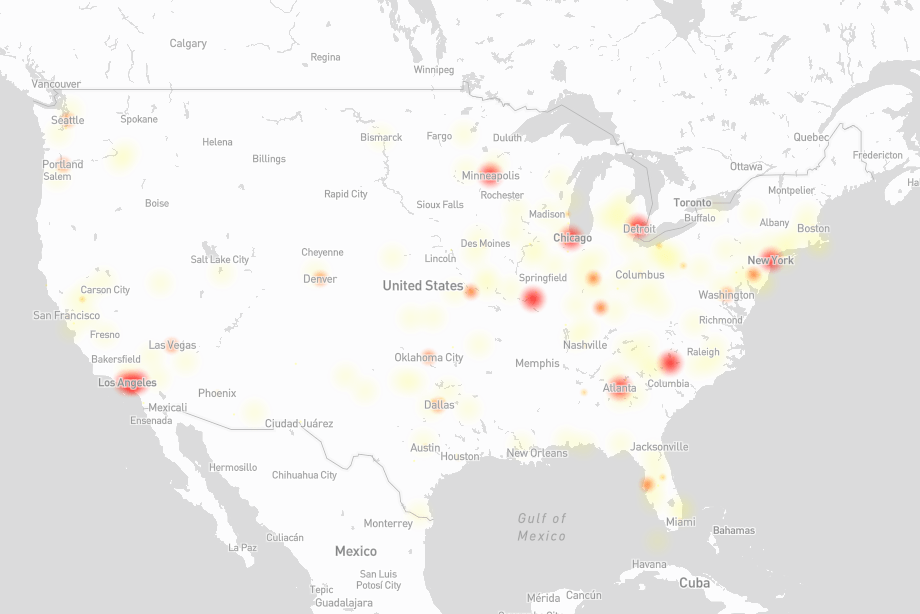
A heat map showed the highest concentration of complaints coming from cities such as New York City, Columbia in South Carolina, Springfield in Ohio, Chicago, Detroit, and Minneapolis. Verizon users also reported problems but at a lower volume than T-Mobile, according to DownDetector data. Verizon assured in a statement, “Our network is operating normally nationwide.” They suggested difficulties in reaching someone could relate to the T-Mobile outage.
AT&T users also noted issues, though the number of reports dwindled quickly. T-Mobile stated on X, “Our teams are actively working on the reports of technical challenges impacting some customers. Any service impacts are in the process of being resolved and are our highest priority.” Newsweek sought comments from T-Mobile and Verizon without receiving responses before publication.
Understanding the “SOS” Message on Phones
When an iPhone shows “SOS” or “SOS Only,” it indicates the phone isn’t connected to its regular network but can make emergency calls via another carrier. This feature allows for emergency calls such as 911 even without typical service. Such alerts can arise due to poor reception, carrier outages, SIM card issues, or network setting problems. In SOS mode, regular calls, texts, and mobile data usually remain inactive until the phone reconnects to its network.
Tracking Outages: T-Mobile and Verizon Maps
DownDetector maps indicated areas with significant outages. Users reported problems in various cities including Seattle, West Sacramento, Irvine, Albuquerque, Orlando, and St. Louis. DownDetector highlights incidents when complaint volumes exceed usual levels, suggesting possible service interruptions.
For Verizon, report maps showed clusters of complaints over the past 24 hours. Reports were scattered, with disruptions noted throughout the day. DownDetector only flags incidents when complaints significantly surpass normal levels for that timeframe.
Expert Analysis
Roger Entner, an analyst at Recon Analytics, noted that a nationwide disruption often signifies a core network issue. “Everything else would be a localized outage, likely caused by an upgrade affecting the network,” he explained. Entner mentioned that T-Mobile’s engineers likely spent the first 10-15 minutes in a triage window to identify changes and prevent further spread before rolling back modifications.
Entner added that distinguishing between a localized outage and a core network issue can be challenging for consumers, as the result is similar: lack of network connection. “While infrequent, such outages occur to every carrier eventually,” he stated. “Every carrier has infrequent outages, happening every few years but they are uncommon.”