
The Austin neighborhood of Chicago often features in media through grim statistics like homicide rates, crime maps, and poverty metrics, painting a picture of despair. These challenges are real, yet another side exists — a side led by community spirit and collective efforts. Neighbors connect, turning vacant lots into gardens, youths find mentorship, and residents dedicate time to improving their surroundings. This version of Austin is what Rev. Dollie Sherman has worked tirelessly to build.
Sherman has lived in Chicago’s West Side for nearly half a century. Her initiatives, starting with summer cookouts and school supply drives, evolved into the Vessels Unto Honor block club. For over a decade, this grassroots group has focused on beautification, youth engagement, and resident support. “The block club has helped turn our block into a community,” Sherman remarked. “We’re not just waiting for somebody else to come along; we’re building it ourselves.”
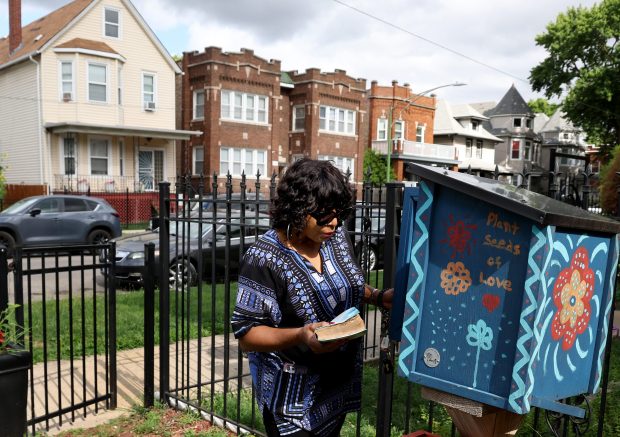
Sherman’s leadership is part of a broader movement in Chicago, where residents and local organizations confront challenges that the government has yet to address. Linda Williams, for example, diligently arranges books in a free library box on the 600 block of North Lorel Avenue, helping to foster community engagement.
This commitment was evident over Memorial Day weekend, when residents gathered for the Center for Poverty Solutions’ first community job fair. Eleven employers conducted interviews, collected résumés, and offered connections to employment opportunities. Importantly, this event enabled more than a few individuals to rediscover pathways to employment and self-worth.
The impact was significant; dozens received job offers, and many secured interviews for full-time positions. More importantly, the fair reinforced the notion that with proper opportunities, residents can thrive, contributing to and shaping their own futures. Sherman emphasized the importance of engaging youth in activities, which can significantly reduce crime and vandalism.
Employment offers more than income. It provides stability, purpose, and dignity. Statistics show that 97% of Chicagoans with full-time employment live above the poverty line, and 80% of part-time workers do the same. In contrast, the figure drops to 68% for those without work. Employment strengthens family units, offers young people hope for a better future, and reinforces community bonds.
Sherman’s efforts assist homeless youth facing unstable housing and limited opportunities, guiding them toward viable work options. “Many of these youth are homeless,” Sherman noted. “After working here, they leave with something tangible, restoring their self-esteem.”
Although a single job fair cannot solve decades of poverty or eradicate violence, connecting even one resident to a career opportunity propels the neighborhood towards self-sufficiency. Every youth choosing employment over illicit paths marks a triumph, significantly hindering the temptation of crime.
Sherman’s understanding preceded the Center for Poverty Solutions’ arrival on Lorel Avenue. This lesson should not be lost on policymakers, philanthropists, and community leaders. Poverty reduction and safety enhancement are intertwined missions. Creating pathways to work revitalizes hope, one block at a time. Hope remains an influential force in transforming neighborhoods.
Eddie Kornegay, Ph.D., is Executive Director of the Center for Poverty Solutions, an Illinois Policy Institute initiative.
Submit a letter, of no more than 400 words, to the editor here or email [email protected].