
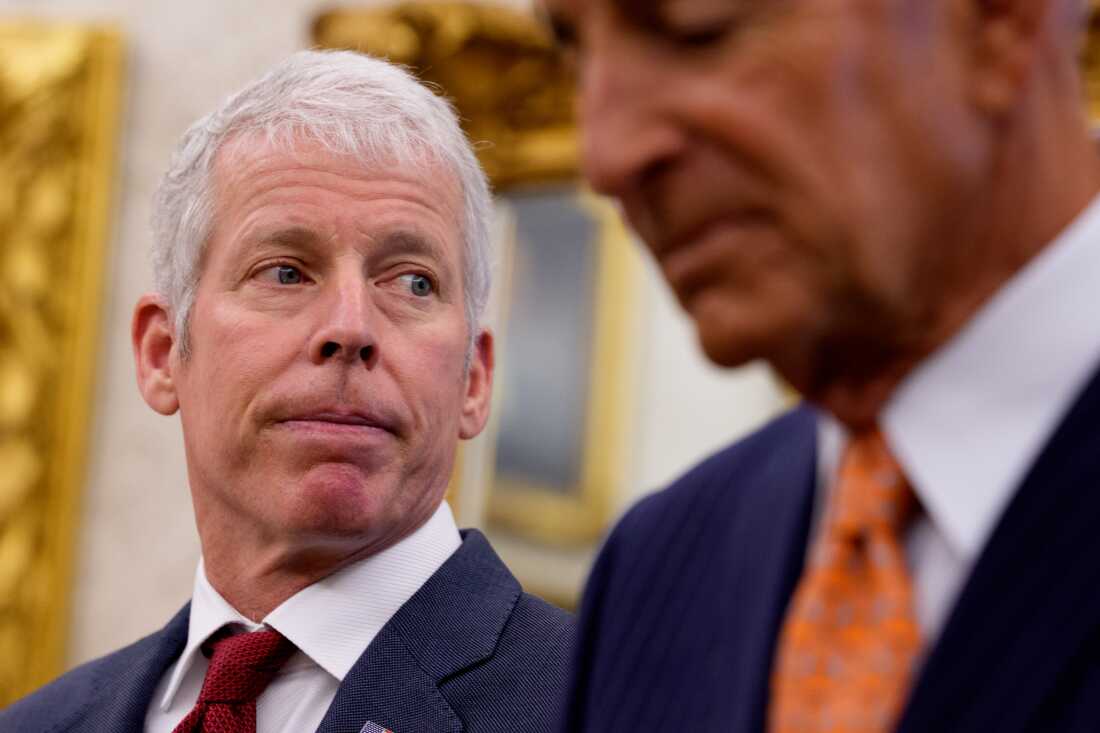
The Trump administration has recently entered into a nuclear cooperation agreement with Saudi Arabia. This agreement permits American companies to operate commercial nuclear power plants within Saudi territory. The arrangement was formalized by Energy Secretary Chris Wright and Saudi Arabia’s energy minister, Prince Abdulaziz bin Salman, according to an announcement by the Department of Energy.
Accompanying the nuclear cooperation agreement, an additional document on safeguards was signed between the two parties. Congressional review of the deal is required, with a period of 90 days allocated for this consideration.
The agreement grants American corporations priority access to the Saudi nuclear energy landscape. This encompasses the provision of nuclear reactors and fuel. As outlined in an administration memo viewed by NPR, the deal is projected to endure for decades, with a financial implication in the billions. These agreements are seen as reinforcing U.S.-Saudi commercial relations, promising economic prosperity domestically and security internationally.
Wright emphasized that the agreements uphold the highest standards of nuclear safety and nonproliferation, leveraging the world’s leading nuclear technology and scientific expertise, originating from the United States.
Despite these assurances, concerns persist regarding the agreement’s omission of the “gold standard” provisions. These provisions would prevent the kingdom from enriching uranium and reprocessing fuel, along with requiring more thorough oversight by the International Atomic Energy Agency. Saudi Crown Prince Mohammed bin Salman has previously stated that if Iran develops nuclear weaponry, Saudi Arabia would pursue similar capabilities.
Rep. Brad Sherman, D-Calif., expressed caution, suggesting Congressional approval should only follow the inclusion of gold-standard safeguards similar to the U.A.E. agreement. He highlighted the paradox of a President campaigning against nuclear proliferation in the Middle East, yet facilitating it due to potential profit for U.S. companies.
The administration’s memo insists that the U.S. does not endorse Saudi nuclear weapons development, confining the agreement to peaceful nuclear energy cooperation. Nonproliferation stipulations are embedded in accordance with the Atomic Energy Act. Nonetheless, the memo clarifies the U.S. is not obligated to transfer any nuclear fuel cycle capabilities or technologies.
Nuclear proliferation expert Matthew Bunn from Harvard’s Kennedy School speculated that the Saudi agreement may hamper efforts to forge a reasonable accord with Iran. He suggested that without Saudi commitment to intrusive inspections, Iran could be deterred from consenting to similar terms within any nuclear agreement.