
A federal judge dismissed the Trump administration’s lawsuit against Minnesota’s sanctuary immigration policies, marking a notable defeat for the administration. The ruling determined that the state cannot be forced to aid in federal immigration enforcement.
Supremacy Clause Debate
The lawsuit focused on whether the Trump administration could leverage the Supremacy Clause to invalidate Minnesota’s sanctuary laws. These policies prevent local authorities from solely detaining immigrants on ICE requests, limit participation in federal immigration enforcement, and restrict sharing driver’s license and immigration-related information with ICE.
The Justice Department argued that these restrictions obstructed ICE operations. However, Chief U.S. District Judge Eric Tostrud countered that states have the constitutional right to decide their officials’ role in immigration enforcement.
Judge Tostrud’s Opinion
In a detailed 56-page opinion, Tostrud dismissed every claim brought by the Justice Department against Minnesota, Minneapolis, St. Paul, and Hennepin County. He clarified that the laws in question govern only state and local officials, not federal entities.
They don’t direct the federal government or its representatives to act. They don’t prevent the federal government from taking action. They don’t influence how the federal government or its representatives carry out their duties,” Tostrud wrote.
The ruling poses challenges to the Trump administration’s broader effort to halt sanctuary policies nationally by asserting they unlawfully hinder federal immigration enforcement.
Conflicting Opinions
Eric Wessan from the Iowa Solicitor General’s Office voiced concerns that Tostrud’s decision contradicts a previous Eighth Circuit ruling. That earlier decision supposedly supports the federal government’s capacity to challenge state laws that interfere with federal immigration enforcement.
Wessan noted, “States across the nation have enacted laws regarding state immigration offenses. The Eighth Circuit found one such law obstructed federal immigration enforcement, warranting preemption.”
DOJ Arguments and Tenth Amendment
The Justice Department contended that Minnesota’s laws and local regulations conflicted with federal immigration statutes. They argued these restrictions affected local officers’ ability to uphold ICE detainers, restrict information sharing with the federal government, and prevent participation in immigration enforcement.
Tostrud concluded this argument would conflict with the Tenth Amendment’s anti-commandeering doctrine. He emphasized Congress cannot command states to employ their personnel and resources in executing federal regulatory programs.
“The framers specifically designed a Constitution that confers Congress the authority to regulate individuals, not States,” Tostrud stated, explaining the federal government “cannot direct State officers to enforce federal regulations.”
Voluntary Cooperation and Obstruction Concerns
Wessan acknowledged states aren’t mandated to support federal efforts. However, he suggested the critical legal question is whether states can restrict voluntary cooperation.
“States can choose not to aid federal immigration law enforcement, but whether they can ban cooperation when desired by specific actors may depend on state laws,” Wessan mentioned.
Tostrud dismissed one of the administration’s core arguments, asserting Minnesota’s non-cooperation with ICE didn’t equate to obstruction of federal enforcement.
“Not assisting isn’t synonymous with hindrance,” Tostrud wrote.
Immigration Concerns and Sanctuary Policy Defense
Wessan emphasized the larger immigration issue, suggesting Minnesota should appreciate federal assistance addressing the illegal immigration crisis.
Minnesota officials defended their sanctuary policies, asserting they encourage undocumented immigrants to aid local law enforcement without fearing exposure to immigration enforcement.
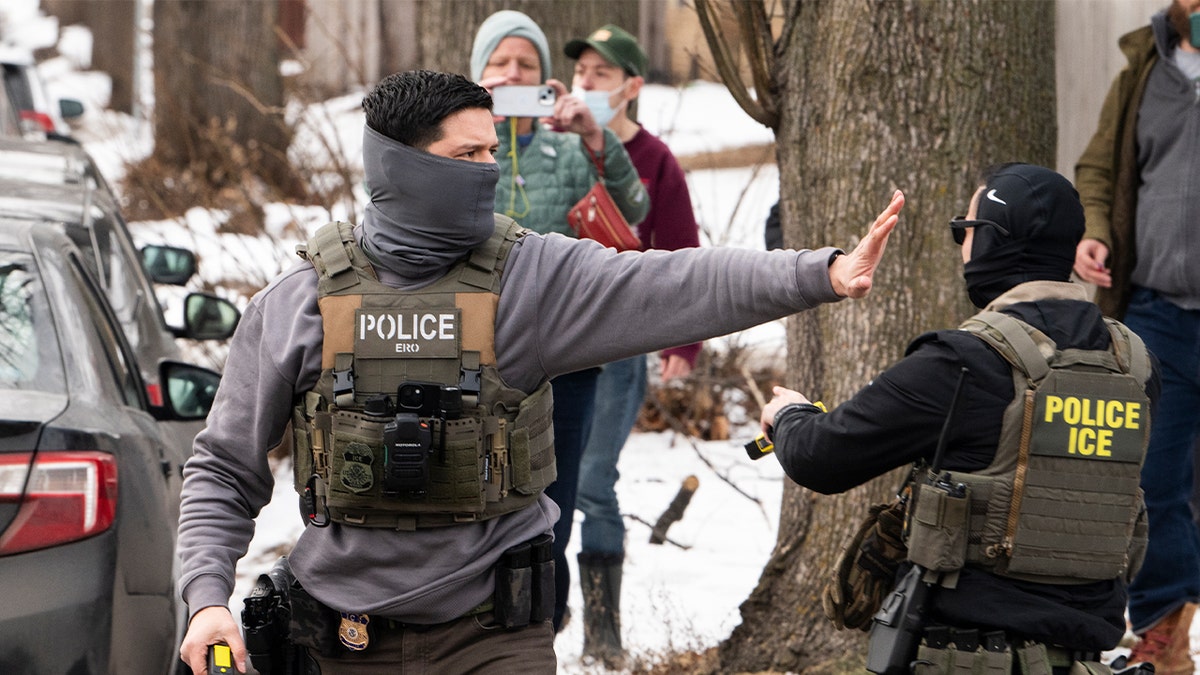
The legal battle follows increased immigration enforcement in Minnesota, sparked by Operation Metro Surge. This large-scale ICE initiative drew national attention and protests, significantly raising the federal law enforcement presence statewide.
Operational Changes and Local Cooperation
The operation gained momentum post the fatal shootings of U.S. citizens Renee Good and Alex Pretti by federal agents, prompting scrutiny of Minnesota’s immigration policies. President Donald Trump responded by removing then-Homeland Security Secretary Kristi Noem from overseeing this operation.
Tom Homan, stepping in as the border czar, argued that reducing federal operations’ necessity hinges on local cooperation with federal immigration authorities.
“Collaborating with local authorities, particularly in jails and prisons, provides federal agents better access to undocumented individuals,” Homan said, suggesting this cooperation might lead to fewer agents on Minnesota streets.
The Trump administration continues challenging sanctuary policies in other states following Monday’s ruling.
Fox News Digital sought comments from the White House and the Justice Department regarding this legal decision.