
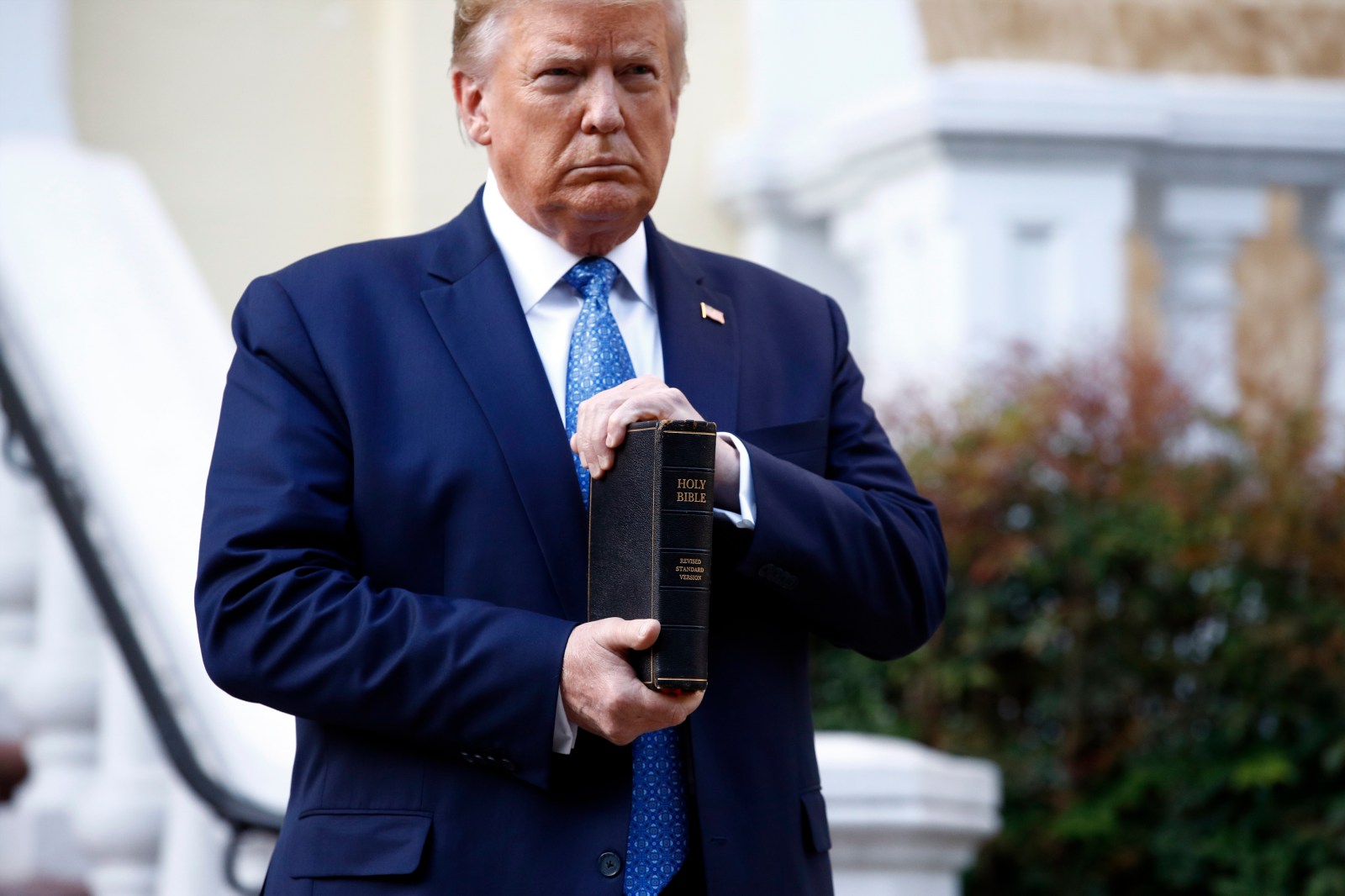
President Donald Trump has issued a stark warning to Iran over its actions in the Strait of Hormuz. He declared that for each missile, rocket, or drone Iran launches at a ship, the United States will target and bomb an Iranian bridge or power plant. This approach, resembling a biblical eye-for-an-eye policy, evidences Trump’s known preference for straightforward policies that can be explained without complex analysis.
In a recent post on Truth Social, Trump specified that any attack by Iran on ships in the Strait would result in U.S. retaliation on infrastructure, even in Tehran. This message resonates clearly with his followers and aligns with his trade agenda’s similar moralistic, tit-for-tat approach.
Such strategic language surfaced previously, notably after the U.S. eliminated Iranian General Qassem Soleimani in 2020 when Trump indicated that 52 Iranian targets were identified in response to the 1979 hostage crisis. Likewise, in 2019, Trump refrained from a military strike that could result in disproportionate casualties following Iran’s downing of a U.S. drone.
“Harm for harm! Injury for injury!”
However, the significance of the Strait of Hormuz transcends symbolic punishments. As a critical passageway, approximately 20 million barrels of oil per day, or around 20% of global petroleum consumption, pass through the strait. Disruptions could lead to severe economic repercussions, according to the U.S. Energy Information Administration.
U.S. Central Command reported recent attacks on over 30 commercial vessels by Iran over three months, posing a hazard to mariners and threatening navigation freedom. The deterrent logic seems evident but hinges on Tehran’s belief in several factors: that Trump would uphold his threat, that Washington can manage any resultant escalation, and whether Iran perceives the damage as outweighing the propaganda benefit of absorbing a U.S. strike.
The challenge is that a literal eye-for-an-eye approach to geopolitics cannot secure the critical economic lifeline that is the Strait of Hormuz. While the threat scheme may force Iran to reconsider its choices, it risks escalating tensions further, transforming a simple doctrine into a complicated cycle of threats and potential catastrophe.