
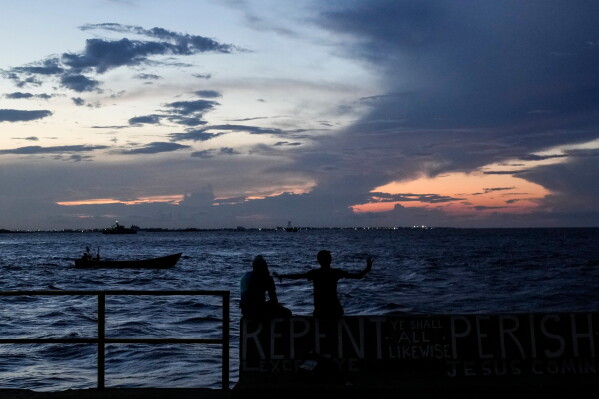
Tropical Storm Bertha made landfall on the southern tip of Louisiana on Wednesday. It brought strong winds far from its center, leading to the closure of beaches from the Florida Panhandle to Mississippi.
The National Hurricane Center, based in Miami, reported Bertha’s landfall in St. Bernard Parish, approximately 40 miles east of New Orleans and 45 miles southwest of Biloxi, Mississippi. The primary threats posed by the storm were wind and storm surge, affecting Deep South states.
Along the coast, parks and piers closed, as did some low-lying roads. A tropical storm warning extended from the Alabama-Florida border to Louisiana. This included New Orleans and Lake Pontchartrain, according to the National Hurricane Center.
Bertha’s tropical storm force winds spread over 100 miles from its center. A storm surge of up to 3 feet was possible in Louisiana, with forecasts of heavy rain in some areas. Rainfall was expected to total between 2 to 4 inches, with higher amounts in isolated places.
“Bertha’s wind bands are more crucial than the landfall itself,” said Robbie Berg, a warning coordination meteorologist with the National Hurricane Center, in an AP interview.
As it proceeded toward Texas, Bertha continued to lose strength. Earlier, the storm passed the Florida Panhandle, as well as parts of Alabama and Mississippi, with maximum sustained winds around 45 mph at landfall.
This week in the U.S., storms brought tornado reports from Cincinnati to New Jersey. Heavy rains led to flash floods on Tuesday night, affecting homes, washing out bridges, and prompting water rescues in West Virginia.
Authorities in Mississippi, Louisiana, and Florida opened sandbag distribution sites to aid residents affected by Tropical Storm Bertha. Double-red flag warnings were issued on some beaches, closing them to swimmers.
According to Candice Henderson, manager of the Crab Trap, a beachfront restaurant on Pensacola, Florida’s Perdido Key, locals viewed it as just another storm. During rainy vacations, visitors often opt to shop or dine out.
Bertha, the second tropical storm of the Atlantic hurricane season, follows Tropical Storm Arthur, which delivered heavy rainfall to the southeastern U.S. Coastal areas of Mississippi are still recovering from flooding caused by Arthur, which damaged homes. In the Pacific, Hurricane Fausto remained distant from land.
Hurricane Fausto was situated hundreds of miles west-southwest of the southern tip of Baja California. It had maximum sustained winds of 80 mph and was expected to gradually strengthen. The hurricane center cautioned that Fausto’s ocean swells could create life-threatening surf and rip tide conditions along the Baja California coast.
Associated Press journalists Julie Walker in New York and Kim Chandler in Montgomery, Alabama, contributed to this report.