
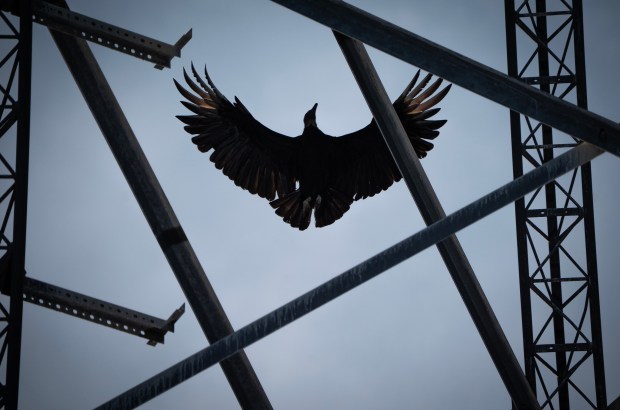
In rural southern Illinois, black vultures were once strangers but have now become a common sight. Seen gliding over country roads and cattle farms, they pose a significant concern for local farmers. Roadkill offers them an easy meal, but they also prey on newborn calves, causing distress among those in agriculture.
Patty Zettle, a 62-year-old farmer, recalls her tragic experience from the previous year. A calf, newly born to one of her cows, Black Ruby, was found brutally attacked. Missing eyes and torn flesh suggested a vulture attack. The incident not only devastated Zettle emotionally but also represented a financial loss of about $2,000, significant in a small-scale cow-calf operation.
“That’s my effigy,” Zettle stated, pointing to a makeshift vulture effigy she had constructed. These birds dislike effigies, making them a useful deterrent.
Zettle’s farm covers 70 acres in northeastern Williamson County, Illinois. She began her farming venture with two cows but now maintains a diverse group of 19 cows, along with chickens, goats, a horse, and a rooster. Awareness of the vulture threat keeps her vigilant. Farmers differentiate black vultures from the native turkey vultures by their stockier build and unique wing-tip markings, a useful clue for farmers like Zettle.
Due to the black vultures’ protected status under federal law, Zettle needed a permit to kill them. The Illinois Farm Bureau started issuing these permits in 2021 after mounting reports of attacks. The permit allows Zettle to take action against three vultures each year. The fear of another calf lost to vultures looms, impacting her financial stability and prompting her readiness to act.
Zettle recounted a recent encounter. Watching her herd closely with three pregnancies nearing delivery, she noticed vultures circling above. These birds often circle in anticipation, understood by Zettle as stalking.
Formerly a rural postal carrier for over two decades, Zettle used her route to observe vultures. The birds’ menace became evident through witnessing their feeding frenzies. Now, running her farm with her fiancé Robert Willmore, she faces the challenge head-on, hoping their methods deter future attacks.
Eleven miles south of Zettle’s farm, black vultures gather on towers in Crab Orchard, claiming this new territory. The abundant food supply and changing climate have contributed to their growing presence. Wildlife biologist Michel Kohl highlights that although vultures are unseemly, they play an essential role in the ecosystem by consuming carrion efficiently.
Despite their ecological importance, the challenge remains: managing vulture-induced conflicts on farms. Strategies to prevent such conflicts need development as vultures expand northward. Understanding their behavior is key to determining effective deterrence measures.
For now, Zettle uses a laser focus on daily operations. Taking advantage of a unique find, a dead black vulture on her mail route, Zettle seized the opportunity to replace her effigy with a real vulture carcass. By deploying it strategically in a tree, she hopes the sight will fend off others. Mounted carefully in her farm’s landscape, the dead vulture becomes a new guardian, an advantageous visual signal to other vultures in the area.
Through collaboration with her fiancé, Zettle remains proactive. Her familiarity with rural life in southern Illinois has equipped her to adapt, understanding that climate change may bring more southern species northwards. With growing temperatures, she continues to watch over her farm vigilantly, taking measured steps to protect her livelihood.