
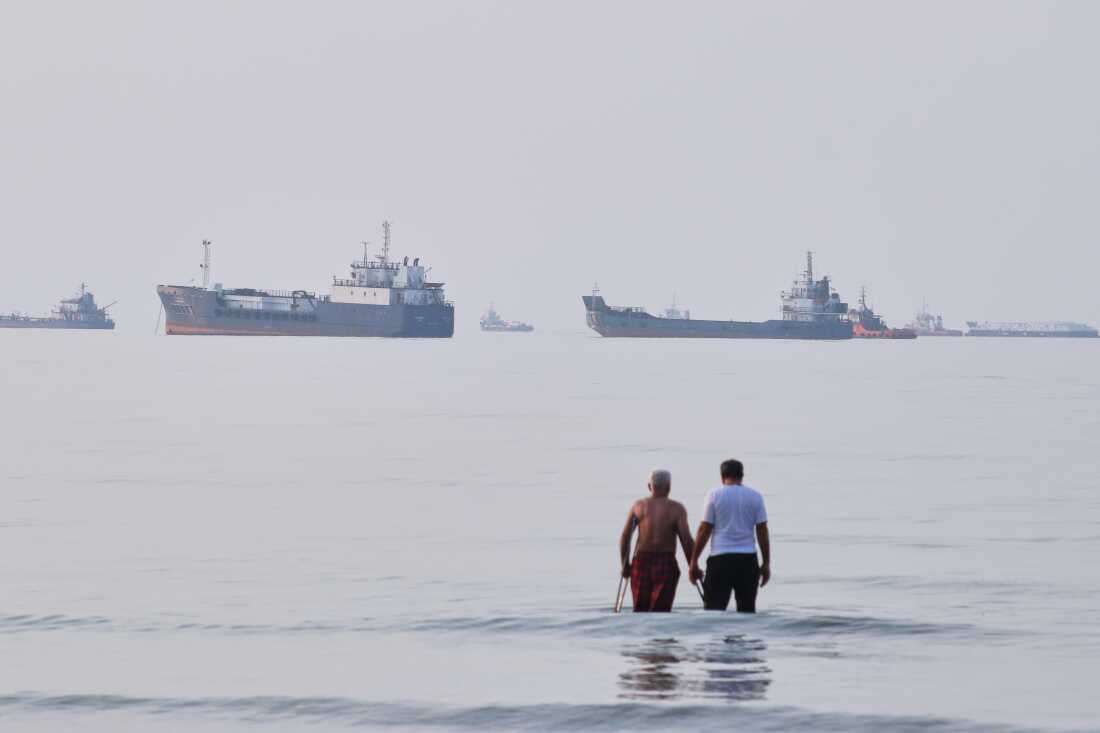
Amid escalating tensions between the United States and Iran, the Strait of Hormuz remains a focal point of conflict. The U.S. and Iran continue exchanging strikes, targeting infrastructure and military facilities. This conflict has been ongoing for more than four months, with no foreseeable resolution after the collapse of an interim ceasefire.
U.S. Central Command reported that strikes targeted surveillance sites, military logistics, underground weapons storage, and maritime assets. Kuwait intercepted Iranian missiles and drones, while Iraq shot down drones over Irbil. Jordan’s air defense responded to Iranian missiles, and air sirens warned residents in Bahrain.
Iranian officials claim recent U.S. strikes have resulted in numerous fatalities and injuries. The closure of the strait by Iran since late February has driven up oil prices, giving Iran leverage in negotiations. Reports show oil prices exceeding $86 a barrel, as shipping through the strait drops.
In remarks to the American public, President Trump expressed confidence in U.S. progress in Iran. Political pressure mounts on him to end the conflict to avoid long-term engagement in the region, a stance he previously summer campaigned against.
Infrastructure Targeted in Strikes
U.S. airstrikes have targeted infrastructure in Iran, including bridges in Hormozgan province, aiming to isolate Bandar Abbas from access to Tehran. The Iranian Energy Ministry called for reduced power usage in areas experiencing intense heat, suggesting attacks impacted electrical infrastructure.
Iran reports 46 fatalities and over 400 injuries from recent strikes. U.S. officials confirmed additional injuries among service members, yet details remain sparse. Since the conflict began, U.S. casualties include 14 deaths and 427 injuries.
Impact on Key Port
U.S. strikes have also damaged the Chabahar port on the Gulf of Oman, crucial for trade with Afghanistan. The collapse of a tower used for maritime surveillance was confirmed by U.S. authorities.
Explosions were reported across Iran on Friday. Local officials in Ahvaz noted attacks, while media reported similar incidents in Lar, Yazd, and Sirik.
Iran Targets Mediator, Neighboring Nations
Iran has broadened its attacks, targeting Qatar, a mediator in the conflict. Missiles and drones threatened various regions, with damage and injuries reported. Kuwait and Bahrain experienced substantial effects on infrastructure and military sites.
Jordan’s military intercepted missiles, and explosions targeted Iranian Kurdish dissidents in Iraq’s Kurdish region, resulting in fatalities. A tanker in the strait also faced an attack, sustaining damage though crew members were unharmed.
Global Implications of Straits Control
Iran demands exclusive control over the strait, challenging longstanding perceptions of it as an international waterway. President Trump reiterated threats against Iranian infrastructure to pressure this stance. Efforts to reestablish a naval blockade further complicate regional dynamics.
Trade through the strait has significantly dwindled, with energy shipments increasingly relying on pipelines, insufficient to counteract declining maritime traffic.