
The initial aim of the U.S. war with Iran was to curb Tehran’s nuclear ambitions. However, the focus has shifted significantly. Now, the United States is engaged in a battle for dominance over the Strait of Hormuz, a crucial oil-shipping lane.
The conflict, which began under the projection that it would last only four to five weeks, has extended into its 20th week. Iranian resistance has proven stronger than expected. Instead of concentrating on Iran’s nuclear capabilities, the U.S. now finds itself confronting a challenging adversary over control of an essential trade route.
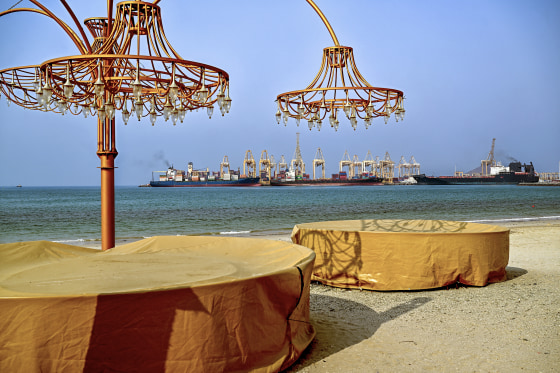
The Khor Fakkan Container Terminal, located outside the Strait of Hormuz in the United Arab Emirates, remains the only fully operational terminal in the region—a key point in the ongoing struggle.
This strategic lane is vital not just for Iran, but for the global supply of oil. Control over this area has become a significant military and economic objective for the United States in its ongoing conflict with Iran.
The focus has shifted from nuclear discussions to strategic control over a major global trade route.
The prolonged nature of the conflict underscores the complexities involved in geopolitical maneuvers concerning oil and trade routes. As the U.S. presses on, understanding and controlling the Strait of Hormuz continue to be crucial elements of its strategy.