
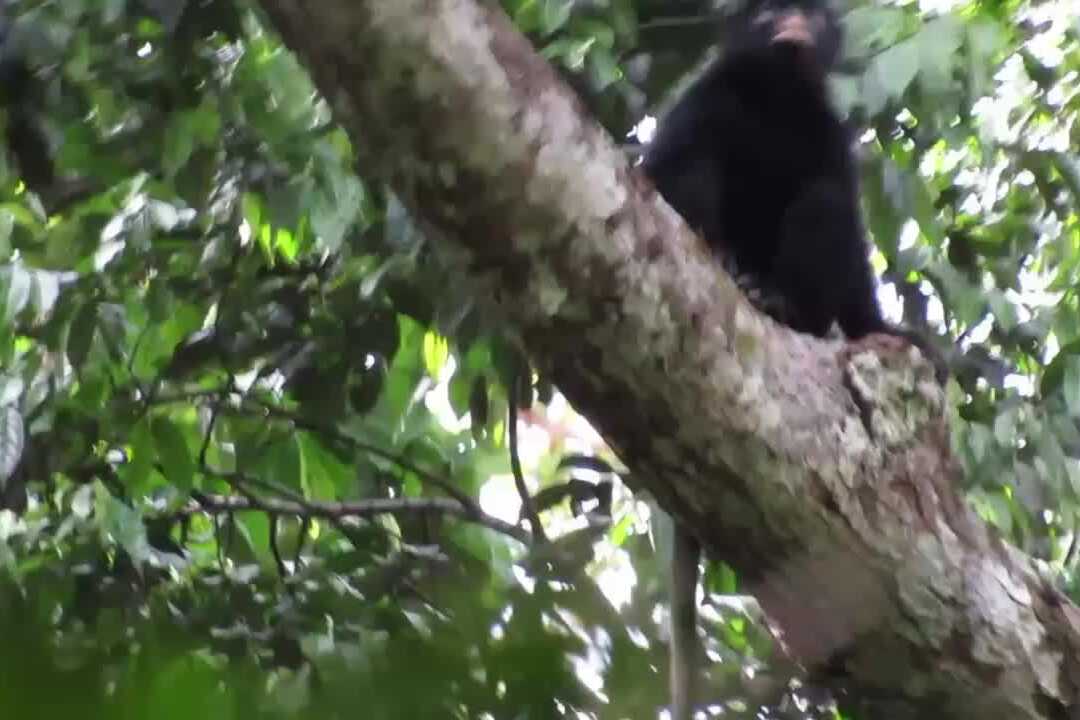
A mysterious monkey, Colobus congoensis, locally named Likweli, has been confirmed as a new species. This marks only the fifth new African monkey identified in the last 75 years. Known for its deep, roaring calls, similar to other Colobus species, this discovery adds significant knowledge to the field of primatology.
The story began nearly two decades ago with a blurry photograph taken in the remote forests of the Democratic Republic of Congo. The image captured an unusual orange-faced monkey that at the time, did not receive much attention.
In 2008, researchers from the Lukuru Wildlife Research Foundation spotted an unfamiliar monkey in what is now Lomami National Park. Due to the unclear photograph, the sighting was initially overlooked. Junior D. Amboko, a Ph.D. student at Florida Atlantic University, explained that the lack of a clear picture resulted in the initial disregard of the find.
A breakthrough came a decade later when another team captured a clearer image of a medium-sized monkey with distinctive shaggy black hair and an orange area around its nose and mouth. This was shared with Amboko and John Hart, the scientific director of Lukuru Wildlife Research Foundation, confirming it as a species not previously recognized in the region.
The researchers launched a project, partially funded by the National Geographic Society, to investigate this peculiar primate further. Between 2018 and 2022, they conducted extensive surveys in and around Lomami National Park. The team used various methods like scanning treetops, recording monkey vocalizations at dawn, and conducting interviews with residents from 52 nearby villages.
“People in eight of those villages could identify the orange-mouthed monkey, known to the Balanga ethnic group as Likweli,” Amboko noted.
The study found that the Likweli inhabit a small forest area in northeastern Congo, approximately half the size of Rhode Island. This restricted habitat likely contributes to their obscurity even among local populations. Amboko added that the monkeys’ shy nature further complicates their chances of being widely recognized.