
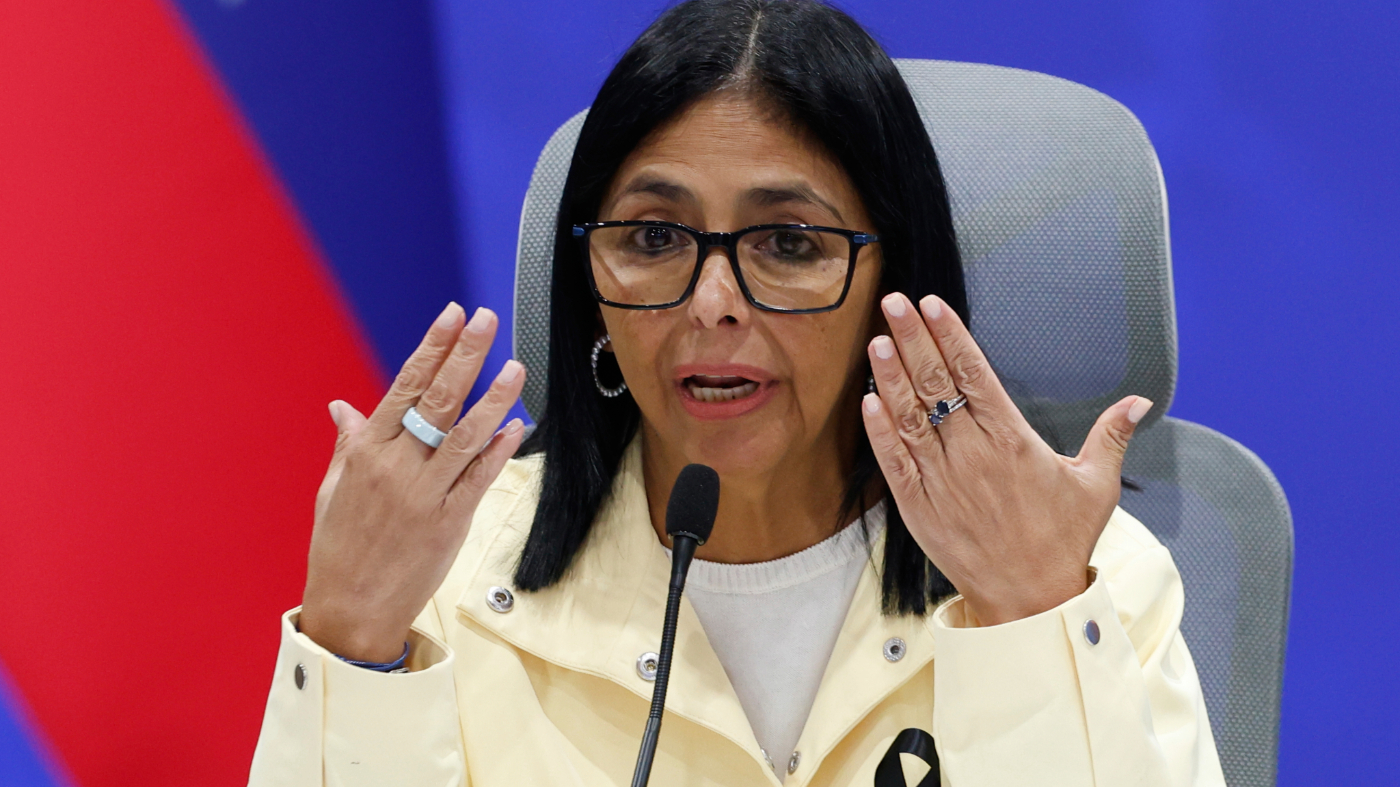
Acting Venezuelan President Delcy Rodríguez spoke on the government’s response to recent earthquakes in Caracas. During a press conference on July 2, 2026, Rodríguez’s remarks hinted at Venezuela’s political transformation.
Historically, Venezuela had a strained relationship with Israel. In June 2010, former President Hugo Chavez accused Israel of terrorism, reflecting the regime’s longstanding communist ideology. Figures like Delcy Rodríguez, who now leads the country, previously shared these views. However, a dramatic shift occurred after Nicolas Maduro’s ousting in January.
Changes were marked by Venezuela’s growing diplomatic rapport with Israel. Rodríguez recently sent a congratulatory message to Israel for Passover, emphasizing peace and religious coexistence. This marks a stark contrast from past alliances with Tehran’s regime. Venezuela skipped sending a delegation to Ayatollah Ali Khamenei’s funeral, signaling a distancing from Iran.
In a significant move, Venezuela extradited Ali Zaki Jalil, a Hezbollah agent accused of terrorism. This action was intended to win favor with Israel and distance itself from Iran. Alex Saab, a high-ranking official linked with Iran, faced extradition on charges of money laundering, further cutting ties with past support to terrorist entities.
Venezuela’s collaboration also included handing over highly enriched uranium. The U.S., along with Venezuela and the UK, successfully eliminated uranium threats in partnership with the International Atomic Energy Agency.
The country seeks strong ties with Israel by welcoming Israeli experts after the earthquakes. Israel’s military and humanitarian teams were authorized to assist, showing tangible collaboration. They presented a rehabilitation plan to Rodríguez, focusing on rebuilding efforts.
Israeli Prime Minister Benjamin Netanyahu praised the rebuilding efforts in Venezuela, highlighting positive relations. Caracas aimed to modify its narrative and imagery, cleansing past propaganda linked with anti-American and antisemitic sentiments.
The interim Venezuelan government’s outreach to Israel appears driven by pursuit of legitimacy and influence. Despite superficial change, Venezuelan citizens continue to demand freedom for political prisoners, safe return of exiled citizens, and fair elections. To achieve genuine progress, Venezuela must build on democratic principles.
Arturo McFields, former Nicaraguan ambassador to the OAS, emphasizes rebuilding Venezuela on solid democratic foundations, aligning with global standards.