
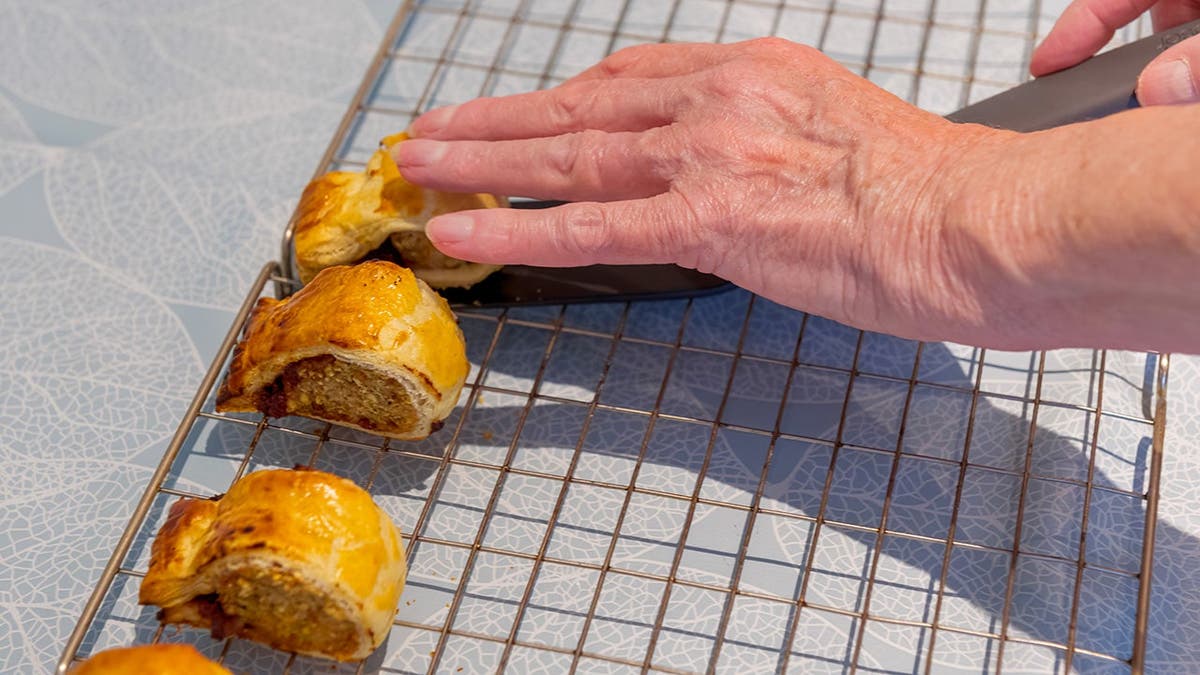
Scottish researchers are working on creating a healthier version of the classic sausage roll by developing a plant-based alternative to traditional pastry fats. Scientists at Heriot-Watt University in Edinburgh have taken steps to produce a healthier pastry without sacrificing its texture, by transitioning their experiments from the lab to a partner’s kitchen.
By taking innovative food science out of the lab into the kitchen and testing it with everyday consumers, it has the potential to make the nation’s favorite snacks healthier and make a genuine difference to our health and wellbeing,
said Stephen Euston, a professor involved in the research.
Sausage rolls, a popular British snack, consist of seasoned sausage meat baked in puff pastry. On average, around 10 to 15 million sausage rolls are sold in the UK each week, with the most popular versions containing up to 12.4 grams of saturated fat per serving. This is more than 60% of the recommended daily limit for adults.
The objective is to produce pastry with familiar flavor and texture but reduced saturated fat content. This innovation is not limited to sausage rolls but extends to other pastries like croissants and turnovers. Creating flaky pastry typically involves layering butter or lard between dough sheets. When baked, steam forces the layers apart, resulting in the desired flaky texture.
Euston and his team are using oleogelation, a process that converts liquid plant-based oils, like sunflower and rapeseed oil, into a form that behaves like traditional solid fats but with less saturated fat. The team focuses on oils from crops grown sustainably in the UK to minimize environmental impact.
While initial findings are encouraging, dietitian Kelly Springer expressed caution. There is not quite enough research behind this product to either say if it’s good or better for you,
Springer noted. Further studies are needed to validate the health benefits.
Researchers hope their oleogels will remain stable at higher temperatures, potentially reducing the need for chilling pastry dough. This development coincides with debates in the US over the use of refined seed oils in processed foods.
Some critics, including figures like Robert F. Kennedy Jr., argue against seed oils, promoting animal fats instead. However, Euston counters these claims, citing respected institutions like the British Heart Foundation in support of seed oils.
The oleogelation technology developed by Heriot-Watt University leverages cold-pressed seed oil, involving only mechanical pressing and filtration, without chemical processing. An advantage for bakers is that pastries using oleogels may require less chilling.