
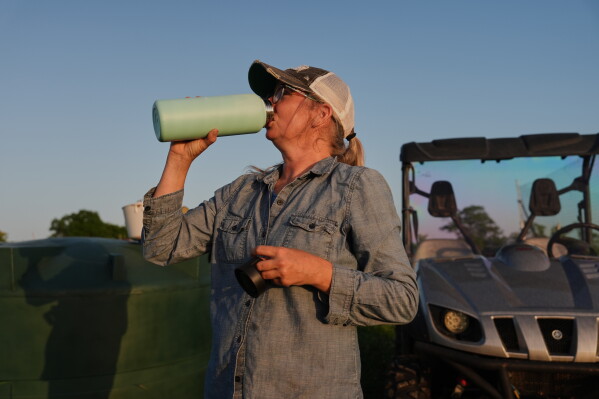
In Brooksville, Kentucky, Annie Woods manages a 50-acre farm where she grows squash and zucchini. Recently, the persistent heat has posed a significant challenge, showcasing a climate change pattern resulting in extreme weather. This pattern includes intense flooding and prolonged drought, affecting farming routines by shortening planting windows and risking crop loss due to early-season heat and subsequent freezes.
Woods remarks on the regularity of such heat waves, no longer considering them uncommon. Heat domes, high-pressure systems trapping heat and humidity, have particularly impacted specialty farmers who grow fruits and vegetables. They often adjust their harvest schedules to avoid peak heat but lack ample safety nets compared to traditional crop farmers like those growing corn and soybeans.
Working in the cooler parts of the day, taking frequent water breaks, and using market tents for shade are some adaptive strategies Woods employs. She emphasizes the heat’s serious threat to human health, echoed by Melissa Widhalm, associate director at the Midwest Regional Climate Center.
“We have to do a lot of checking on the greenhouse and watering frequently to keep those teeny tiny plants alive,” Woods said.
Extremely hot days, coupled with high humidity and rain, make crops like tender salad greens susceptible to diseases and pests. Woods grows various vegetables and culinary herbs for local restaurants and a community-supported agriculture program. She stores seedlings in a barn inside an enclosed cabinet to keep them cool and later moves them to a fan-cooled greenhouse to manage temperatures.
The recent heat has also impacted Paul Rasch, who owns fruit orchards in Iowa. His team had to accelerate raspberry harvesting due to a shortened window imposed by rising temperatures. They start as early as 6 a.m. to avoid afternoon heat, and he’s leveraging shade pavilions and high tunnels to stabilize conditions for certain crops.
Both Woods and Rasch underline the cyclical nature of extreme weather events. Diversifying crops provides some protection against total losses, yet specialty crop insurance remains insufficient compared to that for traditional crops. The federal crop insurance system prioritizes common crops, making it challenging for small-scale specialty farmers to secure coverage for their diverse yields.
For Woods, community support agricultural programs offer flexibility. Customers commit to buying seasonal produce regardless of the variability in offerings, providing a buffer against weather-related losses.
“It’s something you have to be aware of and plan for and have a plan to be resilient in the face of these kind of events,” Woods said.