
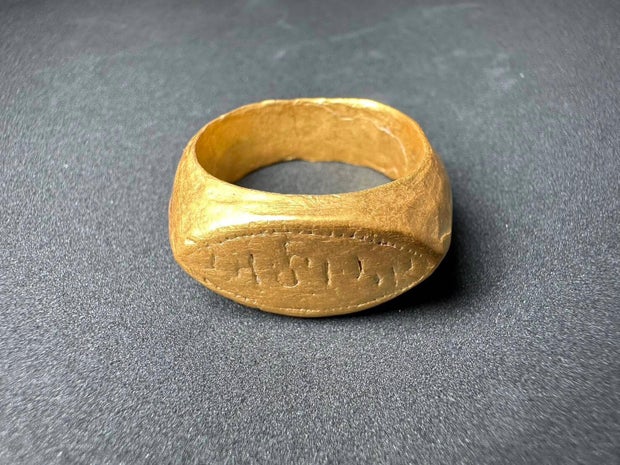
Archaeologists have discovered two gold rings estimated to be around 2,000 years old at a new archaeological site in western Thailand. The Thai government’s Fine Arts Department announced the finds, which were unearthed alongside human remains during an ongoing excavation at the Don Yai Thong site in Phetchaburi province.
One of the rings, discovered last Thursday, features engravings believed to be in Bhrami script, a venerable Indian writing system. Experts initially interpreted the script as reading ‘pusarakhitasa,’ which suggests protection by Pushya, recognized as one of the auspicious zodiac signs in Indian astronomy. The second ring is a simple gold band, free from any engravings or patterns.
According to experts, the rings likely belonged to a merchant from the Indian caste system known as Vaishyas. The Don Yai Thong site, located roughly 80 miles southwest of Bangkok, was uncovered after locals discovered fragments of ancient bronze drums in a rice field, inspiring further archaeological investigation.
The site dates to Thailand’s late prehistoric era, known as the Iron Age, existing from approximately 1,500 to 2,500 years ago. A video released by the Fine Arts Department showcased archaeologists analyzing artifacts and skeletal remains at the location. Since February, the team has discovered eight human skeletons, as well as bronze and gold jewelry, pottery, and other items suggesting these were ceremonial burials of affluent individuals.
Local reports suggest one skeleton could belong to a young child, with a bronze object found on the torso. Charcoal samples from the site were sent to the United States for further scientific analysis. The excavation is anticipated to conclude in about a month, after which the findings are planned to be displayed publicly.