
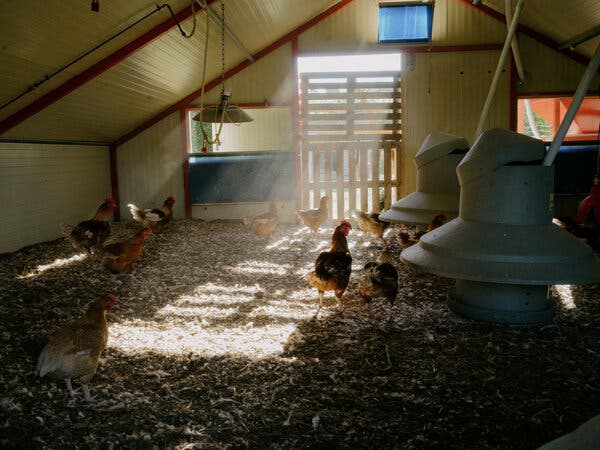
In June, France experienced its hottest period on record, severely impacting poultry farms. As temperatures rose inside a chicken shed, 1,500 birds died within hours. Isabelle Renaudier, a farmer from northwestern France, found one-third of her flock dead when she opened the shed. Those chickens were to be sent to slaughter just 19 days later.
Chickens face a higher risk from extreme heat because they can’t sweat and are covered in feathers. When temperatures rise too much, they resort to panting, which can dehydrate and exhaust them. This risk applies even to slow-growing, pasture-raised chickens like Renaudier’s. However, broiler chickens from large-scale operations are even more vulnerable due to their rapid growth and high metabolism, making them ill-suited for hotter climates despite being bred for efficient meat production.
Sylvia Goisbault, another farmer in the region, plans to adjust her farming schedule next year. She intends to avoid having chickens reach slaughter weight during peak summer temperatures.
Farmers across France are now considering new strategies to mitigate the effects of climate change on their livestock and ensure their farms are sustainable in future heatwaves.