
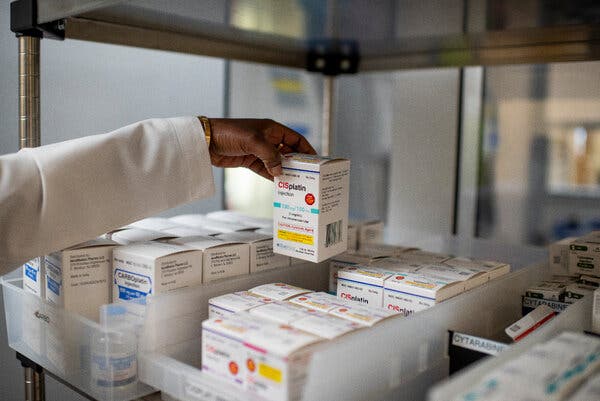
Doctors across the United States are grappling with a shortage of vital generic chemotherapy drugs.
This issue could lead to widespread rationing of medications crucial for treating various cancers.
The Food and Drug Administration highlights manufacturing complications and shipping delays as primary reasons for the shortages.
Additionally, some pharmaceutical companies have ceased production, intensifying the problem.
These drugs, despite being among the most effective treatments for cancers lacking targeted options, are difficult to produce and have low profit margins in the U.S.
They are vital for treating certain breast, lung, and head and neck cancers.
A specific injection called ifosfamide, used for sarcomas, lymphomas, and testicular cancers, is already under rationing consideration.
Dr. Andrew Shuman from the University of Michigan, a head and neck cancer surgeon, stresses the difficult decisions doctors face regarding drug allocation.
Patients unable to receive these medications despite being the best options endure significant challenges, affecting families and healthcare providers.
“There are some individuals who won’t be able to receive this drug, even if it is the best option for them,” noted Dr. Shuman.
In Michigan, doctors prioritize doses for patients with the highest potential benefit.
This often favors younger patients with a chance for complete recovery.