
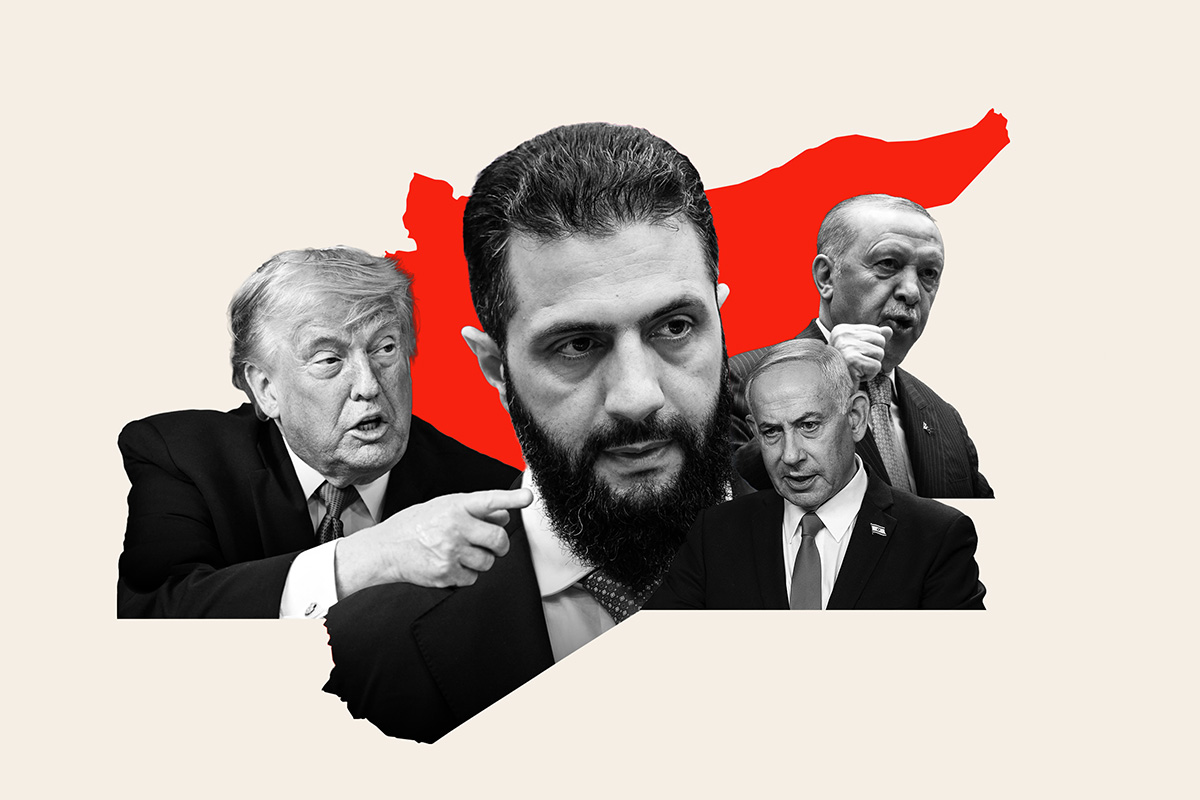
The United States and Iran have reached a fragile truce, impacting alliances in the Middle East. One key figure in this landscape is Syria’s President Ahmad al-Sharaa. His country emerged from civil war only to face new regional challenges.
Rising to power in December 2024 after the ousting of Iran-aligned Bashar al-Assad, Sharaa has focused on internal rebuilding. However, he is caught between escalating tensions involving Israeli Prime Minister Benjamin Netanyahu and Turkish President Recep Tayyip Erdogan. Netanyahu opposes Sharaa’s administration, whereas Erdogan supports him.
US President Donald Trump suggests a role for Syria in addressing Hezbollah in Lebanon. Trump praised Sharaa as an effective leader and hinted that Syria might serve as a counterbalance to Hezbollah, an Iranian ally.
We have nothing to do with this fight,said Syrian diplomat Bassam Barabandi.We want Lebanon to be stable. We need Syria to be stable.
Trump floated the idea of Syrian involvement in Lebanon during a June interview. He suggested Syria could more precisely target Hezbollah than Israel’s broader approach, which he criticized for its collateral damage.
Despite these ideas, Sharaa favors diplomacy over military action. He advocated for strengthening Lebanese state institutions and pursuing peaceful solutions. His approach aims to maintain confidence with the US without committing to unrealistic military engagements.
Syria’s history with Lebanon is complex. The country once had significant influence over Lebanese affairs until 2005. Renewed Syrian intervention could reignite old tensions. Former US envoy James Jeffrey emphasized that Syria must avoid entangling itself in Lebanon again, as doing so could consolidate support for Hezbollah and frustrate US policy.
The regional dynamics involve more than just Syria. Israel and Turkey are key players. Netanyahu questions Sharaa’s peaceful intentions and has taken military actions against Syria. Erdogan sees Israeli strikes as a threat to Turkey, raising tensions further.
Trump has occasionally backed Sharaa, criticizing Israeli incursions. Yet, the situation remains unpredictable. Turkey’s role as a supporter of Sharaa is critical, along with the need for US backing to balance Israel’s actions.
Sharaa’s government must navigate these pressures carefully. Analysts warn that an Israeli military campaign could destabilize Sharaa’s reconstruction efforts in Syria, especially with Israel’s election dynamics influencing Netanyahu’s decisions.
Sharaa seeks to keep the US and Turkey as stabilizing allies. At the same time, he avoids antagonizing Israel, hoping for more moderate leadership in the future. Strategically, he must maintain these delicate relationships amidst regional politics and potential Israeli electoral maneuvers.