
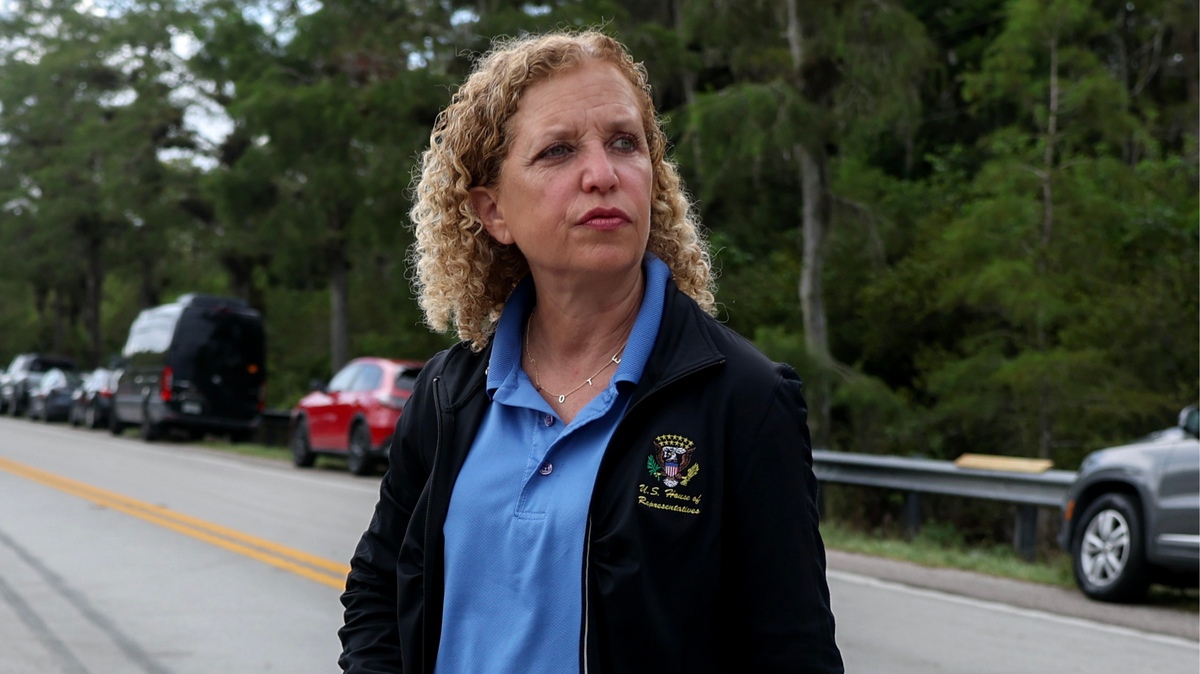
Debbie Wasserman Schultz, a veteran Democrat in Congress, announced her candidacy for Florida’s District 20 following a mid-decade redistricting. This district includes areas like southern Coral Springs, North Lauderdale, Lauderhill, Tamarac, and neighboring cities.
Photo by Joe Readle Getty Images
Many of Florida’s Democratic National Committee members have expressed disapproval of Wasserman Schultz’s choice. The district was initially designed to ensure Black voters’ representation but is now subject to redistricting under Gov. Ron DeSantis. In a formal statement, 10 Florida DNC members highlighted a contradiction in the party’s stance: “Our party cannot denounce Republican actions dismantling Black political power while treating a majority-Black district as a convenience for an incumbent.” Most of Florida’s 11 non-officer elected DNC members and the first vice chair, Daniel Henry, signed this statement.
Wasserman Schultz decided to run in District 20 after DeSantis and the state Legislature altered district boundaries, leaving only a few left-leaning districts in South Florida. She has served in Congress for over two decades, opting for a secure Democratic district rather than newly formed districts favoring Republicans. She resides in the new 22nd District, which covers regions from Coral Springs to Marco Island. Her former voter base is divided across new district lines, but only a small part falls within District 20.
The decision to pursue a safe Democratic district sparked criticisms. Critics argue Wasserman Schultz leveraged her $2.5 million campaign fund to secure an easier win and preserve her influence.
The Florida DNC members stated, “We cannot defend voting rights and racial representation while undermining Black political influence.” Wasserman Schultz viewed these criticisms as politically motivated, pointing out that they come mainly from current candidates for District 20.
The DNC members’ statement represents a significant internal critique of Wasserman Schultz’s decision. The congresswoman previously led the DNC from 2011 to 2016.
The origins of Florida’s 20th District stem from a 1992 federal court ruling, ensuring Black voters could elect their candidates, resulting in Florida’s first Black congressional representatives since Reconstruction. Alcee Hastings initially represented the district, succeeded by Sheila Cherfilus-McCormick, who resigned her seat but is campaigning to return.
Gov. DeSantis focused on the 20th District, official sources confirm, coinciding with a Supreme Court ruling affecting the Voting Rights Act in Louisiana v. Callais. Wasserman Schultz countered the criticism by positioning herself as a protector of Broward County, arguing that the vote dilution aimed to diminish Broward’s influence.
For Florida’s DNC, the issue is part of a broader trend impacting Black voters. They assert that Black representation remains crucial: “Representation matters. Lived experience matters.”
Claire Heddles reports on politics for the Miami Herald, having previously covered national politics from Washington, D.C., and served as a public radio reporter in Tennessee and Jacksonville, Florida.