
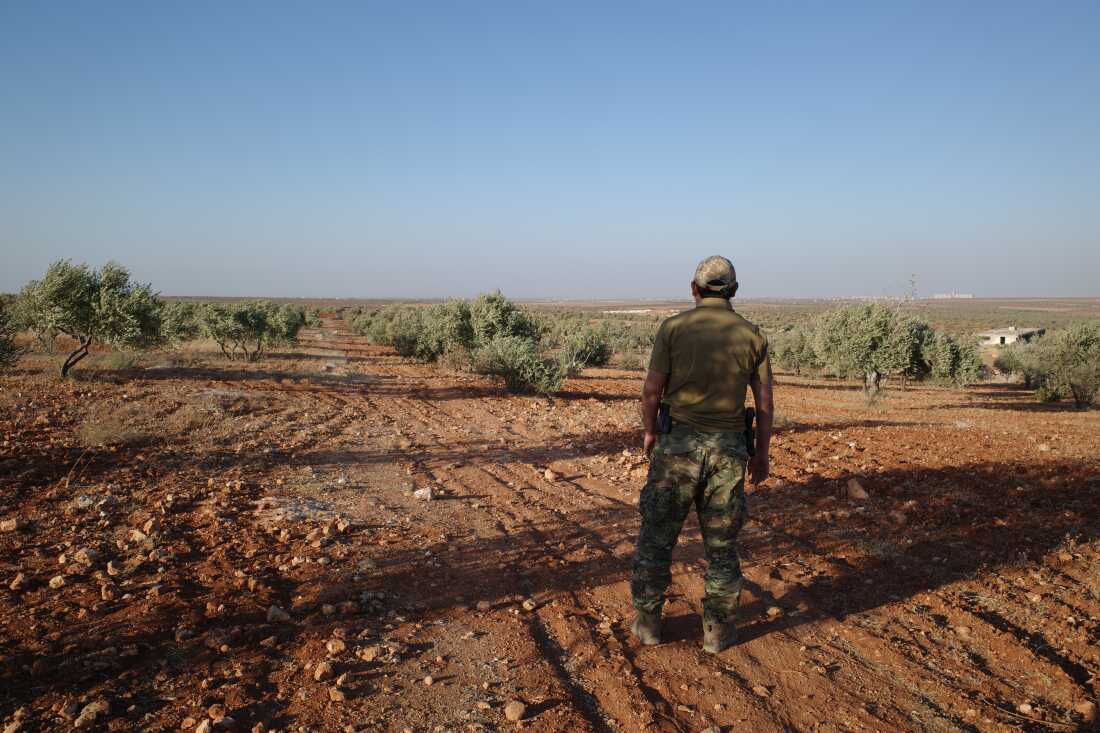
A senior Uyghur militant stands in an olive grove in northern Syria, where their fighters conducted a successful assault on Syrian regime forces in November 2024. Under cover of night, an elite group struck Syrian government forces, cutting off supply lines to the regime-held city of Aleppo.
For months, fighters cleared a disused water tunnel, over two miles long, deep behind enemy lines near Aleppo. During a secret meeting with Ahmed al-Sharaa, then-leader of the rebel group Hayat Tahrir al-Sham, they prepared a joint assault to liberate Aleppo from regime control.
These elite fighters were Uyghurs, a persecuted ethnic minority largely from China’s Xinjiang region. The assault began one night in November 2024. Uyghur commander Hobayd remembers entering a tunnel used during the offensive. One unit, wearing oxygen tanks, stationed itself in poorly ventilated sections. A second unit positioned in olive groves aimed to hit Aleppo at dawn. Together, they forced government troops into a panic and retreat. Within days, Aleppo was in rebel hands.
“We remained steadfast. Miraculously, all the brothers who charged into death itself came out alive,” says Hobayd, 31, recounting the operation. The weeks that followed saw them chasing regime soldiers to Syria’s capital, Damascus.
Just over a week after Aleppo fell, Syria’s then-dictator Bashar al-Assad fled to Russia. The path to Damascus was clear, according to Hobayd.
“From Aleppo, our way to Damascus was clear.”
This event is part of a broader story about how the Uyghurs became a significant force in the Syrian civil war. They aligned with Hayat Tahrir al-Sham, gaining influence and helping bring down the Assad regime. Their disciplined combat skills earned them respect among Syrian rebel factions and within the new Syrian government.
Yet their position remains precarious. Some Syrian Arabs view foreign fighters with suspicion. China exerts diplomatic pressure on Syria to expel Uyghur fighters, labeling them terrorists. China’s crackdown on the Uyghur minority includes sending many to reeducation camps or subjecting them to surveillance.
Many of the Uyghurs in Syria express deep animosity toward the Chinese government, accusing it of repressing their culture and rights. Some, like Nurmemet, joined Syrian factions to learn warfare skills with the hope of one day challenging Chinese authority in Xinjiang, or East Turkestan, as termed by Uyghurs.
A former Uyghur fighter, Choghtal, recounted his decision to leave China following police brutality against Uyghur protesters in 2009, fearing imprisonment. The incidents led many Uyghurs to believe armed resistance was necessary to secure their future.
“If I had not left China, I would have died in prison.”
In northern Syria, the Uyghurs became integral to the military landscape, securing the town of Jisr al-Shughur from government forces, a strategic objective during the conflict. The Uyghurs’ disciplined approach and combat readiness aided in shaping the region’s power dynamics.
Despite their contributions to the current Syrian government led by Sharaa, the Uyghurs face two key challenges: local distrust and Chinese pressure. Their sustained presence in Syria is uncertain as tensions arise over land occupied during the war.
China continues to demand the expulsion of Uyghur fighters from Syria, using its international leverage. Uyghur leaders counter accusations of terrorism, focusing on defending their community and preserving their culture.
In Syria, the Uyghur community is working to establish a sense of permanence, engaging in business and education initiatives. However, geopolitical tensions and claims of terrorism against them complicate their long-term ambitions.