
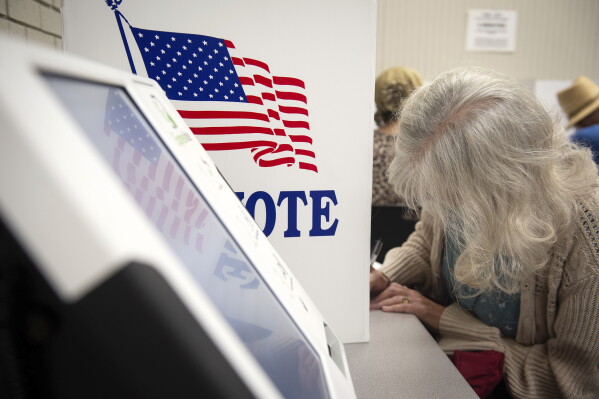
On July 27, 2026, a federal appeals court upheld an injunction against President Donald Trump’s executive order to create a federal list of eligible voters. The injunction also blocked a plan to restrict mail ballot delivery only to individuals on that list. The 1st U.S. Circuit Court of Appeals rejected the Trump administration’s attempt to enforce mail-in voting limitations in 23 states ahead of the midterm elections.
Trump’s order, issued in March, tasked the U.S. Citizenship and Immigration Services director and Social Security Administration commissioner with forming a ‘state citizenship list.’ The U.S. Postal Service would then use this list to deliver mail ballots exclusively to listed individuals. Despite Trump’s claims that these measures would prevent non-citizens from voting, state election officials opposed the plan, citing potential for misuse and disruption.
In related news, the Trump administration admitted canceling clean energy project grants, worth $7.6 billion, based on the political affiliations of the states receiving the grants. Court documents revealed that 16 states, which supported Democrat Kamala Harris in 2024, were specifically targeted. This admission contradicted prior statements from Energy Secretary Chris Wright, who had claimed the projects were halted due to inefficacy or poor investment potential. Democrats and environmental advocates criticized the administration for what they saw as the politicization of federal funding to suppress political opponents.
Meanwhile, the United States and Iran paused their escalating military actions for the second consecutive day. This break aimed to facilitate negotiation efforts for an interim ceasefire agreement. The recent hostilities began after Iran fired at ships navigating the Strait of Hormuz. Despite previous attacks on Iranian coastal regions and infrastructure, the Pentagon did not comment on why the U.S. halted its operations.
The Pentagon has also adjusted its documentation practices. Four American soldiers who died in the renewed U.S.-Iran conflict are now listed under a new ‘Overseas Operations’ category instead of the Iran war toll. Alongside, 207 wounded soldiers are recorded, although it is unclear if all injuries stem from the Iran conflict. This change has sparked debate over accurately capturing the conflict’s impact on U.S. military personnel.
Additionally, President Trump has instructed the installation of signs outside the Smithsonian Institution’s U.S. history museum, asserting inaccuracies in its exhibits. This move follows a report stating that the Smithsonian does not adequately present a unifying narrative of American history. The signs, overseen by the National Park Service, will direct visitors to resources Trump deems accurate about U.S. history.