
Disruptions in US air travel have persisted for three days, impacting over 5,200 flights as of Sunday. Transportation Secretary Sean Duffy expressed optimism about returning to normal operations by Monday. Airlines have worked diligently to restore schedules after a systemwide ground stop.
On Sunday, data from FlightAware indicated more than 1,600 flights were canceled nationwide, and nearly 3,600 experienced delays. On Saturday, airlines had already canceled over 6,400 US flights and delayed more than 8,000.
During an interview on ABC’s “This Week,” Duffy assured there was no evidence of a cyberattack or malicious intent behind the disruptions, although the exact cause remains unclear. He stated that by Sunday, flights would likely return to normal and assured that safety remains the Federal Aviation Administration’s (FAA) priority.
JetBlue saw 27% of its flights canceled on Sunday, while American Airlines canceled 13% of its flights. Southwest, United Airlines, and Delta reported cancellations affecting 3% to 5% of their operations.
The FAA had issued a nationwide ground stop on Friday, halting almost all departures for nearly five hours. This marked the most extended national travel halt since the September 11, 2001, attacks.
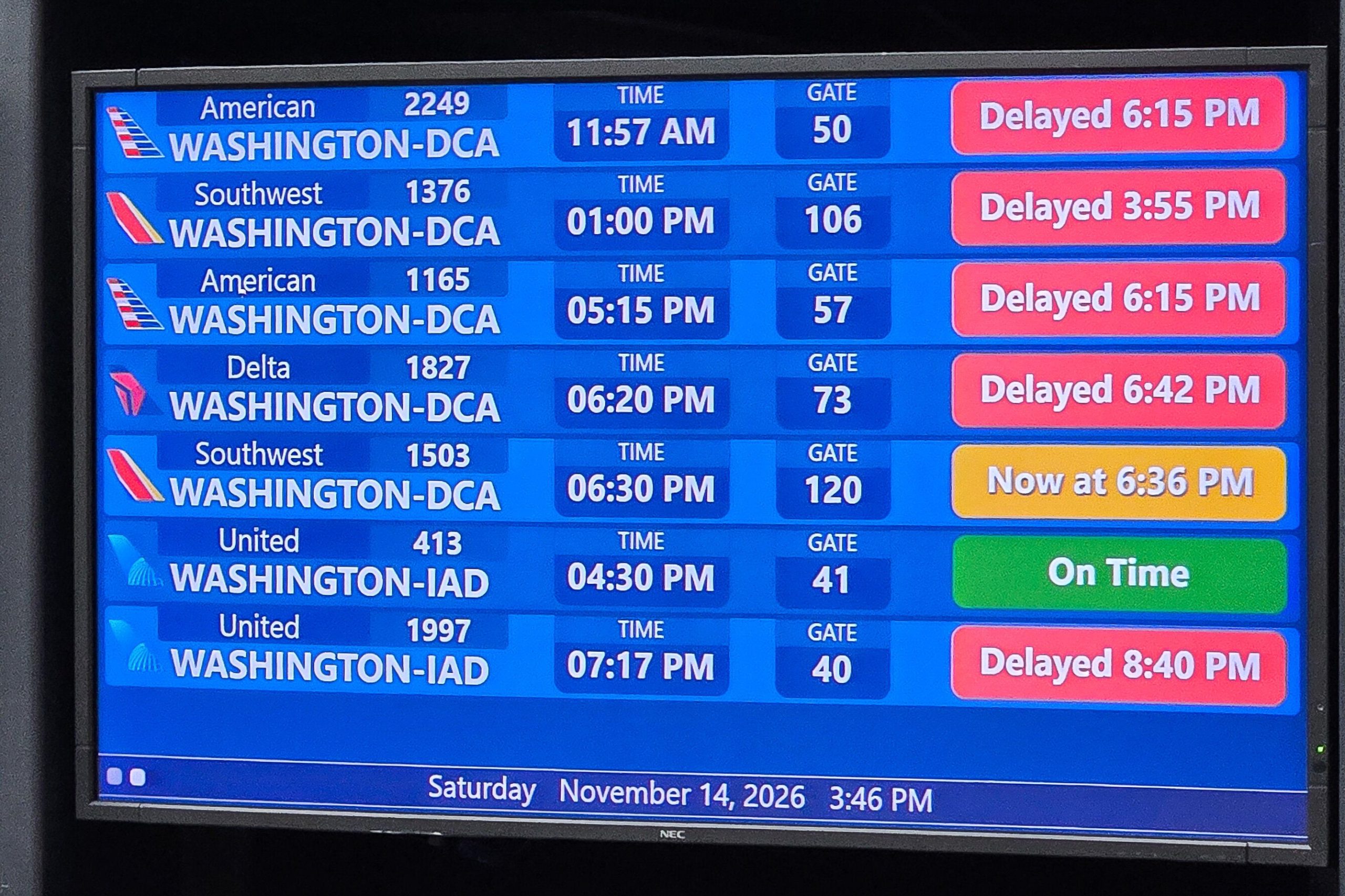
A photo from Orlando International Airport showcases multiple flights delayed to Washington, D.C., by American Airlines, Southwest Airlines, Delta Air Lines, and United Airlines. These airlines face a significant backlog after the lengthy FAA ground stop caused by telecommunications and radar system issues.
Officials have identified the root cause as the installation of a new router by FAA contractor L3Harris, which caused overloading in communication systems across air traffic control centers. The FAA has since disabled the affected routers and suspended some 60 similar routers in the air traffic system. However, they are still investigating the underlying problem.
Duffy highlighted a worker’s error during the installation but dismissed any sabotage claims, labeling the worker a patriot and asserting they lack a definitive root cause.
The incident illustrates the strain on the US air traffic control system, plagued by outdated technology and equipment issues. Duffy called for $50 billion to upgrade these systems, highlighting the inadequacy of the $12.5 billion granted last year.
President Donald Trump commented on the air travel issues, urging Congress to allocate more funding promptly. With Democrats set to control Congress after midterm elections on November 3, the request faces scrutiny, especially after finding that a large portion of the funds allocated last year remain unspent.
Representatives Rick Larsen and André Carson expressed skepticism over the need for additional funding given previous unutilized resources. Duffy clarified that the existing funds are pre-allocated for specific purposes and do not cover new airspace management software.