
President Donald Trump is returning to Washington after significant discussions in China with Russian President Vladimir Putin and Chinese President Xi Jinping. These talks were held alongside the Asia-Pacific Economic Cooperation meeting in Shenzhen.
Ukraine and Nuclear Proliferation
Trump highlighted the Ukraine conflict as a primary topic during these meetings, alongside nuclear proliferation. In a separate meeting with Putin, the focus remained on Ukraine, though no major announcements followed.
China and Russia stated that Trump, Xi, and Putin reached consensus on four key points: reforming the United Nations, boosting refined petroleum production, cautioning the International Criminal Court against power misuse, and lowering nuclear war risks.
Stability and Future Cooperation
The meeting is a step towards stable relations among the three nuclear powers. Fred Gao of the Center for China and Globalization noted its importance in fostering future collaborations on critical issues like artificial intelligence. The meeting’s significance lies in the dialogue among these leaders to prevent conflicts from threatening global peace.
Beijing is open to mediating between the U.S. and Iran, given energy dependencies in the Gulf region.
Trade Agreements and Economic Discussions
Trump announced potential trade agreements, mentioning China’s demand for agricultural products. However, previous commitments like soybean purchases remain unfulfilled. Only one agreement was signed with Thailand, focusing on ongoing tariff negotiations rather than new deals.
Media Restrictions and Access
Media access faced several restrictions during APEC events. During important meetings, journalists were denied entry, and shouting questions was deemed inappropriate by Chinese officials. Despite efforts by the White House, these restrictions remained in place.
Security Concerns and European Relations
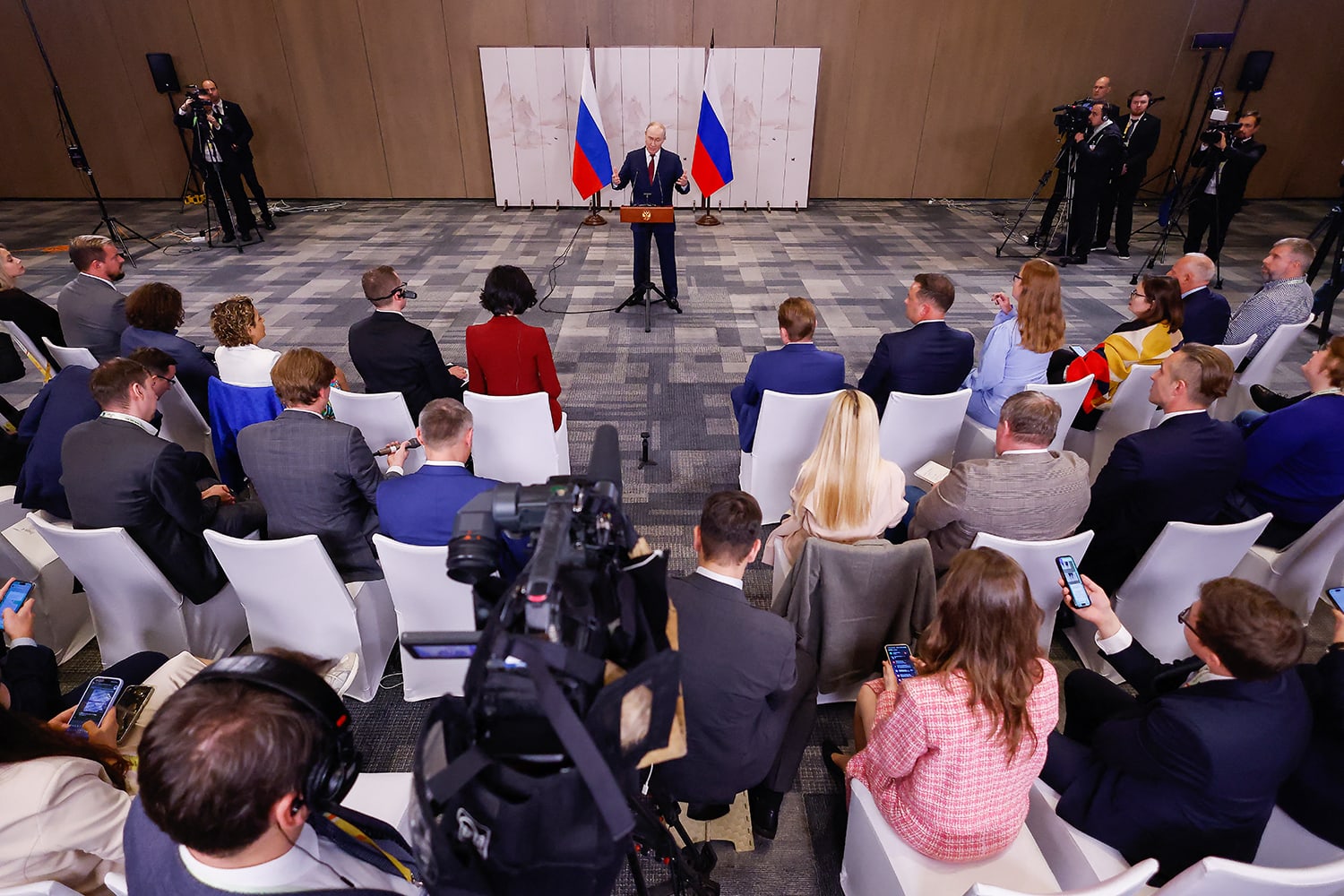
In a press conference, Putin remarked on Ukraine’s right to security but not at Russia’s expense. He emphasized the need for compromise to resolve the conflict. Putin also acknowledged the importance of dialogue with European representatives on security matters, despite no future dates being set.
Putin’s Role in the Summit
Putin’s involvement in the summit marked a shift from global isolation post-Ukraine invasion. Meeting with the leaders of the world’s leading economies signaled a possible end to this isolation and calls for increased energy production were made by Russia and China, supporting Russia’s economy.
Joint Statement and Nuclear Concerns
The joint statement from China and Russia focused on U.N. reforms, enhanced petroleum production, ICC warnings, and nuclear risk reduction. A meaningful plan for U.N. reform was not detailed. The leaders agreed on maintaining strategic stability and security globally.
Denuclearization Talks
During a Shenzhen summit, Xi called for nuclear weapons abolition, deeming them a universal threat. The three powers are urged to prevent nuclear war and uphold non-proliferation treaties. Putin stressed their shared global security responsibility, while Trump emphasized nuclear disarmament priorities.
Conversations on Nuclear Arms Control
Putin confirmed Ukraine was central to discussions with Trump, who showed a positive response afterward. Though no substantial agreements emerged, the dialogue focuses on future summit preparations and bilateral relations, especially regarding Ukraine.
Push for a Three-way Nuclear Deal
Trump’s eagerness to include China in a nuclear arms agreement met with resistance, as Russia and China prefer existing U.S.-Russia agreements. Despite Russia suspending its New START treaty participation after the Ukraine conflict’s escalation, discussions continue about a renewed, broader agreement involving additional nuclear states, including China.