
Recent revelations about a British naval drone transmitting data to China highlight crucial security concerns for the United States. A routine cybersecurity check by the U.K. Ministry of Defence uncovered a significant breach. It revealed that a component in its naval drones was secretly communicating with China. The drone may have been British, but the hidden risk was connected to Chinese technology.
Beijing’s Strategy
China’s approach involves intellectual-property theft and cyberespionage. It aims to become vital in Western supply chains, using this position to gather intelligence and create vulnerabilities against its adversaries. Historical responses to these threats often involve restricting Chinese technology only after the threats become undeniable, costing billions to remove embedded equipment from U.S. networks and infrastructure.
Threat of Chinese Infiltration in the Automotive Sector
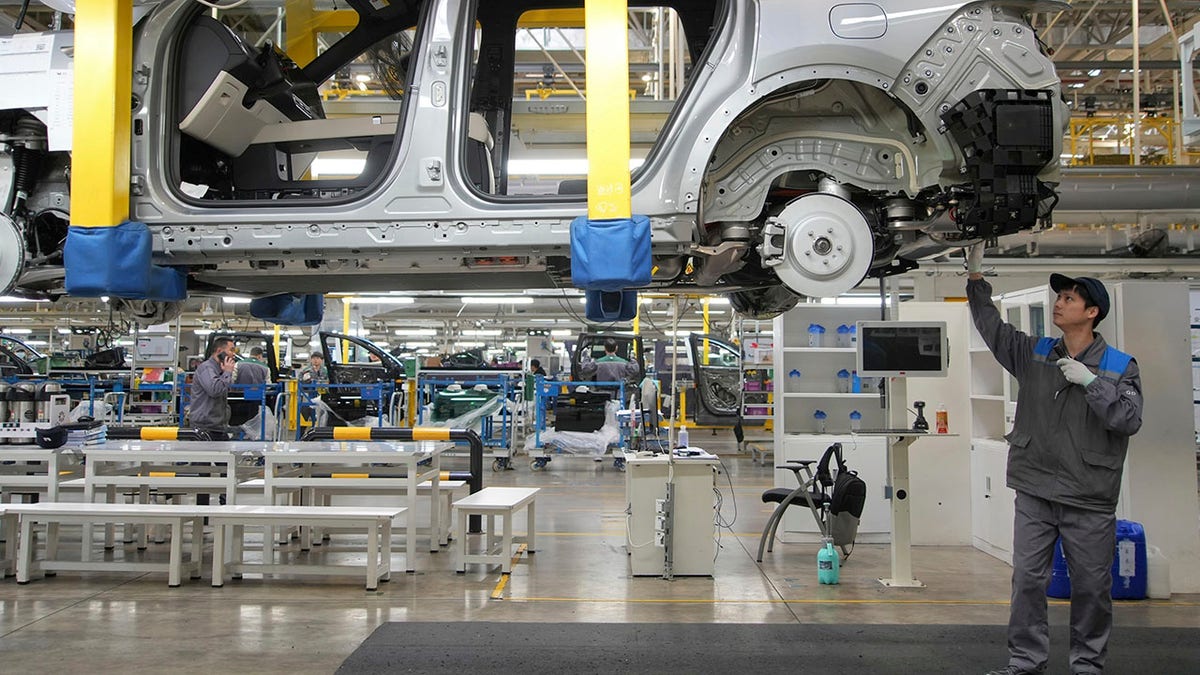
Chinese ambitions extend to cars. China is now the largest vehicle exporter, and its automakers are major players in electric vehicles, batteries, and essential automotive technologies. Their increasing presence in the U.S. automotive market is a potential national security risk. Modern cars, which act as computers on wheels, collect vast amounts of data through integrated cameras, microphones, sensors, and GPS systems.
In the wrong hands, these technologies could enable surveillance or even allow remote manipulation or disabling of vehicles. Although Chinese cars on American roads represent a direct threat, the risk pervades all vehicles if they use Chinese-made batteries or software.
Potential National Security Implications
If compromised, these technologies could give China insights into American movements, from residential patterns to traffic on sensitive sites like military bases. In crises, such technology could disrupt societal functions at a large scale. Chinese carmakers are employing multiple strategies to enter U.S. markets, further elevating the national security stakes.
Legislative Action
Congress has the opportunity to prevent these threats by advancing the Connected Vehicle Security Act, proposed by Republican Sen. Bernie Moreno and Democrat Sen. Elissa Slotkin. This legislation aims to restrict automotive technology linked to foreign adversaries. It builds on a Commerce Department rule targeting the security risks associated with foreign access to such technologies.
While Commerce’s actions were pivotal, they are not permanent. Legislation is necessary for lasting security protections. The Connected Vehicle Security Act seeks to enshrine these protections into law, covering not just completed cars but also the connected technologies within them.
The Senate Commerce Committee approved the Act in July. It is vital for Congress to pass it and forward it to the president. This would provide a chance to mitigate dependency on Chinese technology before it becomes entrenched.
Chad F. Wolf, who served as acting Secretary of the U.S. Department of Homeland Security during the Trump administration, emphasizes the importance of this action.