
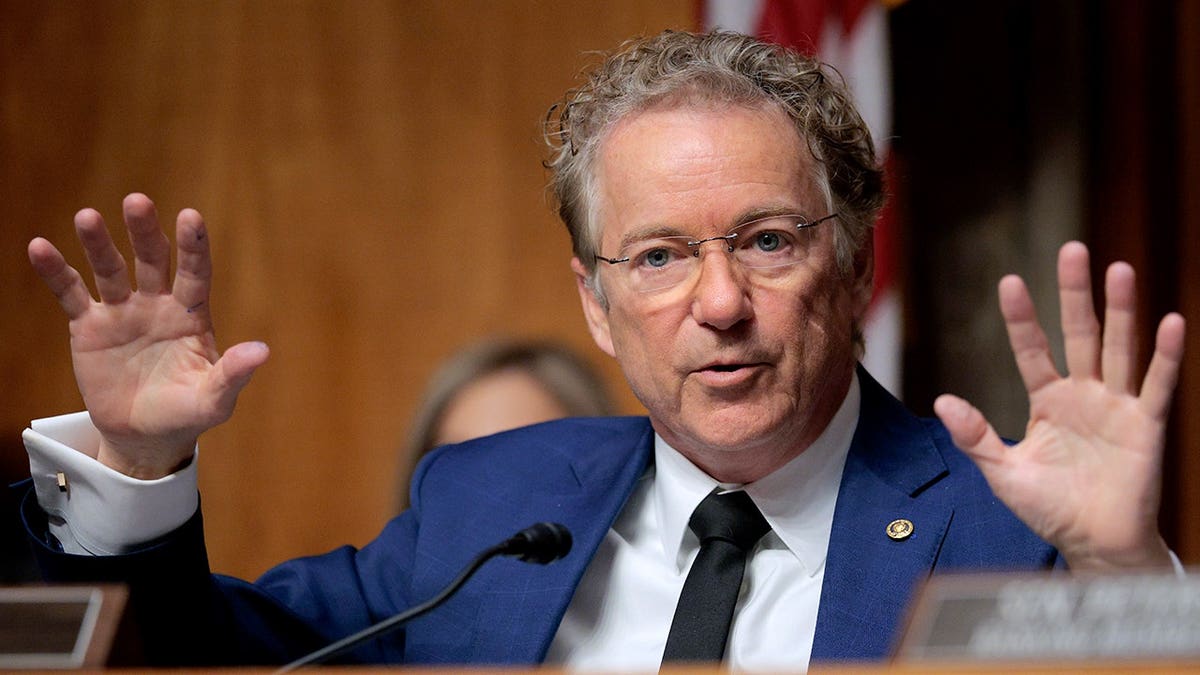
The United States faces a critical economic challenge with the national debt exceeding $40 trillion. This issue, exacerbated by the government’s excessive deficit spending, has sparked debate. Sen. Rand Paul, a Republican from Kentucky known for his fiscal conservatism, has voiced his concern, emphasizing that both political parties contribute to the problem.
Recently, President Donald Trump proposed a plan to award $5,000 to each American adult if Republicans regain control of Congress. He introduced this idea as the “Trump dividend” during a speech at the Republican midterm convention in Dallas, Texas.
In an interview with Fox News Digital, Paul firmly rejected Trump’s suggestion. He argued against distributing dividends amidst a budget deficit. “We’re running $2 trillion short,” he remarked, stressing the impracticality of such giveaways when fiscal resources are insufficient.
Fox News Digital contacted the White House for comments on the President’s proposal.
“And so, the debt is very important. So it’s not just important that it might bankrupt us or overwhelm us in some kind of crisis in the future,” Paul noted, also recognizing the immediate financial impact of this debt.
Paul criticized both parties for their reluctance to communicate the need for reducing government spending on popular programs to the public. He advocated for a balanced budget through methodical cost reductions over five years.
Paul described his initial strategy as a “one-penny plan,” proposing a 1% annual spending cut. He explained, “with economic growth increasing revenue, the lines cross at about five years,” achieving balanced finances.
During the COVID-19 pandemic, however, extensive spending inflated the deficit, necessitating a revised “six-penny plan” involving a 6% cut. These cuts, though exempting Social Security, would include Medicare. Paul suggested possible reductions in Medicare without affecting health benefits, citing potential waste and fraud.
Further, he proposed additional means testing to manage Medicare expenditure effectively.
Paul also disclosed his possible interest in another presidential run, noting the importance of free-market advocacy within the Republican field. “I’d say we’re 50-50,” he admitted, reflecting on the potential need for a candidate stressing the benefits of international trade and cautious government fiscal management.
His decision on campaigning will come after the midterm elections.