
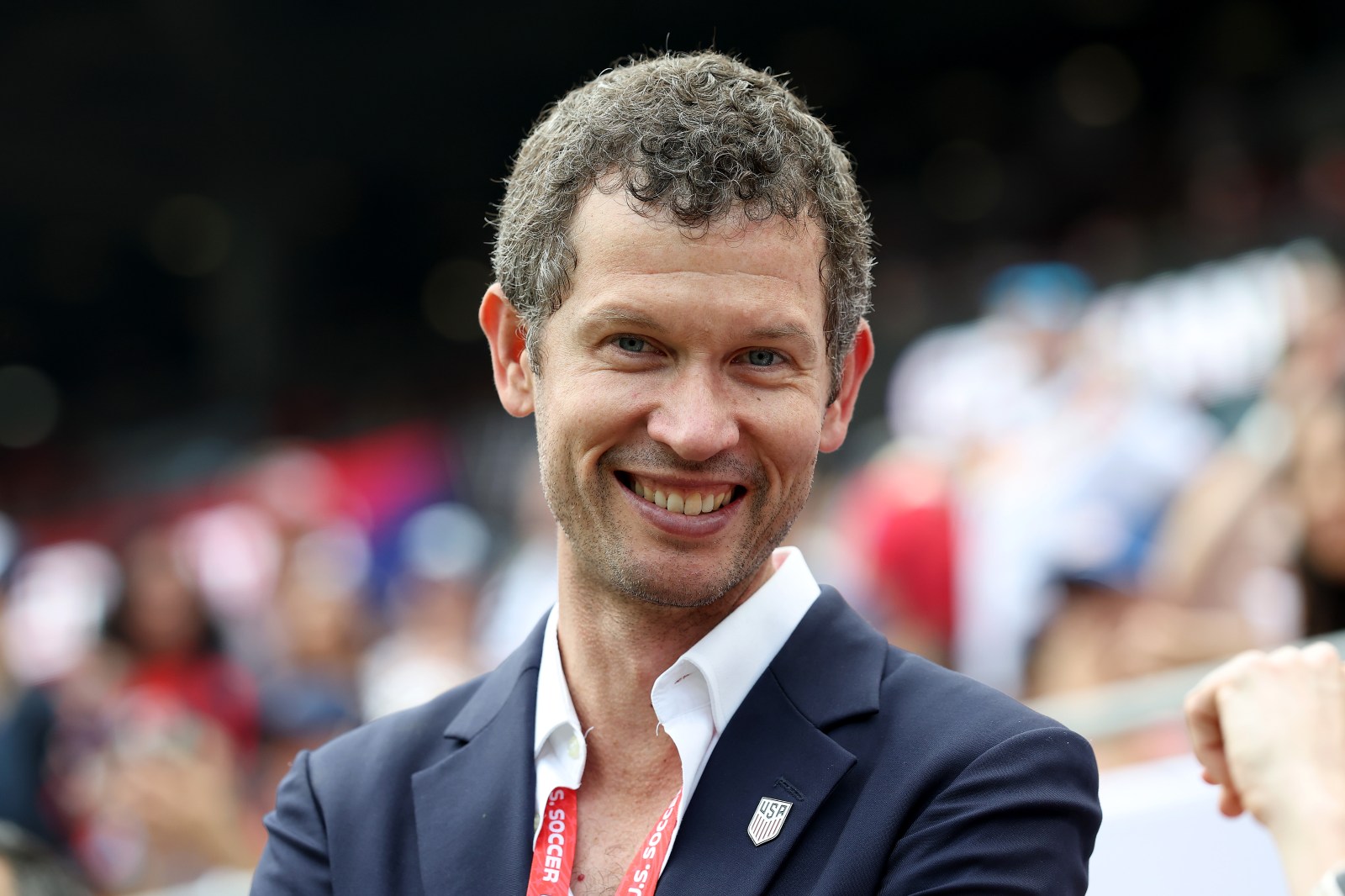
Influence in sports often begins with personal memories. JT Batson, CEO of the U.S. Soccer Federation, recollects his first soccer experience at a YMCA in Augusta, Georgia. He remembers the sweltering heat under bulky jerseys and the unfamiliarity of soccer within a community more accustomed to baseball and basketball. Despite these early challenges, exposure to college-level players who became local coaches laid the foundation for Batson’s lasting dedication to soccer.
Batson’s childhood involved various sports like baseball, basketball, and tennis. However, better coaching and the camaraderie among friends kept him engaged with soccer. This influence drives Batson’s current efforts to enhance U.S. Soccer, especially with the upcoming 2026 FIFA World Cup co-hosted with Canada and Mexico.
Fostering Growth Through Accessibility
The U.S. aims to use the World Cup as a catalyst for increasing soccer participation nationwide. Soccer’s global appeal stems from its simplicity; a game requires little more than a ball. In contrast, sports like basketball dominate American parks due to infrastructures like basketball hoops readily available.
To address this, the Soccer Forward Foundation launched initiatives like Soccer at Schools in partnership with Bank of America and the Places to Play program. These projects aim to make soccer fields accessible across various environments, from city blacktops to suburban fields. The diversity in playing fields corresponds with the increasing diversity of U.S. national teams, embodying the country’s inclusivity.
Coaching and Community Engagement
For U.S. Soccer, developing quality coaching is paramount. The organization provides education for coaches, from beginners to professionals. Digital programs and hands-on experiences aim to cultivate skilled coaches crucial for future athlete development.
On a broader scale, U.S. Soccer is prioritizing community engagement to make the World Cup accessible beyond stadium attendance. They plan events like FanFests and work with cities to extend celebrations to local communities. The idea is to involve fans nationwide, ensuring they feel part of the World Cup excitement.
On-Field Success and Organizational Strategy
A strong performance in the World Cup is vital. U.S. teams are expected to contend for victory. U.S. Soccer’s goals include infrastructure improvements and talent pathways to support long-term success. Strategic hires like Mauricio Pochettino and Emma Hayes for the men’s and women’s teams underscore this vision.
For Batson, success this summer means fostering national pride and connection among fans. The aim is for Americans to feel invested in their teams. Beyond immediate results, the World Cup is anticipated to drive a decade of growth and investment in the sport, bringing millions more into the soccer fold.