
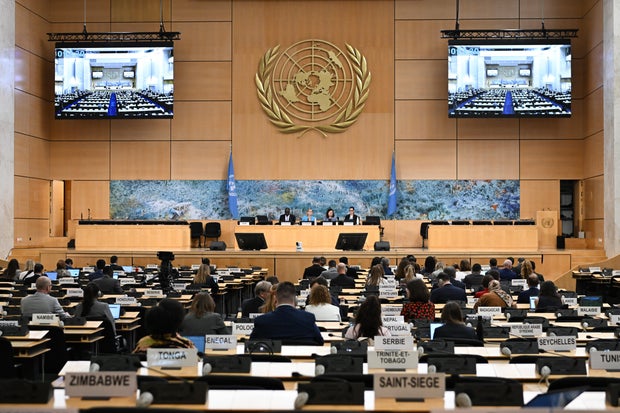
Geneva — The United States has chosen to skip a regular review of its human rights practices at the U.N.’s primary rights body. This makes it the first nation to do so since the council’s inception two decades ago.
The decision follows last year’s withdrawal from the Human Rights Council by the Trump administration. The administration accused the council of bias against the U.S. and Israel while criticizing its failure to uphold its stated values. Supporters of the council argue that monitoring human rights across member states is essential, including examining U.S. policies like strong deportations and targeted killings in the Caribbean and Pacific. The administration claims these actions protect U.S. workers and enhance national security.
The Geneva-based council reviews human rights practices of all 193 U.N. member countries approximately every four to five years. This is known as the universal periodic review. The United States had already missed its previous review session under President Trump. The November 2025 review was postponed to Tuesday, hoping for a change in U.S. policy. However, the decision to skip remained unchanged.
“We give no credibility to the agency,” a State Department spokesperson stated in an email to The Associated Press. “This body consistently fails to uphold its ‘values’ while promoting anti-American rhetoric.”
Without a national representative present, the council cannot proceed with the review. Generally, during these reviews, national delegations present their cases, respond to questions, and receive feedback from other envoys, aiming to refine their human rights strategies.
Critics argue this U.S. move might prompt other countries to avoid scrutiny too. Jamil Dakwar, from the American Civil Liberties Union, voiced concerns: “The administration signals indifference to global review while perpetuating rights violations.” The ACLU urges the U.N. human rights chief to update on U.S. practices next year.
Eric Tistounet, a visiting professor at the Geneva Graduate Institute and the council’s inaugural secretary, warned that the U.S. absence could compromise the review system’s credibility. “If a global power, committed to rights norms, opts out, it poses a significant challenge,” he stated.