
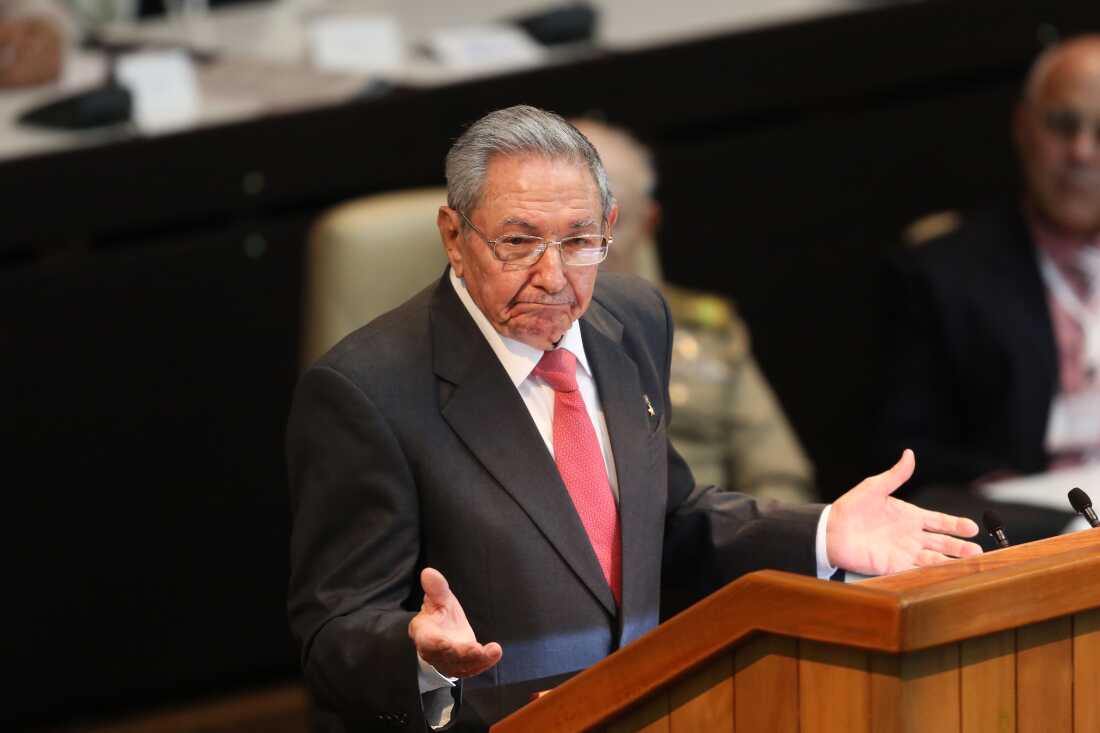
The U.S. Department of Justice has announced an indictment against Raul Castro, the 94-year-old former president of Cuba. The charges relate to an attack on a humanitarian group more than three decades ago. According to Acting Attorney General Todd Blanche, Castro and other former Cuban officials face charges of conspiracy to kill U.S. nationals, destruction of aircraft, and four counts of murder. The announcement was made at Miami’s Freedom Tower, a historical site symbolizing refuge for Cubans fleeing the Castro regime.
The indictment names others including Lorenzo Alberto Perez-Perez, Emilio José Palacio Blanco, José Fidel Gual Barzaga, Raul Simanca Cardenas, and Luis Raul Gonzalez-Pardo Rodriguez. A Miami grand jury brought the indictment on April 23. The U.S. government revealed the indictment on a symbolic day, coinciding with Cuban Independence Day.
The DOJ accuses Castro of playing a central role in the shooting down of two U.S. planes in 1996. The attack killed four members of the anti-Castro group Brothers to the Rescue, including three U.S. citizens. This group flew over waters near Florida, assisting Cuban migrants. Perez-Perez is alleged to be a pilot who helped down the planes. The incident led to significant outcry and strengthened the U.S. embargo against Cuba, which remains today.
The indictment signals that harm to Americans will be pursued, regardless of one’s position or the time that has passed, Blanche stated.
Cuban President Miguel Díaz-Canel criticized the indictment on social media, describing it as a political maneuver by the U.S. He accused the U.S. of misrepresenting the facts surrounding the incident. He labeled Brothers to the Rescue as a “narco-terrorist” group. An arrest warrant for Castro has been issued.
Questions about any plans to extradite Castro or conduct an operation similar to the capture of Venezuelan leader Nicolás Maduro remain unanswered. Blanche mentioned, “We expect he will show up here, either by his own will, or another way, and go to prison.” He emphasized that this is a serious indictment.
Castro’s indictment occurs amid a thaw in U.S.-Cuba relations. CIA Director John Ratcliffe had high-level talks with Cuban officials, including Castro’s grandson, during a May 14 visit to Cuba. The discussions touched on intelligence cooperation and economic stability.
The DOJ alleges that on February 24, 1996, following orders from Raul and Fidel Castro, the Cuban Air Force shot down Brothers to the Rescue planes. The Cuban government justified their action by claiming the planes were threats. Disputed airspace claims complicate the situation. The International Civil Aviation Organization determined the planes were shot down in international airspace.
Díaz-Canel defended Cuba’s 1996 actions as “legitimate self-defense,” describing Castro as a beloved hero. Families of the victims have long sought justice. Previous indictments targeted pilots involved in the attack, but not the Castros until now.
Brothers to the Rescue had drawn criticism from Cuban leaders by flying over Cuban airspace, dropping leaflets quoting the United Nations’ Universal Declaration of Human Rights. The actions energized Cuban-based anti-Castro groups. Miami-based Cuban government spies provided information on flight plans to Cuba. In preparation, the Cuban military trained fighter pilots to intercept the planes. Raul Castro, according to the DOJ, authorized the military to use deadly force on Brothers to the Rescue planes.
A third Brothers to the Rescue plane escaped the assault and returned to Miami. Cuban-American Congressman Mario Diaz-Balart and others had urged the U.S. Justice Department to pursue an indictment against Raul Castro. Despite his retirement, Castro remains a significant figure in Cuban politics.