
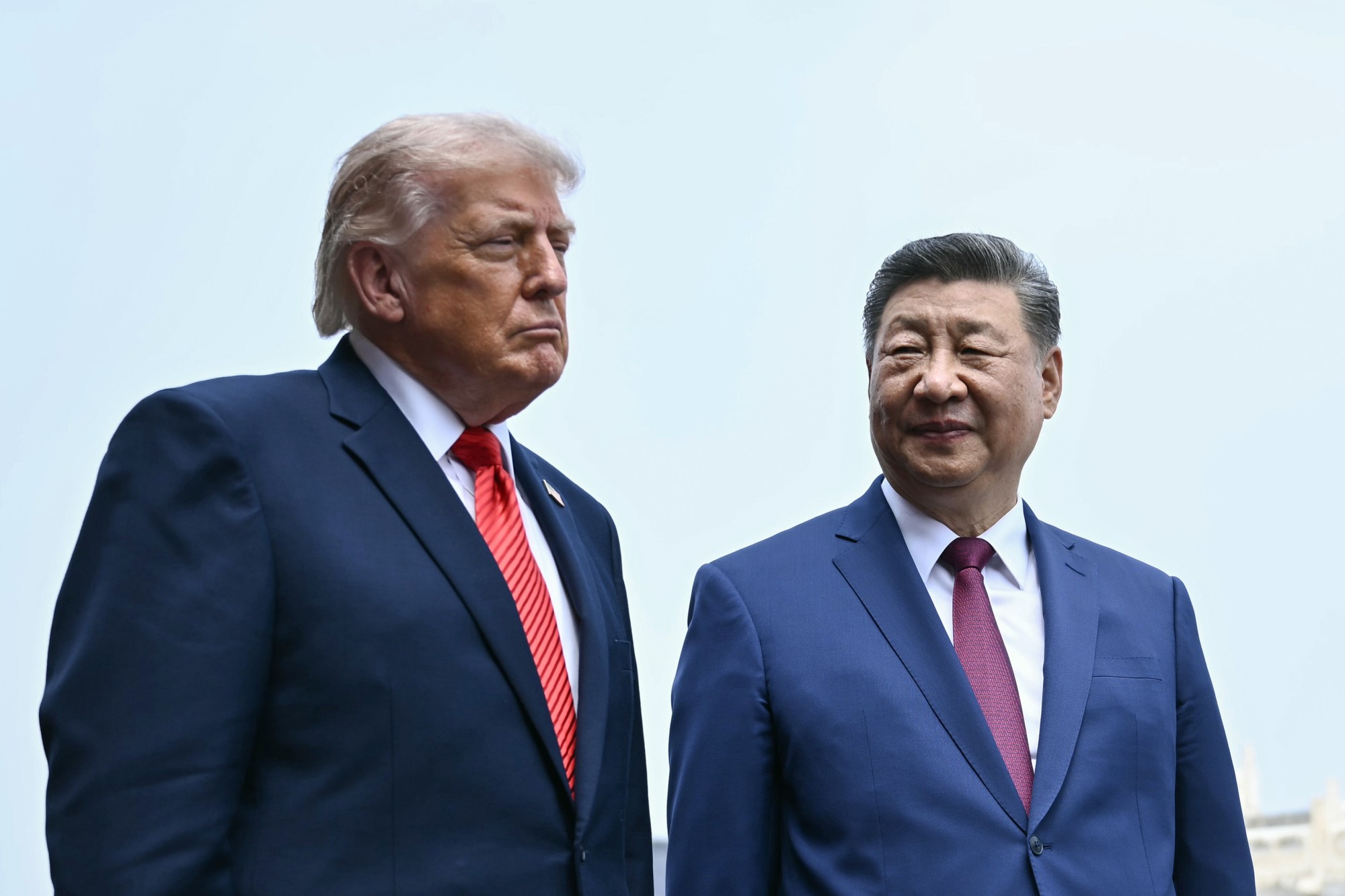
The upcoming summit between U.S. President Donald Trump and Chinese President Xi Jinping in Washington is poised to be significant. Held in the U.S., this meeting provides a small tactical advantage for American interests and longer-term international security.
U.S. presidents have historically made concessions to China on Taiwan, starting with Richard Nixon’s 1972 Shanghai Communiqué. This led to Taiwan’s formal de-recognition under President Jimmy Carter. In 1998, President Bill Clinton declared the ‘three nos’ policy, rejecting support for Taiwan’s independence and its role in international organizations despite advice against it.
Meeting Xi in Washington weeks before midterm elections may afford Trump a negotiating edge. Though marginal, it is preferable to letting Chinese hosts exploit any advantage. However, Trump risks losing this advantage if he appears overly keen for a deal to bolster the Republican election outlook. While securing a trade deal is crucial for Trump, Xi likely seeks a concession regarding Taiwan, potentially weakening U.S. commitment to its defense. This strategic concession could harm Trump politically.
Xi has warned Trump to tread carefully on the Taiwan issue. Trump has refrained from responding to these threats, often emphasizing his ‘great’ relationship with Xi, similar to sentiments expressed during the COVID pandemic. Only after severe consequences did Trump publicly acknowledge his misgivings. Despite this, Trump has resumed his amicable stance in his second term, illustrating the adage: ‘Fool me once, shame on you. Fool me twice…’
The political landscape complicates Trump’s negotiation efforts with Xi. Xi could suggest a minor trade victory for Trump in exchange for innocuous language on Taiwan, such as ceasing military presence in the Taiwan Strait. Trump should decline such offers and possibly propose a daring resolution.
Once Xi arrives in Washington, Trump should signal plans to address the Taiwan issue to restore regional peace. He might propose China permanently renounce force against Taiwan, with Taiwan agreeing not to declare independence for a decade or until Xi steps down. Taiwan would retain de facto independence and receive full U.S. military support.
Trump should commit to defending Taiwan and recognizing its independence if China uses force. By doing so, Trump would challenge China’s assertion that ‘independence means war,’ stating instead that ‘war means independence.’ This explicit move would end Washington’s strategic ambiguity policy initiated under President Clinton.
Joseph Bosco, who served as China country director for the Secretary of Defense and Asia-Pacific director of humanitarian assistance, offers this perspective. He is affiliated with several advisory boards on Taiwan and Asia-Pacific strategies.