
In the global race to advance artificial intelligence, the U.S. and China are focusing intensely on technology and computing power. Chinese companies like Huawei are challenging industry giants like Nvidia within their domestic markets.
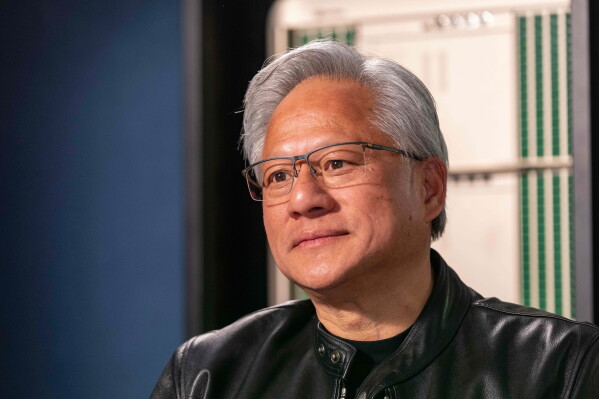
Jensen Huang, CEO of Nvidia, experienced the popularity of his brand in China during a visit to Beijing for a diplomatic summit when he was recognized by many. However, this fame did not translate into strong sales for Nvidia’s advanced chips in China.
U.S. Export Controls Affect Nvidia
Washington imposed restrictions on exporting certain advanced technologies, including Nvidia’s H200 AI chips, citing national security reasons. By the time export controls were temporarily lifted, China had started to push for the use of domestically made chips such as those from Huawei.
We were in China for 30 years, and before the export control, Nvidia had about 95% market share.
Nvidia’s presence has diminished as Chinese companies grow stronger in the AI chip sector, with Huawei leading the charge.
Huawei’s Growth in the Chip Market
Following the U.S. ban in 2019, which prevented Huawei from purchasing powerful chips and machinery, Chinese chipmakers accelerated efforts to become self-reliant. While Nvidia and AMD continue to dominate the U.S. AI chip industry, Huawei has gained significant ground in China.
A report by Bernstein estimated that Nvidia’s share of China’s AI chip market was 40% in 2025 but is expected to shrink to about 8%. Conversely, Huawei’s market share might grow to 50%, as noted by Antonia Hmaidi from the Mercator Institute for China Studies.
Technology Development and Partnership
Huawei’s technological strides are evident in its AI chips, such as the Ascend 950 series, which industry analysts consider comparable to Nvidia’s H200. Huawei’s commitment to building AI computing clusters points to its ambitions to strengthen domestic capabilities.
Paul Triolo from DGA-Albright Stonebridge Group highlighted collaboration between Chinese companies like DeepSeek and Huawei to develop AI technology on local hardware.
Nvidia’s Role Remains Significant
The global semiconductor supply chain ensures that even with AI chip demands surpassing supply, Nvidia remains essential. Smuggling activities show the ongoing demand for Nvidia chips in China.
While Huawei’s chips are improving, experts agree that Nvidia’s technology remains crucial for cutting-edge AI research and development.
International Ambitions of Huawei
With operations in 170 countries, Huawei is expanding its reach and aims to integrate digital solutions worldwide. China’s ambitions for self-sufficiency in technology continue to drive local innovation, and these advances may eventually gain interest in other global markets.
Brady Wang of Counterpoint Research suggests that China’s strategy to support its tech industry remains unchanged, regardless of Nvidia’s sales in China.
Report contributions from AP journalists Josh Boak and Kelvin Chan.