
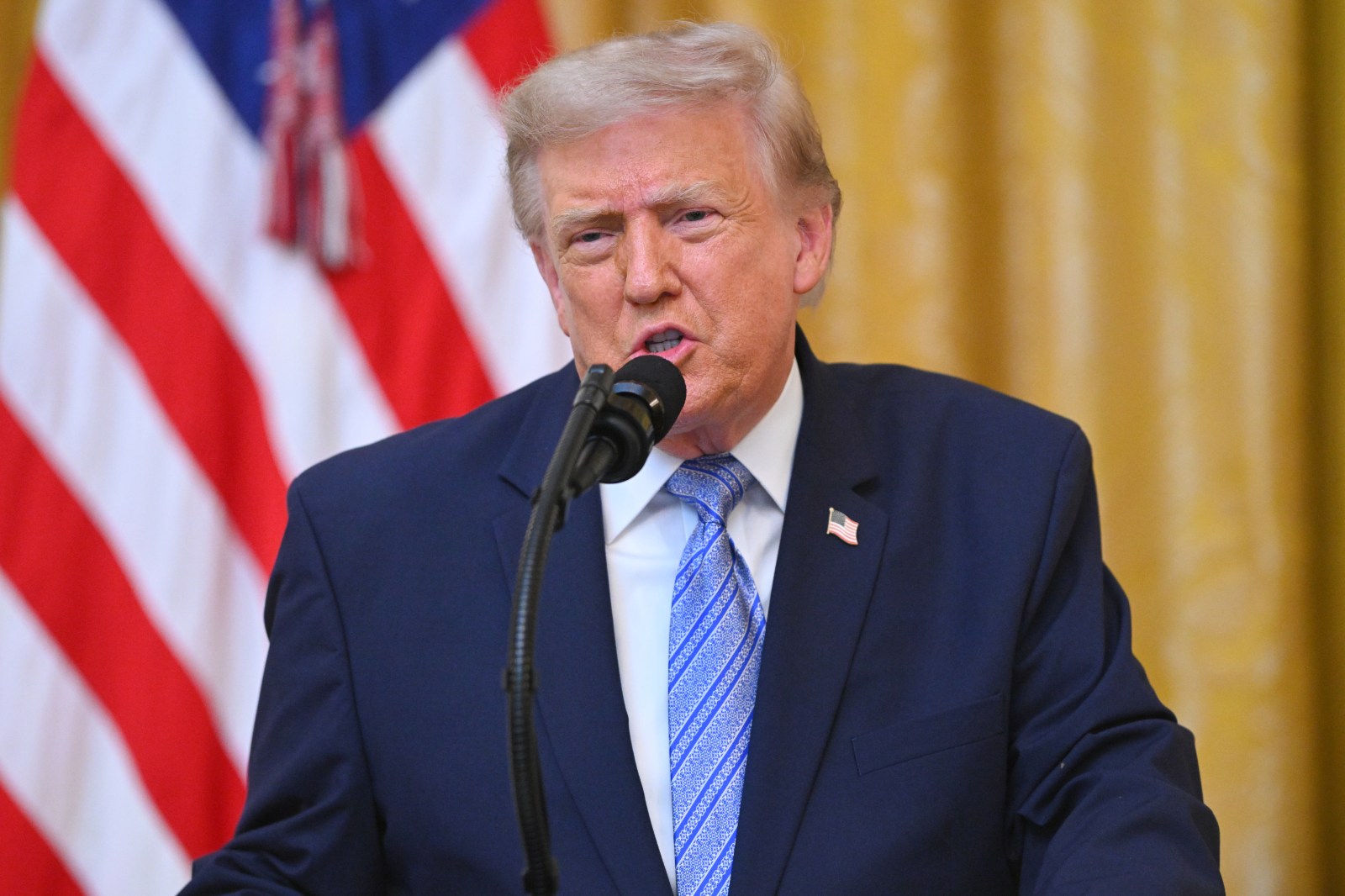
President Donald Trump’s recent address alleged a campaign of election interference involving China, drawing responses from both supporters and critics. For years, Trump has insisted on claims of widespread voter fraud in the 2020 election, despite audits affirming the election’s integrity and a lack of supporting evidence. During his primetime speech, he announced plans to release documents concerning election integrity, asserting that China executed what he described as the largest compromise of election data in history.
Trump claimed China obtained 220 million U.S. voter files containing sensitive data, and used this to interfere with the 2020 election. He alleged that China’s efforts aimed at ensuring his loss to Democrat Joe Biden. Reports also surfaced about 278,000 noncitizens found on voter rolls during a Department of Homeland Security (DHS) review. Trump has further alleged that the ‘deep state’ attempted to hide this interference.
Push for the SAVE Act
The speech coincides with efforts from the White House and Trump-supporting Republicans to promote the SAVE Act, which has passed the House but remains stalled in the Senate. The bill seeks to require U.S. citizens to provide documentary proof of citizenship when registering for federal elections, aiming to prevent undocumented immigrants from voting.
Following the address, conservative supporters renewed calls for the SAVE Act’s passage. However, some Republicans dismissed Trump’s claims raised during the speech.
Reactions from Republicans
Ben Ginsberg, a former Republican Party election lawyer, voiced opposition to Trump’s statements on CNN. He emphasized the lack of any evidence proving election errors and suggested providing more federal funding to address vulnerabilities in the U.S. election system, which he described as ‘notoriously underfunded.’ Ginsberg criticized the administration’s cutbacks on cybersecurity and related departments.
Representative Thomas Massie from Kentucky criticized Trump’s remarks about China gaining access to voter files, describing the claims as ‘absurd.’ Stephen Richer, Recorder of Maricopa County, Arizona, also refuted fraud allegations, emphasizing that any manipulation of tabulation machines would emerge during post-election hand counts.
Georgia Secretary of State Brad Raffensperger asserted that the state performs stringent citizenship checks, marking its efforts as pioneering in the nation.
Responses from Democrats and Other Republicans
Democrats condemned Trump’s speech, with Massachusetts Senator Ed Markey advocating for impeachment over undermining elections. Virginia Senator Mark Warner warned that free elections were ‘under attack,’ urging vigilance to protect democracy.
Some Republicans, however, supported Trump’s points. South Carolina Representative Nancy Mace highlighted claims related to non-citizen voter registration, promoting the necessity of the SAVE Act. Homeland Security Secretary Markwayne Mullin voiced intentions to review election records across states to identify illegal activity or ineligible voters.
Debate on CISA’s Funding
Following the speech, critics noted cuts to the Cybersecurity and Infrastructure Security Agency (CISA), a body established under Trump’s first term. Reduced budgets and staffing cuts were highlighted as concerns. Trump’s criticisms of CISA related to its efforts to counter misinformation about the 2020 election led to further scrutiny, especially after the firing of its director following the disputed election outcomes.
The New York Times reported that CISA’s workforce has seen a significant reduction since Trump’s return to office, alongside budget cuts affecting cybersecurity initiatives for election officials.