
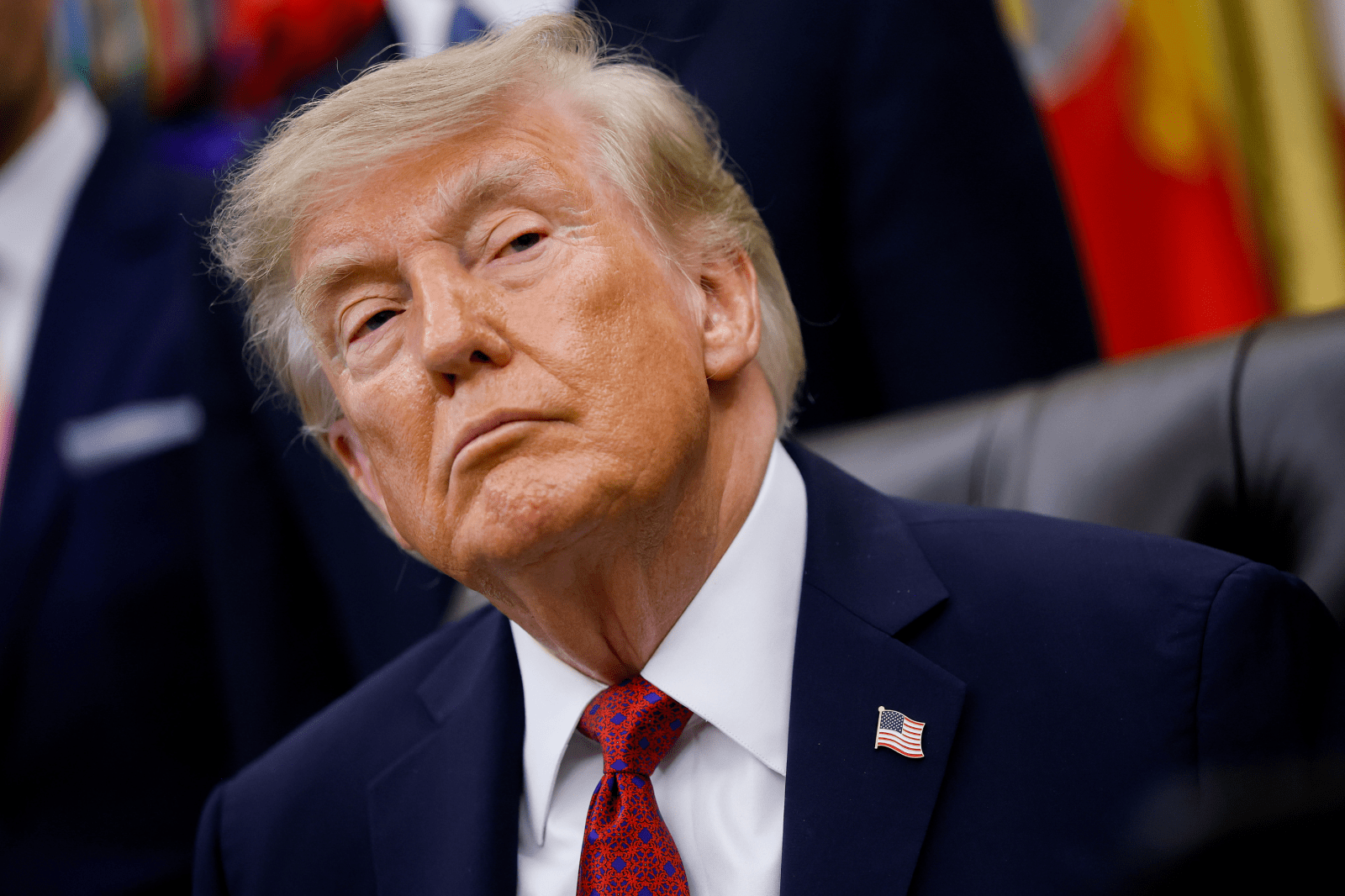
With two months remaining before the 2026 midterm elections, President Donald Trump’s political standing has weakened since the start of his second term. Civiqs’ tracking poll of registered voters reveals significant changes in his approval ratings.
Current Approval Ratings
As of August 31, 2026, Trump’s national approval rating stands at 35 percent, while his disapproval rating reaches 59 percent. This results in a net approval rating of minus 24 percent. State-level data mirror this trend, with his strongest support persisting in Republican areas but declining across key battleground states.
Key Insights
- Trump’s approval is underwater in every major battleground state with two months until the elections.
- Tennessee and Utah have reached net-even territory, while Indiana has slipped further.
- Some Republican-leaning states have experienced greater declines than Democratic strongholds since January 2025.
- Younger voters, independents, and postgraduates remain among Trump’s weakest demographic groups.
Deep Red State Support
Trump enjoys his strongest ratings in Republican-leaning states, with Wyoming leading at a net approval of +22. North Dakota and West Virginia follow at +15, while Alabama, Arkansas, and South Dakota remain positive at +8.
Despite this, the approval margins in these states are considerably smaller compared to the time he began his second term. Wyoming, for instance, decreases from a net approval of +47 to +22.
Deep Blue State Opposition
Democratic-leaning states show low approval for Trump. Hawaii has the lowest net approval at -60, followed by Vermont at -52 and Maryland at -51. Other states like Massachusetts, California, and New York also exhibit strong disapproval.
Demographic Breakdown
Demographics provide insight into state-level trends. Among young adults aged 18 to 34, only 22 percent approve of Trump, while 70 percent disapprove. In contrast, adults aged 35 to 49 show 28 percent approval and 63 percent disapproval.
Independents display firm disapproval with 29 percent approval compared to 62 percent disapproval. Educational differences also mark significant divides; only 23 percent of postgraduates approve compared to 72 percent who disapprove.
Swing State Challenges
Battleground states represent a problematic area for Trump. Currently, he is underwater in these critical regions:
- Arizona: -14
- Florida: -10
- Georgia: -23
- Nevada: -23
- North Carolina: -16
- Ohio: -17
- Pennsylvania: -18
- Wisconsin: -18
Florida, for example, shifted from a positive net approval of +9 to -10.
Largest Declines
All states show a lower net approval rating compared to January 2025. Some of the steepest declines include Kentucky dropping from +23 to -7, and Wyoming from +47 to +22.
The notable factor is that many significant declines are in Republican-leaning states.
Tighter Margins in Middle States
Several states now balance between positive and negative territory. Tennessee and Utah are at a net-zero. Indiana, Nebraska, and Kansas hover near neutral, which suggests that small changes could shift the status of these states.
Comparison with Previous Midterms
In 2018, Civiqs showed Trump with 43 percent approval and 53 percent disapproval, a net of minus 10. Currently, his national net approval is minus 24, worse than before his first midterm election.
Familiar Map with Narrower Margins
Trump’s current political landscape retains the familiar partisan structure, but with tighter margins. His Republican support remains, though more narrowly distributed than earlier.
White House Reaction
The White House dismisses poll fluctuations. Spokesperson Davis Ingle emphasizes progress on jobs, inflation, and housing. The administration believes its accomplishments stand as a testament to Trump’s agenda.