
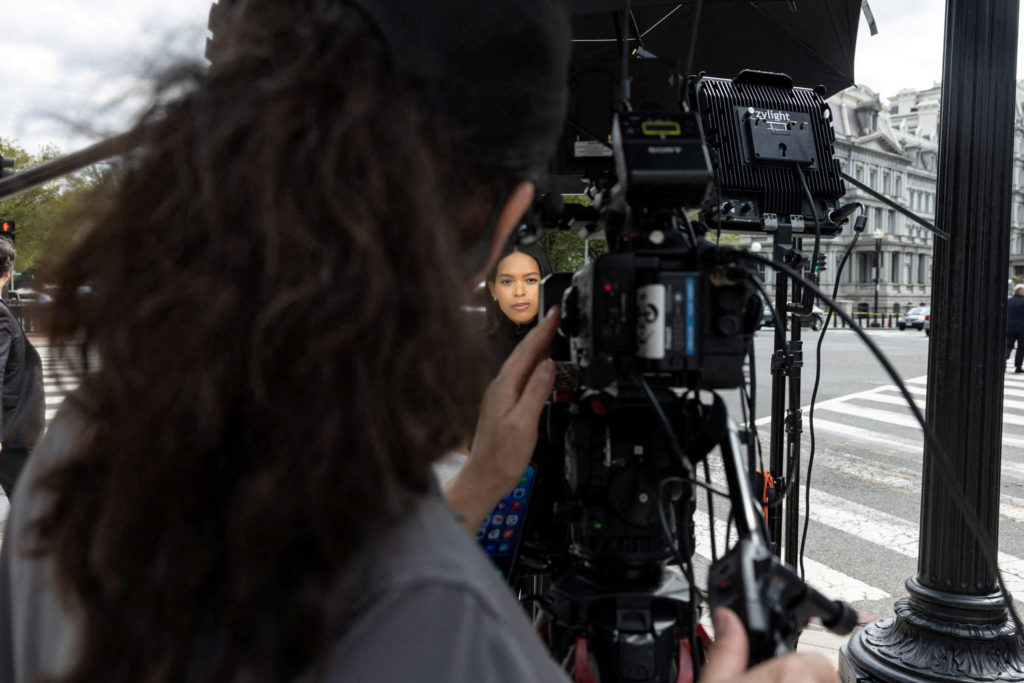
Reporters from CNN, MS NOW, and Politico were denied entry to the White House following President Donald Trump’s decision to ban them due to what he labeled as “fake news.” This action highlights Trump’s ongoing efforts to restrict media coverage from journalists who report unfavorably on him, challenging First Amendment rights in the U.S.
After being turned away, CNN’s Betsy Klein and MS NOW’s Akayla Gardner reported live that their press badges were deactivated. Politico’s Cheyenne Haslett also faced denied access, prompting all three outlets to consider legal action. Politico’s Editor-in-Chief Jonathan Greenberger stated they would defend their First Amendment rights, while CNN and MS NOW echoed similar sentiments.
The White House Correspondents’ Association President Jacqui Heinrich urged the administration to reinstate the banned media access, emphasizing the broader implications this could have on press freedom. Heinrich noted that excluding one outlet could set a precedent affecting any media organization in the future.
The American people, through a free and independent press, must be able to scrutinize those elected to power, regardless of government approval,Heinrich stated.
The incident took place over a weekend when Trump was at Camp David. Gardner reported initially passing two security gates but was stopped at the badge scan point where her access was revoked. A similar scenario unfolded for CNN’s Klein, whose badge was confiscated. She was directed to contact the White House press office for more details.
Penn State University professor Amy Kristin Sanders commented that Trump’s administration is disregarding traditional First Amendment norms. She highlighted that actions against press freedom under Trump exceed those of other modern U.S. presidents. CNN analyst Brian Stelter referred to the ban as a direct threat to American press freedom, portraying it as a significant test of free speech in the country.
On social media, Trump justified his actions by branding the media outlets as sources of fake news. He criticized the outlets specifically, stating, “You get so tired of reading and seeing fake news.” The move occurred after his previous ban on Associated Press reporters due to a disagreement over naming the Gulf of Mexico. The AP responded by suing, emphasizing that government retaliation over media content is unacceptable.
The Associated Press and other media entities have expressed support for the banned organizations, underlining the essential role of a free press in preserving democracy and promoting civil discourse.